
How To Fill Capsules With Kratom Leaf Powder
With a manual capsule-filling plate, the longer capsule body holds the kratom leaf powder. The shorter cap goes on last. Start with a plate that matches the shell size, then weigh the capsules to see how much powder went in. The same shell size gives you the same space, but two capsules that look equally full can hold different weights of powder. Saskatchewan Open Textbook’s capsule-filling procedure. Research on powder density and capsule fill weight.
This procedure covers the mechanical handling and inspection of dry kratom leaf powder in two-piece hard capsules. Concentrated extracts and products with added or enhanced 7-OH fall outside that scope. The U.S. Food and Drug Administration warns consumers against using kratom because of risks including liver toxicity, seizures, and substance use disorder. Encapsulation leaves those risks unchanged. FDA guidance on kratom. FDA warning on enhanced 7-OH products.
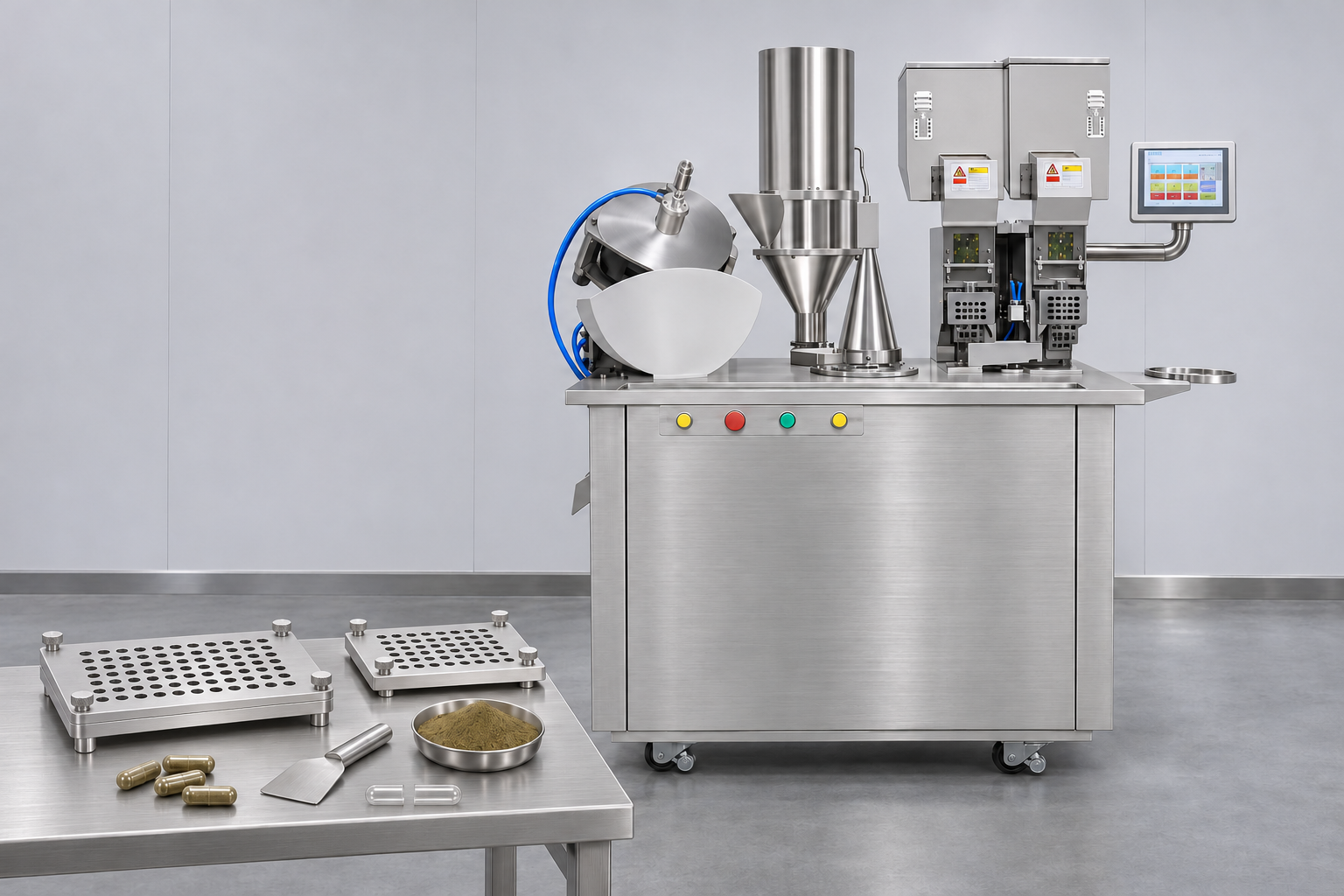
Match The Capsule Shell Size To The Filling Plate
For size 00 hard capsules, use plate components specified for size 00. Dry-fit a few empty shells. The bodies should sit securely with their open ends level, and the caps should align and lock. If the empty shells bind in the holes or fail to close, check the shell size, plate components, and shell orientation before adding powder. Saskatchewan Open Textbook’s capsule-filling procedure.
Powder particles leave air spaces when they settle loosely. Tamping can reduce those spaces, so the same capsule can hold more powder by weight. Recheck net fill when you change the leaf powder batch or the tamping technique. A capacity chart based on another powder can help you compare shell volumes, but it cannot tell you how much this leaf powder will weigh. Research on powder density and capsule fill weight.
Fill And Close The Capsules By Hand
Manual plates differ in how they separate the shells and press the two halves together. Follow the plate manufacturer’s instructions for the order of assembly. The basic filling sequence is the same. Saskatchewan Open Textbook’s capsule-filling procedure.
- Separate the caps and bodies. Work on a clean, dry surface. Set the longer bodies open-end up in the base plate. Leave the shorter caps in the cap plate or set them aside. Reseat any body that sits unevenly before spreading powder.
- Sweep the powder into the bodies. Use the scraper to distribute it across the holes, then scrape excess powder off the plate. When comparing trial fills, keep the tamping and refilling steps consistent so changes in technique do not skew the comparison.
- Align the caps and close the shells. Remove the filled capsules and check for incomplete closure, cracks, or powder escaping at the seam. If several capsules fail to lock, check for powder at the rims and verify that the cap plate is aligned before applying more pressure.
Check Net Fill Weight One Capsule At A Time
Before filling, select several capsules from different positions across the plate and record their hole positions. Weigh each complete empty shell, including both its body and cap, on a balance that can resolve the weight differences you need to detect. After filling and closing, remove any powder from the outside and weigh each of those same capsules again. Saskatchewan Open Textbook’s capsule-filling procedure.
Net fill weight per capsule = filled capsule weight − weight of the same empty shell.
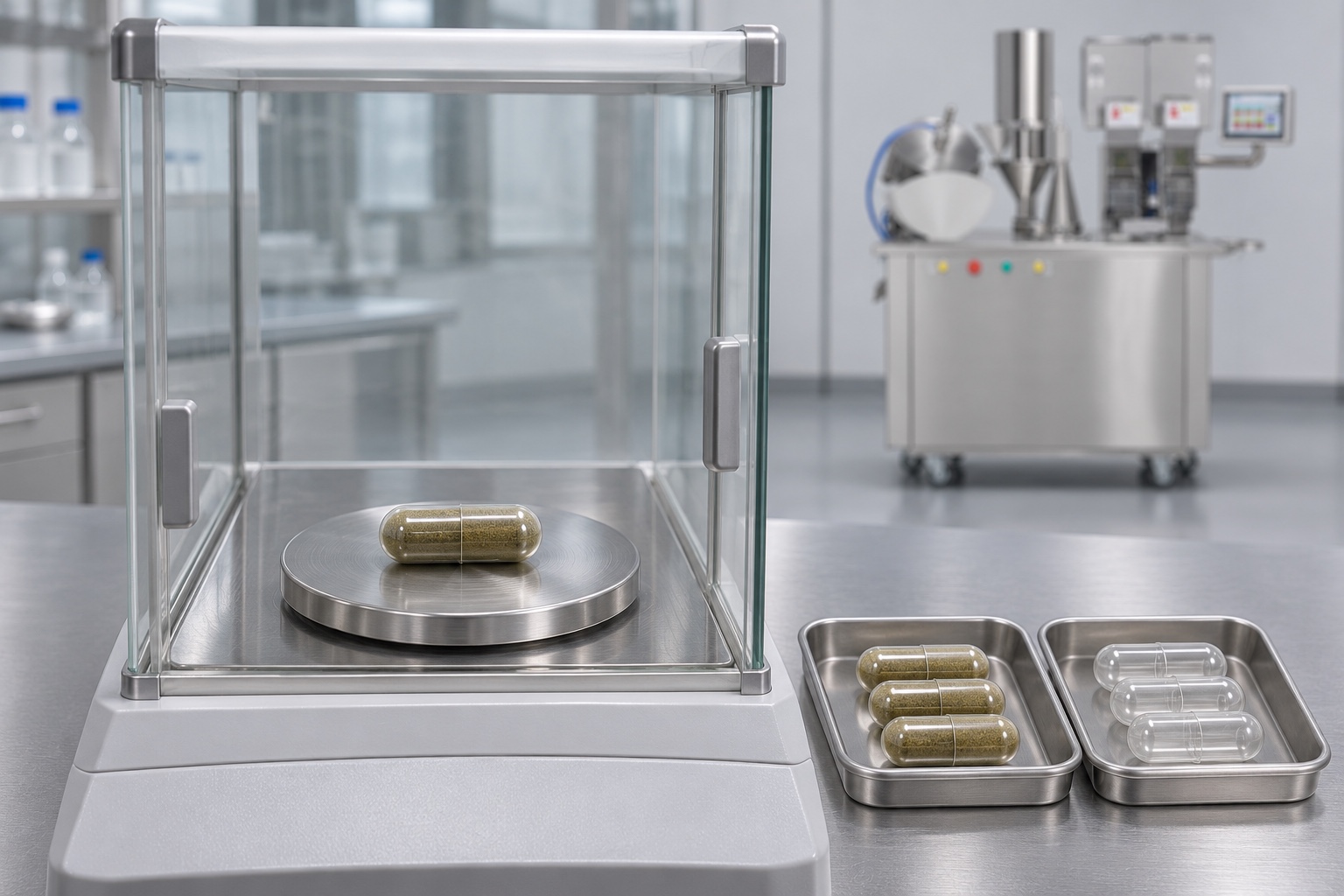
One underfilled capsule and one overfilled capsule can cancel each other out in the average. If the same row repeatedly comes in light, check whether the scraper covers that row and the bodies sit flush. If net fill rises across the plate after you change how you tamp, repeat the comparison with the same powder batch to isolate the effect of the technique. Research on powder density and capsule fill weight.
What Net Fill Weight Tells You About Leaf Powder
The balance measures the mass of leaf powder in the capsule. Measuring its mitragynine content takes a separate test. In a study of kratom leaves collected in Thailand, mitragynine concentrations varied with sampling time and location. Two batches can therefore have the same net fill weight and different mitragynine content. Use batch-specific test results to establish alkaloid content. Net fill weight alone cannot establish a serving dose or an equivalent amount of concentrated extract. Study of alkaloid variation in kratom leaves from Thailand.