
What Is The Best Capsule Filling Machine For Your Production Plan?
The best hard capsule filling machine for your operation is the one that consistently meets your per-shift output target with the formulation and capsule shells you plan to use. A manual filling plate often makes sense for a few development samples. Start with a semi-automatic filler for recurring small batches, and evaluate a fully automatic machine first for long runs on a fixed capsule size. Once both candidates meet your fill-weight and closure requirements, compare their acceptable output over a full shift, including changeovers, startup, and rejects.
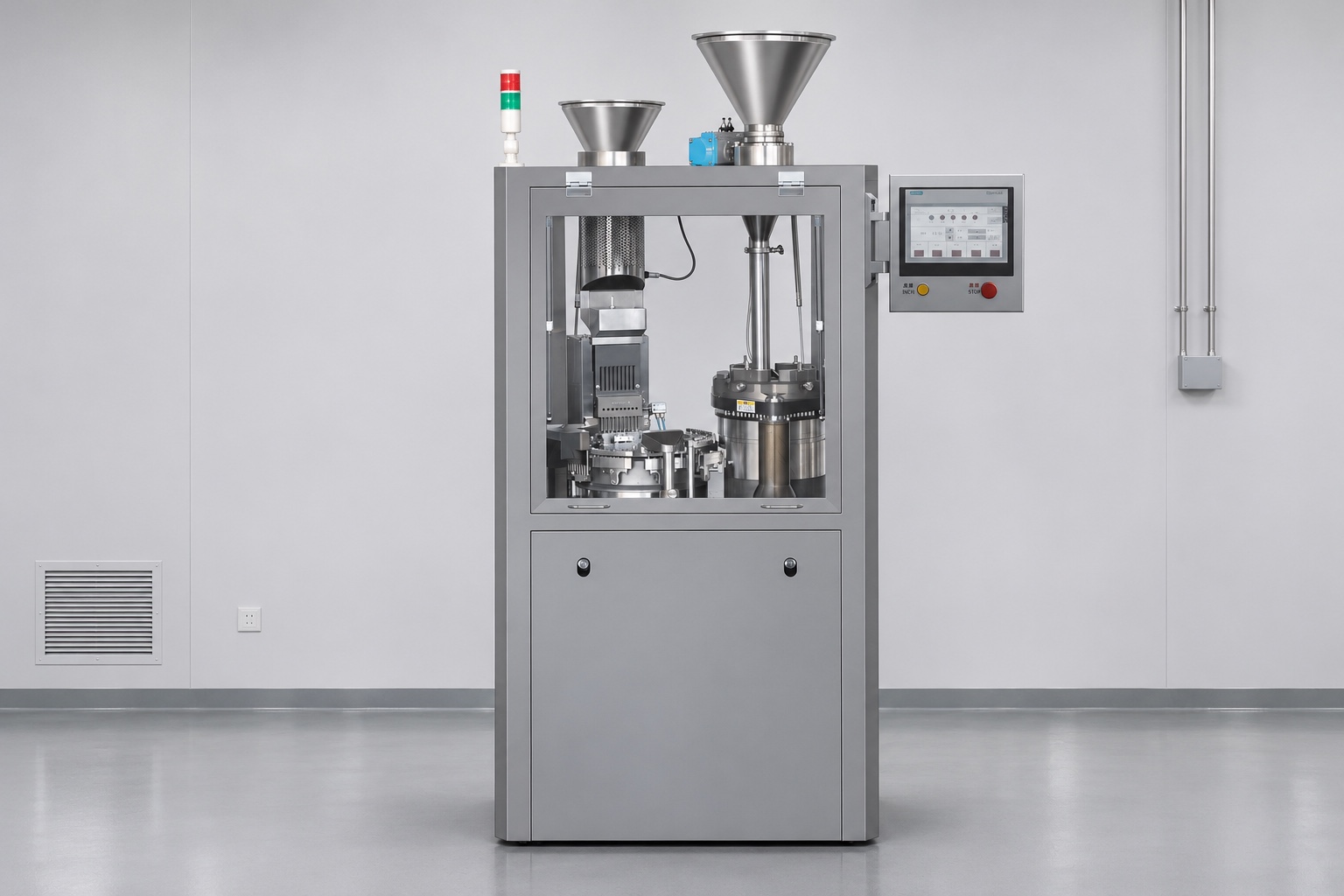
Match The Level Of Automation To Your Batch Length
| Production Scenario | What To Evaluate First | What To Check During The Trial |
|---|---|---|
| Occasional formulation samples | Manual filling plate | Time the full batch, including shell loading, powder spreading, and capsule closing. Check whether net fill weights stay within range when another operator takes over. |
| Recurring small batches with frequent formulation or capsule-size changes | Semi-automatic filler | Ask which steps are powered and where someone still needs to transfer parts or product. Run with the planned crew and include time spent waiting between steps. |
| Several hours on one size with larger routine batches | Fully automatic filler | At the target speed, record failed shell separation, fill-weight rejects, and closure defects. Track refills and restarts as well. |
Short runs make changeover time count. A faster filler can lose its lead if swapping size parts, removing powder residue, and setting up the next run take a large share of the shift. To compare machines, use the same product sequence. Start timing at the last acceptable capsule of the outgoing batch and stop at the first acceptable capsule of the incoming batch.
Why You Should Test Size 0 Capsules With Your Own Powder
Capsule size determines shell volume and the size parts you need. How many milligrams go into each shell also depends on how the powder packs and compresses during dosing. In a tamping-pin system, pins compact powder in the dosing disc to form a plug, which is then pushed into the capsule body. A study on an automatic tamping-pin filler found that pin settings affected fill weight and its variability, while powder bed height affected fill weight for the poorly flowing powders tested. Use your own materials to find settings that work for your formulation. AAPS PharmSciTech study on capsule filling
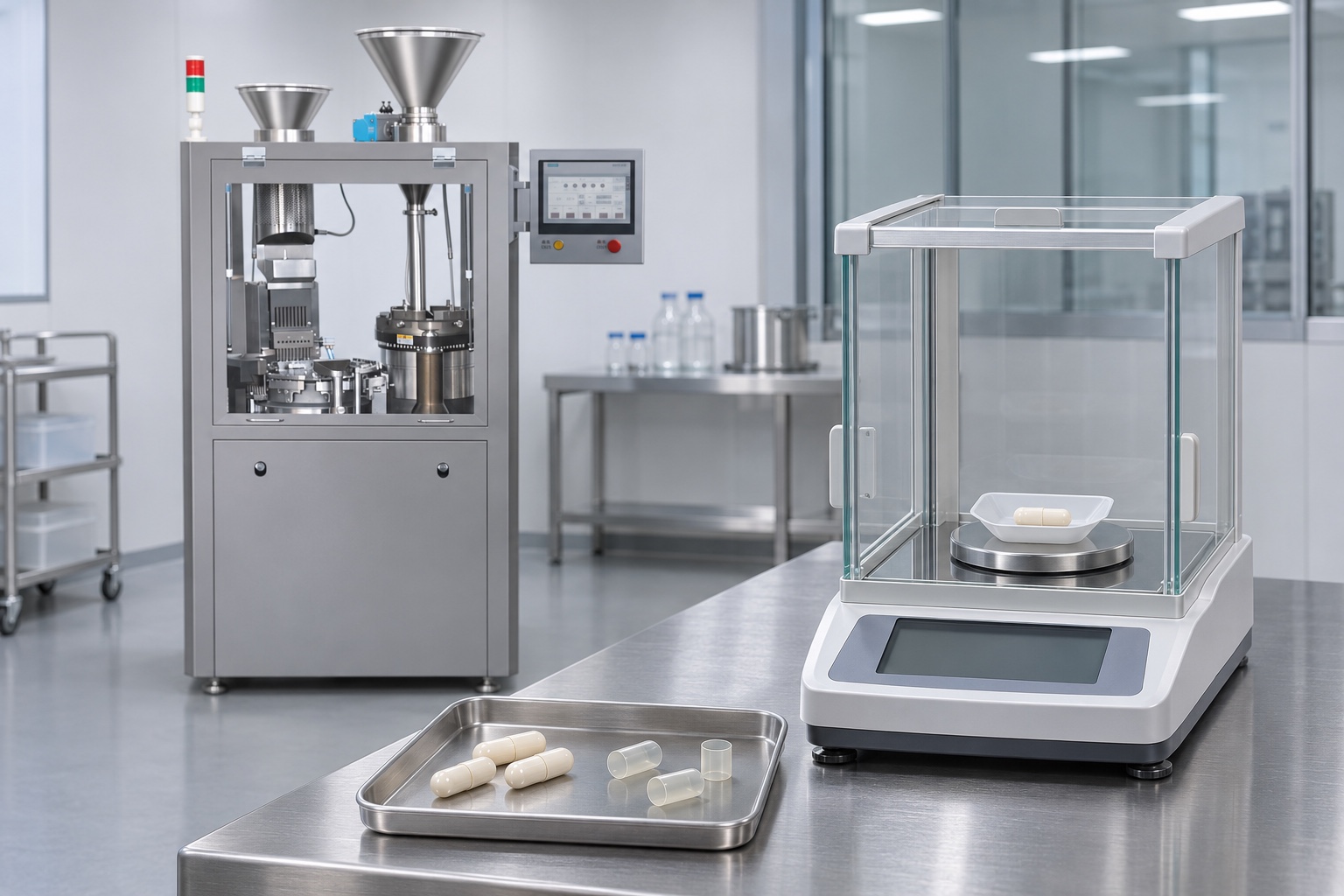
Give each supplier powder from the same batch, the same capsule shell specification, and the same target net fill weight. Record individual net fill weights after startup stabilizes, midway through the run, and near the end. An average on target can still hide individual failures. If weights drift toward the end of the run, check the powder level and feed records for that period. If weights hold steady but caps split or fail to lock, check shell separation, tooling fit, and the closing station with your production shells.
Net fill weight tells you how much powder went into the shell. For drug products, determine how to assess the amount of active ingredient per capsule under the applicable standard. USP Chapter <905> distinguishes between content uniformity testing by individual assay and weight variation testing under specified conditions. Equipment trial weights alone cannot establish compliance with the chapter. USP Chapter <905> on uniformity of dosage units
Compare Acceptable Output Across A Full Shift
Suppose two machines run the same formulation and capsule shells during separate eight-hour shifts. Subtract line clearance, tooling changes, startup adjustments, and downtime from the scheduled shift. Then multiply the actual running speed by the remaining runtime and the share of capsules that meet the trial criteria. Use the actual acceptable count to check the estimate when that count is available.
| Example Machine | Rated Speed | Actual Running Speed | Runtime | Pass Rate | Acceptable Capsules Per Shift |
|---|---|---|---|---|---|
| A | 80,000 capsules/hour | 60,000 capsules/hour | 5 hours | 96% | 288,000 |
| B | 60,000 capsules/hour | 50,000 capsules/hour | 6.5 hours | 99% | 321,750 |
For an order that requires 300,000 acceptable capsules per shift, Machine B meets the target in this example. Machine A falls short by 12,000. If the schedule shifts toward longer runs, changeovers may account for less of Machine A’s shift. Recalculate both machines against that schedule before making the purchase.
Use Material Trial Results To Set Equipment Acceptance Criteria
Before the trial, give each supplier the same acceptance criteria. Specify the formulation and shell, target net fill weight and limits, required continuous runtime, minimum acceptable output, and how to count split caps, incomplete closures, and out-of-range fill weights. For frequent size changes, set a maximum changeover time and define what qualifies as the last acceptable capsule of one batch and the first acceptable capsule of the next.
Review individual weights and downtime records during acceptance. If the machine reaches target speed briefly but fill weights drift out of range during a longer run, that speed still needs to be demonstrated under sustained operation. For drug manufacturing, supplier trial data can support equipment selection. The FDA guidance describes process performance qualification (PPQ) using the actual facility, utilities, qualified equipment, trained personnel, and commercial manufacturing process. FDA guidance on process validation