
Capsule Filling Machine Uses: Match The Machine To The Fill
A capsule filling machine places a measured amount of material into a preformed, two-piece hard capsule and closes the cap and body. That simple description covers several different jobs. A powder formula, a blend of pellets, a tiny tablet, and a liquid do not pass through the same dosing hardware in the same way. Understanding capsule filling machine uses starts with the material and the finished capsule you need to make.
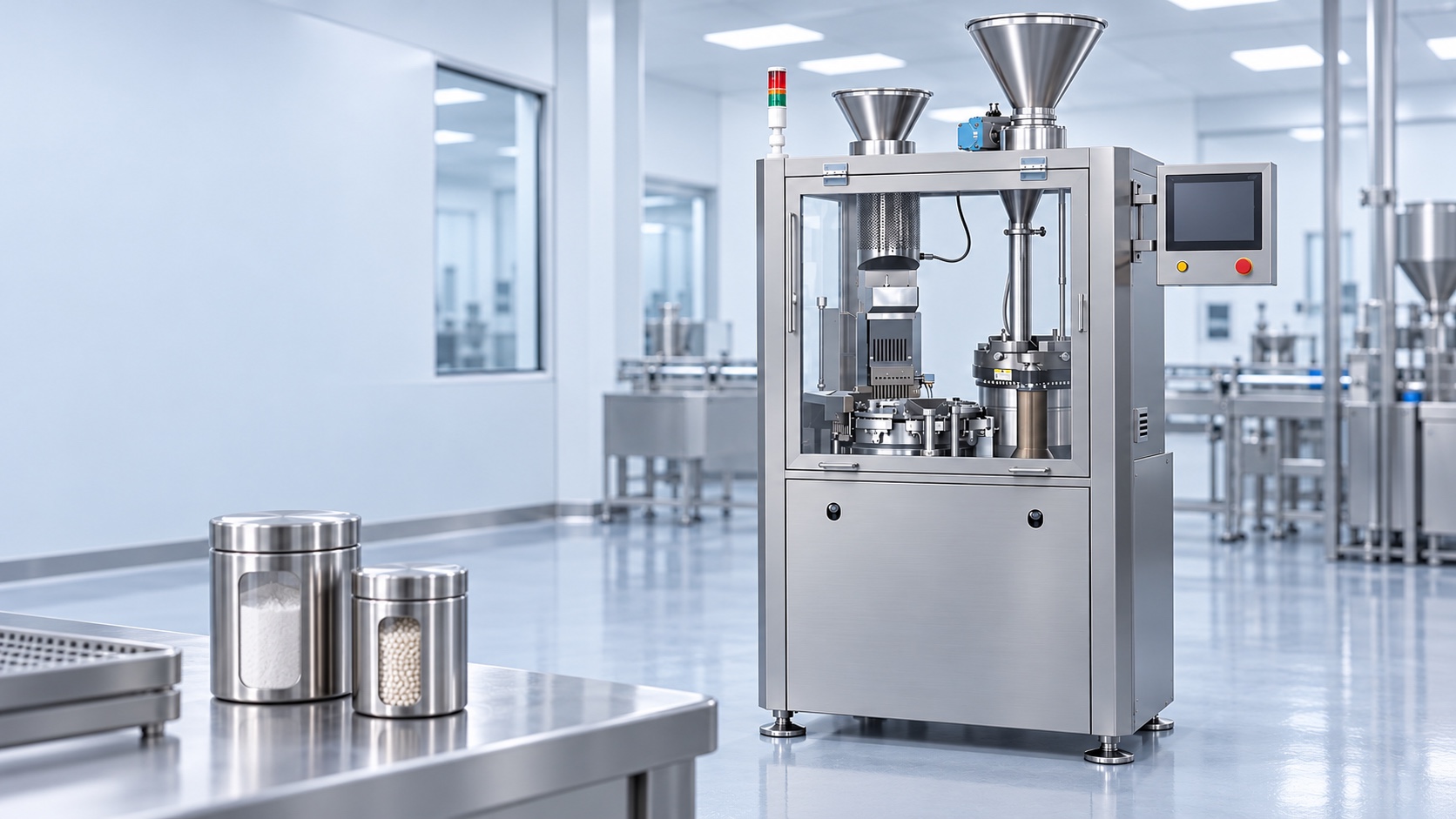
What Can Go Into A Hard Capsule?
Powder is the familiar application. In a typical automatic powder system, a dosing disc and tamping pins form a powder plug, which is then transferred into the capsule body. Other machines may use a dosator. Both approaches depend on how the powder flows, packs, and holds together. A target volume alone does not guarantee a consistent fill weight when bulk density or powder behavior changes.
Granules and pellets are another use. They can be portioned with a suitable chamber or volumetric device before being dropped into the capsule. Their size, shape, surface, and static behavior affect how consistently that portion is delivered. A machine equipped for powder should not be assumed to handle pellets without the relevant dosing module.
Some hard capsules contain one or more tablets or mini-tablets. Here, counting and presence checks matter as much as transfer: the system must avoid a missing, extra, or broken piece. Combination fills are possible on appropriately configured equipment, but each material path and its inspection method must be specified.
Liquid filling is a different application. A metering pump and nozzle deliver a controlled amount into the capsule body. Viscosity and temperature can change how the liquid pumps and whether it drips or strings at the nozzle. Closing the cap does not by itself establish a leak-resistant product. Depending on the formulation, the process may need band sealing and checks of seal integrity and storage stability.
Where Manual, Semi-Automatic, And Automatic Machines Fit
Manual capsule filling boards put much of the work in the operator’s hands: loading empty shells, separating caps, spreading fill, tamping where appropriate, and closing the capsules. They suit formulation trials or very small batches when the required controls can be met. Their results should not be used as a shortcut to predict performance on an automatic line.
Semi-automatic equipment uses powered mechanisms for some operations while operators transfer trays or rings between stations. It can be a practical fit for smaller batches, especially when changeovers and material use matter. The FI-SCF series described in Fimachinery product materials is a semi-automatic powder capsule filler; its process includes capsule positioning, separation, filling, and locking. The label “semi-automatic” does not tell you which transfers or checks are automated, so those details belong in the equipment specification.
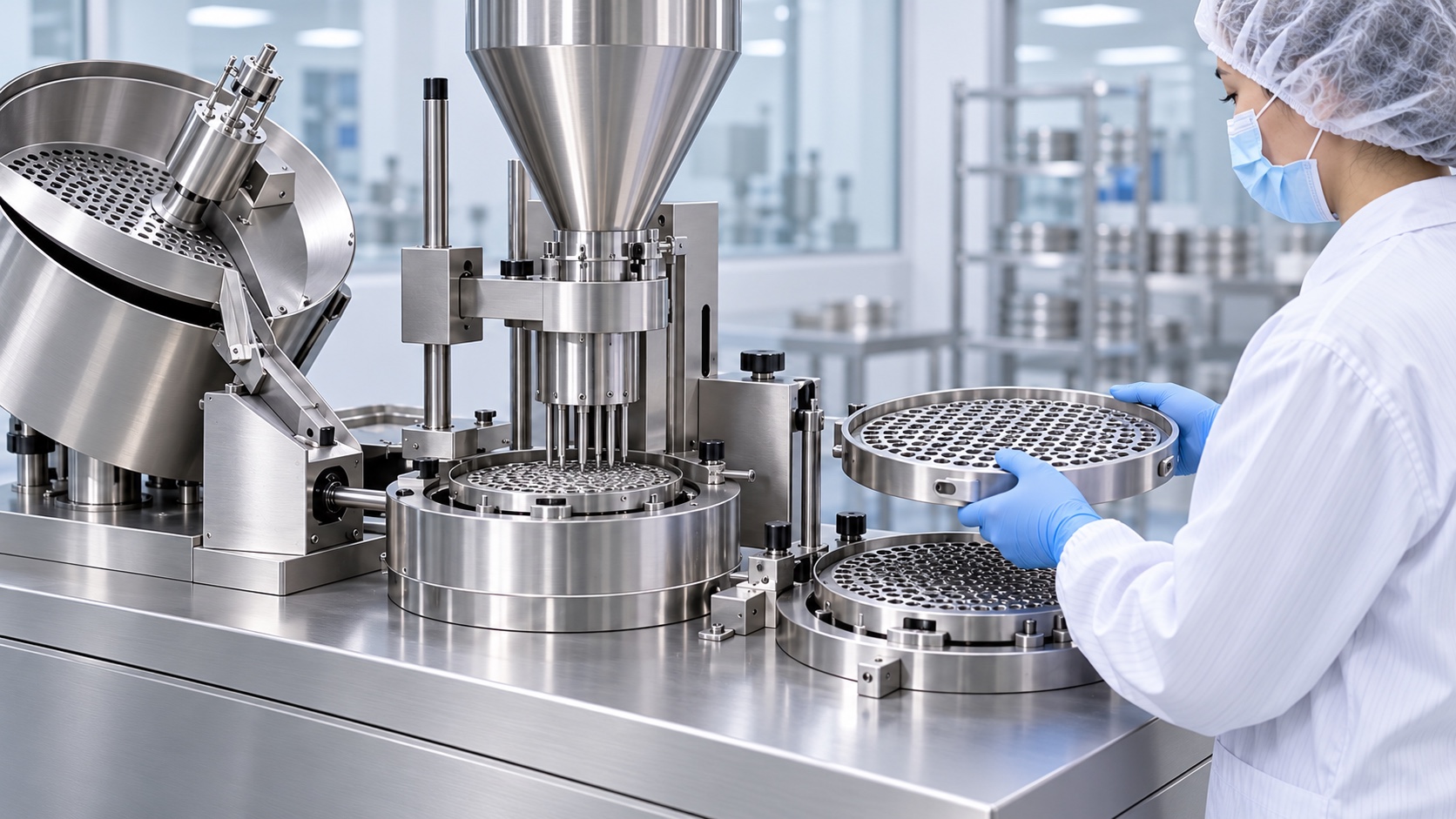
An automatic hard-capsule filler coordinates shell feeding, separation, dosing, rejection, locking, discharge, and cleaning around a production cycle. Operators still prepare material, monitor the run, sample capsules, change parts, and clean the machine. The NJP-1200 described in Fimachinery product materials is one example: it has a powder filling station and provision for a pellet device. That example does not mean every automatic filler includes both dosing systems as standard.
Choose By Material, Batch, And Quality Requirements
Start with the shell: identify its size, material, supplier, and closure behavior. Then describe the fill in practical terms: powder flow and bulk density, pellet size and static, tablet count and dimensions, or liquid viscosity and temperature. Ask for a trial with the actual material and capsule rather than relying on a machine name or a nominal speed.
Next, define the batch. A small project may be governed by minimum workable material quantity, changeover time, and cleaning loss. A larger one needs reliable feed, dust handling, downstream capacity, and a realistic net output after stops and checks. If several capsule sizes are planned, confirm that the required modules, orienting components, locking parts, and dosing parts are included in the proposed configuration.
Finally, set the acceptance checks around the product. Fill-weight variation, missing or broken contents, closure quality, and any liquid leakage need methods suited to the formulation. Pharmaceutical and supplement projects can use similar filling principles, but their documentation, cleaning, containment, and release requirements depend on the intended use and destination market.
The Boundary That Prevents The Wrong Purchase
A hard-capsule filler fills preformed cap-and-body shells. It does not manufacture empty shells, form and seal softgels, polish finished capsules, or count capsules into bottles. Those are separate operations that may connect to the filling line. For a useful equipment proposal, state the material, capsule, required output, inspection needs, and which upstream and downstream tasks the machine must cover. That makes the intended capsule filling machine uses clear enough to test against an actual configuration.