
Dosator Type Capsule Filling Machine: How It Works
When a powder will not fill hard capsules consistently, the dosing mechanism deserves as much attention as the machine's rated speed. A dosator type capsule filling machine uses a hollow tube to collect a measured plug of powder from a controlled powder bed. The tube then carries that plug to an open capsule body, where a piston pushes it out. The sequence sounds simple, but a reliable fill depends on the powder holding together during transfer and releasing cleanly at the capsule.
Understanding this sequence helps you judge whether a dosator suits your formulation, which settings matter during a trial, and what to ask a machine supplier before buying.
How A Dosator Doses Powder
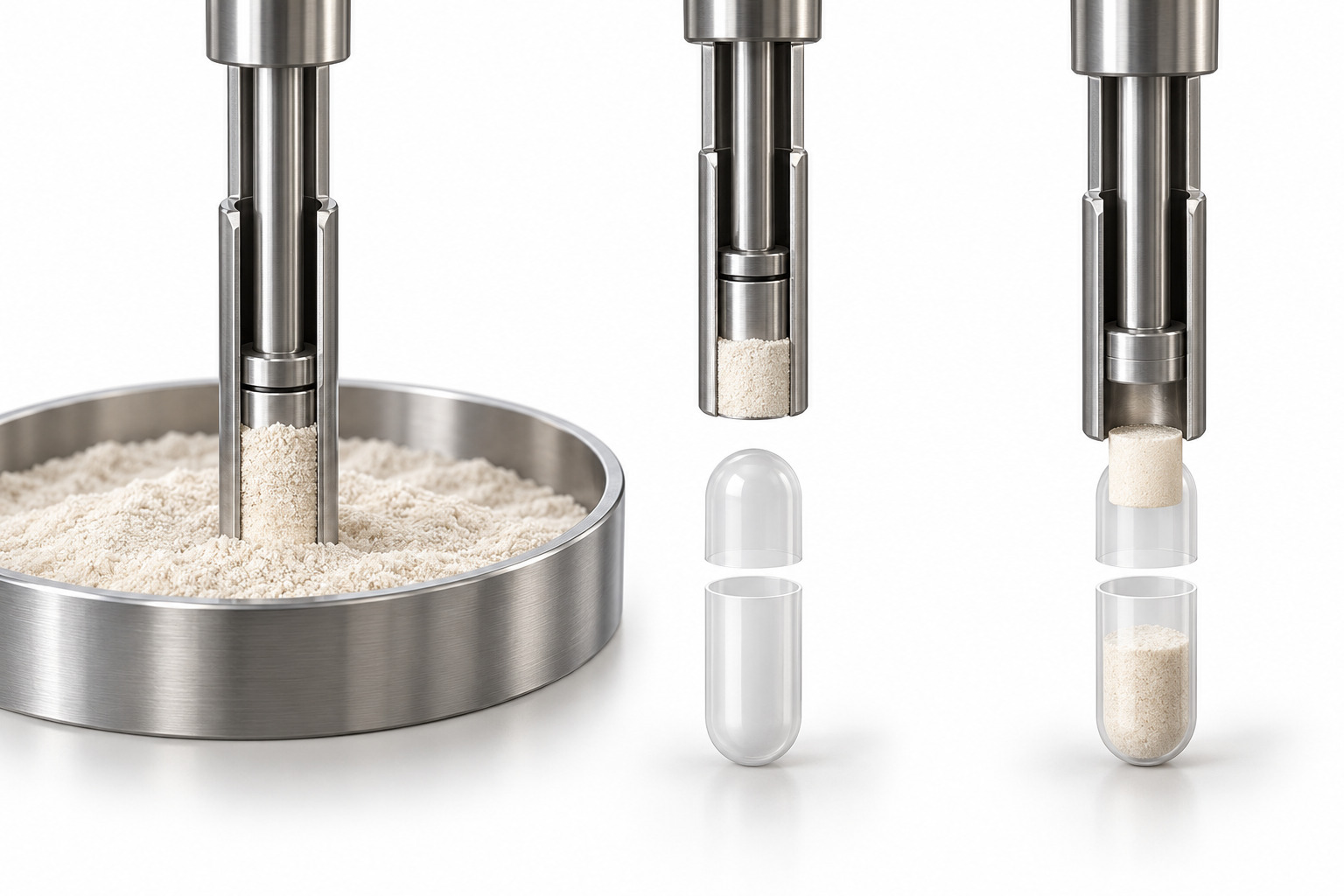
The dosing tube descends into a bed of powder. Powder enters the hollow end and forms a compacted plug. An internal piston defines the available space inside the tube and later ejects the plug into the capsule body. The tube's diameter, piston position, insertion depth, and the condition of the powder bed all influence how much powder is collected and how well the plug survives the move.
This is volumetric dosing: the mechanism controls a volume of powder, while the delivered mass also depends on bulk density and how the material packs. Two runs with the same mechanical setting can therefore give different fill weights if the powder condition changes. A machine setting is only a starting point; the filled capsules must be measured.
The Plug Is The Critical Handoff
Picture lifting a small column of powder inside a metal tube. If it crumbles before reaching the capsule, powder can be lost and individual fill weights can vary. If it sticks to the tube or piston, the capsule may receive less than expected even though a plug formed. A workable formulation needs enough cohesion to travel as a plug, yet it must release at the right moment.
Very free flowing powders can be difficult to retain as a stable plug. Highly cohesive powders can create a different problem: uneven feeding, sticking, and more demanding cleaning. Neither description alone proves that a formulation will succeed or fail. A trial with the actual powder, capsule shell, and target fill weight is more useful than relying on a broad label such as “good flow.”
Dosator Versus A Tamping Disc
A tamping disc fills holes in a dosing plate and compresses the powder in stages with tamping pins. A dosator forms a plug in the end of a tube inserted into the powder bed. Both approaches depend on powder volume and packing behavior, but they expose the formulation to different mechanical actions.
That distinction matters when moving a product from development to production or changing equipment. The same nominal dosing volume does not guarantee the same fill weight, variation, or powder release. Compare the actual capsules produced by each method, along with powder loss and cleanability, before treating the processes as equivalent.
What To Watch During A Product Trial
First, establish steady powder feeding and a consistent powder bed. If the bed height or material condition drifts, adjusting the piston or insertion depth repeatedly can hide the real cause of fill variation. Change one relevant setting at a time and record what happens to the plug, the capsules, and the powder remaining on the machine.
Look beyond the average fill weight. Check the distribution of individual net fill weights, how often plugs break or fail to eject, whether powder escapes around the capsule body, and whether the capsule closes cleanly. An acceptable average can conceal underfilled and overfilled units. For a drug product, the applicable quality requirements may also require content uniformity testing; capsule weight by itself is not a universal substitute.
Repeat the check after feeding changes, a pause and restart, and a change in powder level. Those transitions can behave differently from a steady run. If the machine will handle more than one capsule size or formulation, include the intended change parts and cleaning procedure in the trial.
How To Specify The Machine You Actually Need
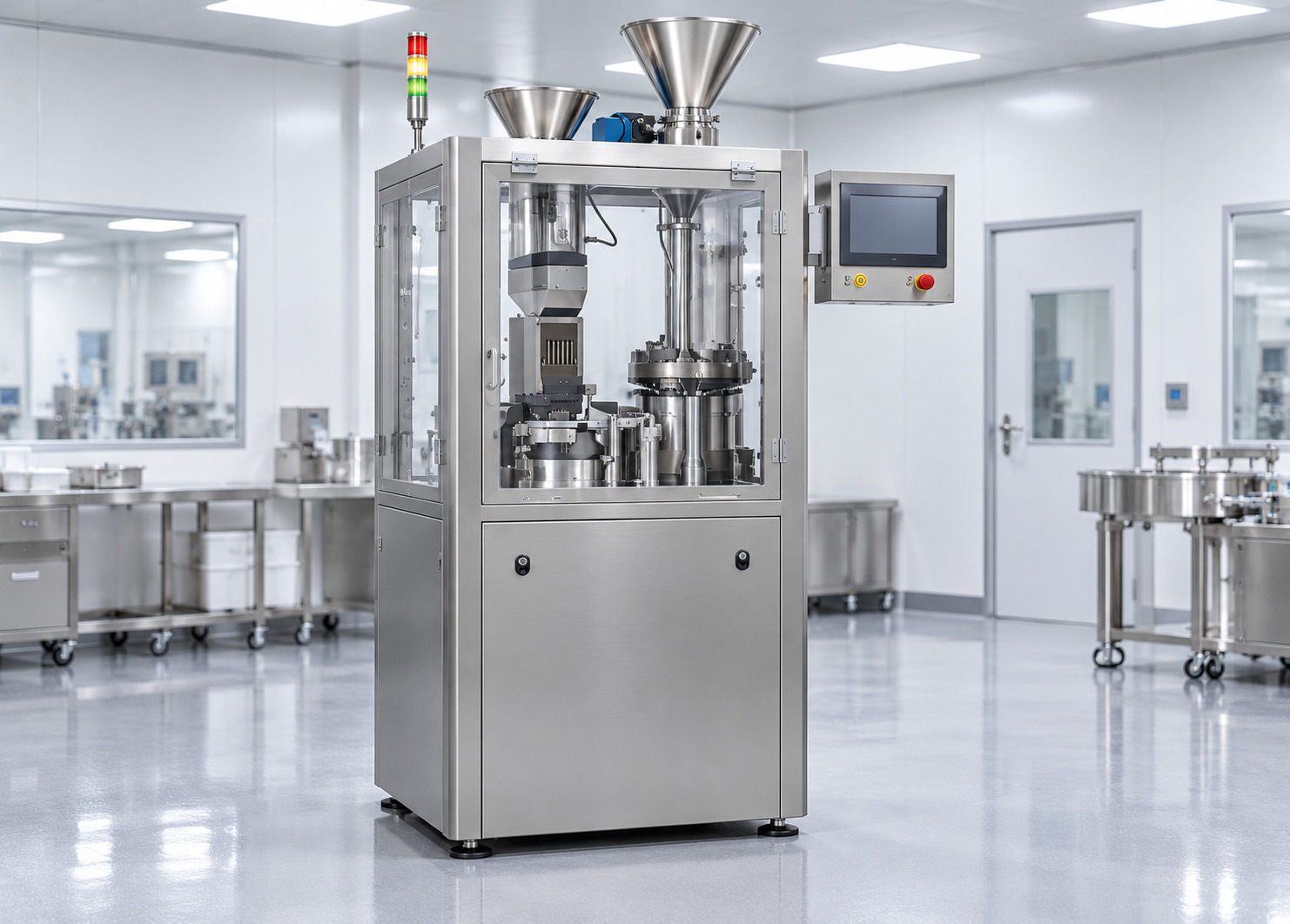
“Automatic capsule filling machine” does not identify its dosing technology. Ask the supplier to name the powder dosing module offered for the exact model and configuration, and to show its operating sequence. Confirm which tube, piston, capsule handling parts, tools, and cleaning components are included in the quoted scope. A catalog image of the machine exterior cannot establish the dosing assembly inside it.
For a Fimachinery project, use the intended powder and shell to define a practical acceptance trial. Agree in advance on target fill weight, acceptable variation, run duration, sampling points, net output, and how rejected capsules will be counted. This makes the comparison useful even if you are evaluating a dosator against a tamping disc design.
Choose From The Filled Capsules, Not The Label
A dosator can be a good powder dosing method when the formulation forms a stable plug and releases it consistently. The right decision comes from observing the complete path: powder bed, plug formation, transfer, ejection, and capsule quality. Once those steps work with the real formulation, machine speed and changeover convenience become meaningful parts of the purchase decision.