
How To Use A Capsule Filling Machine Safely And Consistently
Knowing how to use a capsule filling machine means managing a sequence of shell handling, powder dosing, and product checks. Feeding powder before the empty capsules separate correctly, or increasing speed before fill weight is stable, usually creates more rejects rather than more usable capsules. The practical approach is to confirm the machine and materials, run empty shells, establish the dose, then increase output while watching the capsules themselves.
This guide focuses on two-piece hard capsules filled with powder. It explains the workflow shared by semi-automatic and fully automatic machines, then points out where the operator's role changes. The exact controls, settings, and safety procedures must come from the manual for the machine and configuration in use.
Start With The Capsule, Powder, And Change Parts
Confirm the capsule size and shell material against the batch record. Check that the shells are from the intended lot, have been stored under the supplier's conditions, and show no obvious sticking, brittleness, or deformation. A shell that will not separate reliably is not always a machine adjustment problem.
Match the installed format parts to that capsule size. On an automatic machine, that can include the orientation components, upper and lower capsule segments, closing parts, and ejection parts. A semi-automatic machine uses its own matching loading and tray components. Changing only the segment or tray while leaving another size-dependent part in place can cause misfeeds, damaged shells, or poor locking.
Prepare the powder according to the approved process and check that the feeding path is clean and dry. Powder that bridges in the hopper, separates during handling, or changes with the hopper level will make dosing inconsistent. Keep the material identity and lot visible throughout setup and production.
Check The Machine Before Adding Product
Inspect the capsule path, dosing parts, guards, vacuum system, compressed air where fitted, and dust extraction. Confirm that product-contact parts are clean, correctly installed, and free of leftover powder or shell fragments. The relevant utilities must be available before the machine is started. Do not bypass an interlock to keep production moving.
After a size change or maintenance, use the manufacturer's permitted manual or jog mode to take the mechanism through a full cycle. Watch for interference at capsule separation, dosing, closing, and ejection. An unusual resistance or sound is a reason to stop and investigate, not a cue to add more force or speed.
Run Empty Capsules First
Feed a small number of empty shells and check the route before introducing powder. The capsules should orient correctly, separate into cap and body, reach the intended positions, close, and leave the machine without cracking. On an automatic filler, also verify that unseparated or otherwise defective capsules are rejected as intended. This trial isolates mechanical and shell-handling problems from powder-dosing problems.
If shells remain joined, look at shell condition, format-part alignment, and vacuum performance before changing several settings at once. On the NJP-1200, for example, the documented separation system uses a dry vacuum pump, and its filter needs regular cleaning. The correct vacuum setting belongs to the specific machine and shell combination; excessive vacuum can damage shells while insufficient vacuum can leave them joined.
Establish A Stable Fill Weight
Add powder only after the empty-shell run is satisfactory. First let the feed system form a stable, repeatable powder bed or supply condition. Then adjust the dosing mechanism specified for the machine, such as a dosing disc and tamping pins or a dosator. Change one variable at a time and allow the result to settle before judging it. Otherwise it becomes hard to tell whether a weight change came from the adjustment, a changing powder level, or interrupted feeding.
Take samples and compare fill weight and variation with the approved product limits. Also inspect capsule closure, powder on the outside, empty positions, broken shells, and loose caps. A good average weight does not compensate for large variation or defective capsules. Keep startup and adjustment output separate until the process meets its acceptance criteria.
How The Workflow Differs By Machine Type
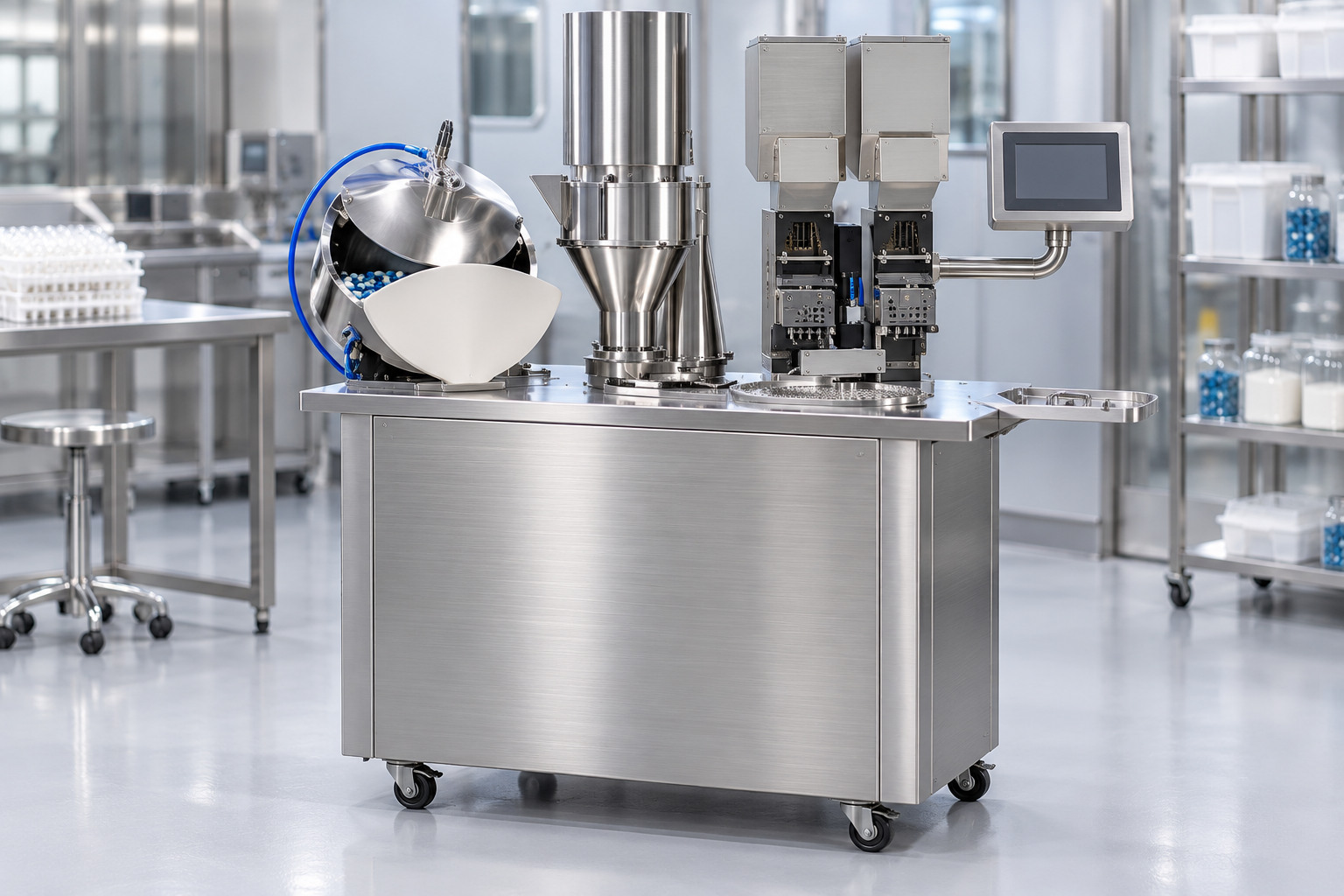
With a semi-automatic filler, the operator remains part of the transfer sequence. Capsules are loaded and separated, the body tray moves to filling, excess powder is managed, and the filled bodies are reunited with their caps for locking and discharge. Tray orientation and batch identification matter every time the tray moves. Fimachinery's FI-SCF series is an example of this machine category. The loading, filling, and closing stations should be checked as one workflow rather than treated as unrelated tasks.
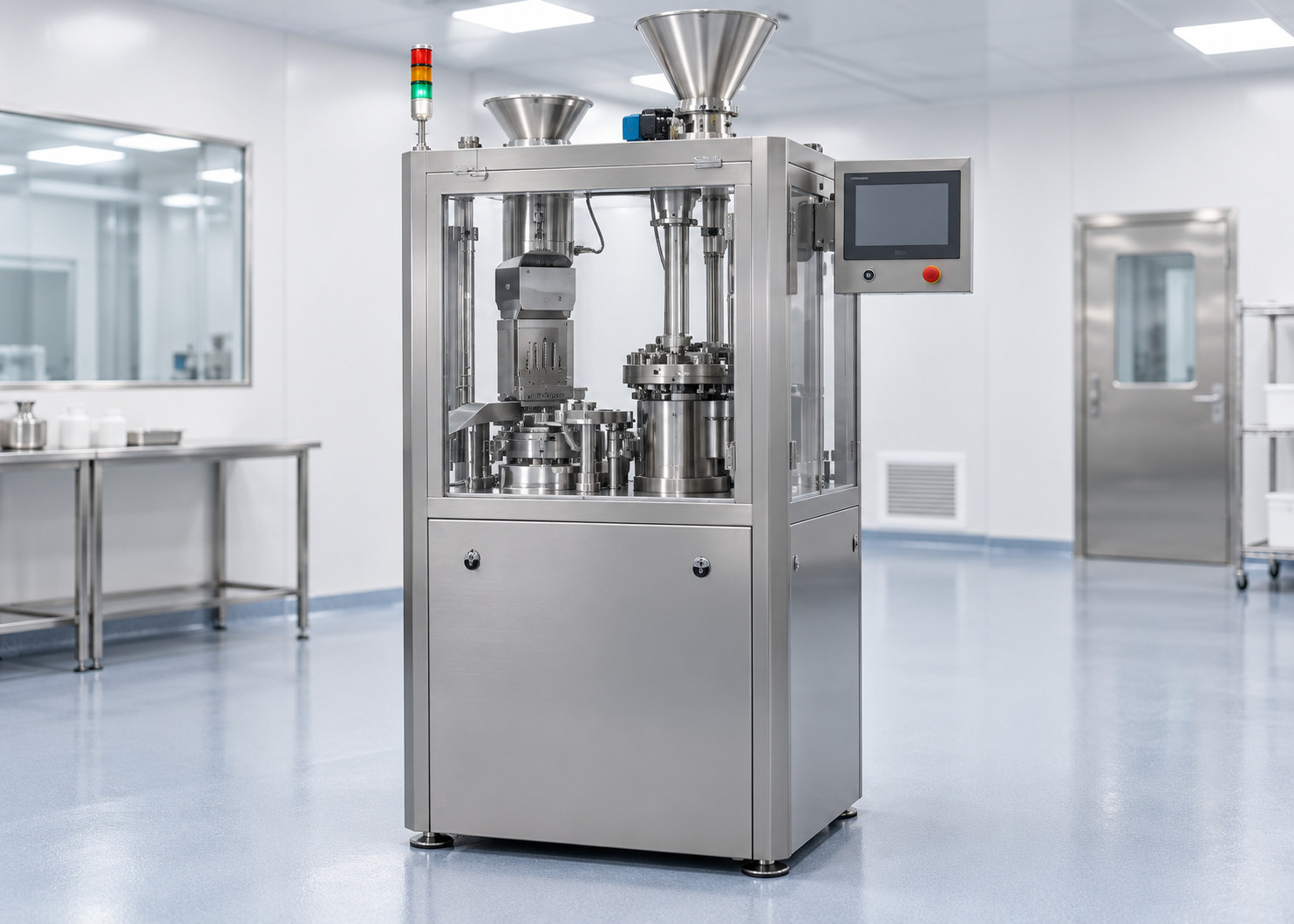
On a fully automatic machine, capsule supply, orientation, separation, filling, rejection, closing, output, and cavity cleaning are coordinated around the machine cycle. Fimachinery's FI-CF powder-filling range and the NJP-1200 are examples of automatic equipment in the client materials. The operator's attention shifts toward stable shell feeding, powder supply, utilities, reject performance, and product checks. Start at a controlled speed after a changeover or new formulation; increase speed only when fill weight, closure, and rejection remain stable.
Monitor The Run, Then Stop Deliberately
During production, watch the trend rather than a single capsule. Empty positions, unseparated shells, fill-weight variation, spilled powder, cracked bodies, loose caps, and rising rejects all point to a process that needs attention. If the hopper level falls, first restore a stable feed condition before compensating by repeatedly changing dosing settings. After a short stop or refill, check whether output has returned to the qualified steady state before mixing it with accepted capsules.
At the end of the run, isolate and identify the remaining material and in-process capsules according to the site procedure. Stop the machine in the specified order, then isolate electrical, pneumatic, vacuum, and other energy sources before opening guards or removing format parts for cleaning. Clean powder-contact surfaces, dosing components, capsule segments or trays, and collection paths using the approved method for the product and equipment. Inspect for retained powder, shell fragments, wear, and damage before reassembly or storage.
The most useful habit is to separate the causes of trouble. Prove the capsule path with empty shells, prove the powder feed at a steady level, then tune the dose and confirm the finished capsule. That sequence makes faults easier to locate and helps the next batch begin with a known machine state.