
Capsule Loader: How To Match It To A Hard Capsule Filler
A filling machine can be ready to run while its supply of empty capsules is anything but steady. Shells arrive in the wrong orientation, a tray does not seat properly, or a change of capsule size turns a routine setup into repeated stops. In that situation, increasing the filling speed will not solve the problem. The empty capsules have to reach the next operation in a consistent position first. That is the job of a capsule loader.
What A Capsule Loader Actually Does
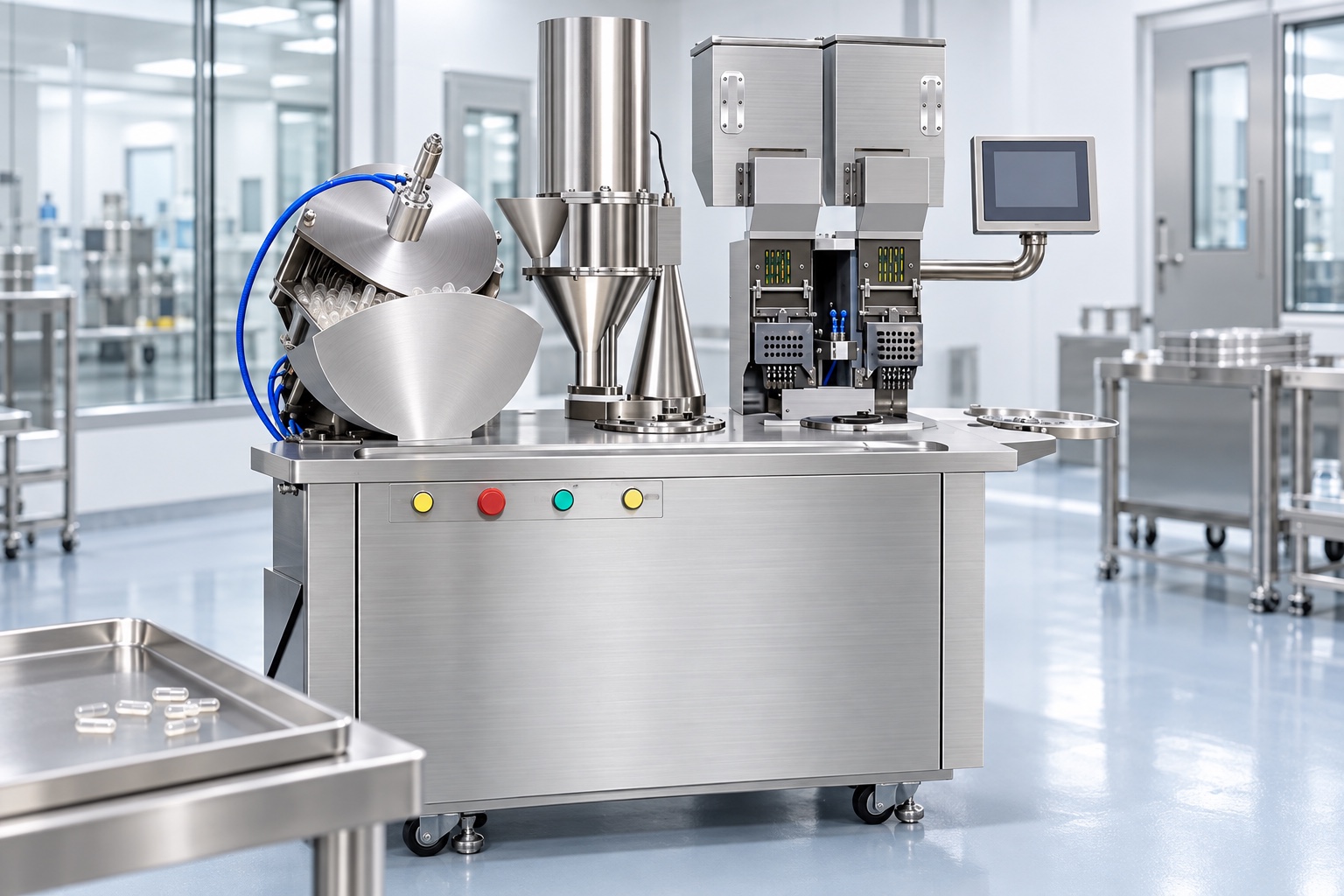
A capsule loader handles preformed, two-piece hard capsules before they are filled. Depending on the setup, it orients empty shells and places them in a loading tray or ring, or feeds them toward an automatic filler’s capsule supply path. The filler then separates the cap from the body, places material in the body, and closes the capsule according to its own configuration. A loader does not make empty shells, measure a powder dose, or replace the filling machine.
This distinction matters when comparing equipment. A product powder vacuum loader moves powder or granules into a material hopper. A capsule polisher handles filled capsules after filling. A capsule counter counts finished units for packaging. All three may sit near a capsule filling machine, but none performs the empty-shell loading task described here.
The phrase can also describe different levels of equipment. A hand-operated loading plate, a semi-automatic tray loader, and an automatic shell feeder may all be called a capsule loader. The useful question is therefore not simply whether a machine has a loader. It is where the empty capsules go after orientation and what format the receiving machine needs.
How Loading Changes With The Filling Setup
In a manual filling kit, the loading or orienting plate prepares empty capsules for the cap and body plates. The plate’s hole pattern and capsule size must match the rest of the kit. Once the shells are positioned, the operator separates the cap and body, fills the bodies, reunites them, and checks the closed capsules. Loading is only one stage of that sequence.
A semi-automatic line may use removable rings or trays. Empty capsules are positioned and separated before an operator moves the relevant parts through filling and locking. The transfer between stations is part of the real cycle time, so a loader that fills a tray quickly may still deliver little benefit if its tray is awkward to remove, identify, or seat. Fimachinery’s FI-SCF series is a semi-automatic powder filling system that performs capsule positioning, separation, filling, and locking. Whether a separate loader is suitable for a particular FI-SCF configuration needs an interface check; the series description alone does not establish a universal add-on.
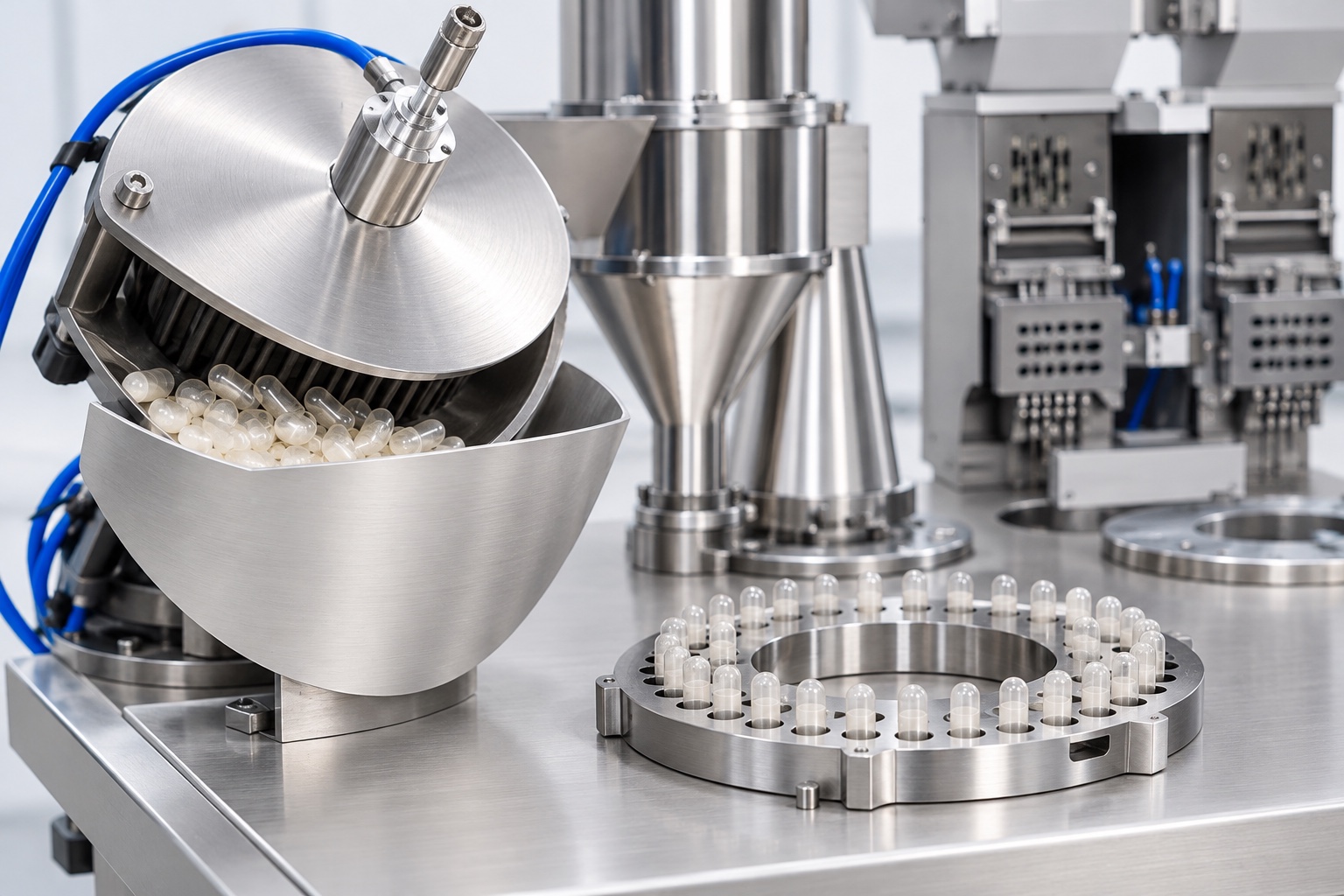
In a fully automatic filler, empty shells enter a more integrated sequence. Fimachinery’s NJP-1200, for example, includes capsule supply and separation before filling, defect rejection, locking, output, and mold-hole cleaning. An external feeder proposed for such a machine must deliver shells at a rate and in an orientation the receiving path can accept. Its stated maximum speed is less useful than the line’s sustained, verified output with real capsules.
The Compatibility Checks That Prevent A Poor Purchase
Start with the capsule itself. Record the capsule number, shell material, supplier specification, and locking style. Gelatin and HPMC shells, for example, can behave differently during handling, and size alone does not describe every feature that affects feeding. Use the actual shell samples planned for production when discussing suitability.
Next, check the physical interface. For a tray or ring loader, confirm the hole pattern, transfer position, seating method, and orientation of the receiving format parts. For an automatic feed path, confirm the inlet and the required presentation of each shell. Ask which parts must change when the capsule number changes. A loading plate, guide, or orienting component that looks similar to another is not automatically interchangeable across models or machine revisions.
Then compare capacity on the same basis. The loader has to keep up with the filler’s sustained net production rate, with room for starts, rejects, and short interruptions. A catalog figure without its unit, capsule size, and test conditions cannot tell you whether the complete line will stay supplied. For semi-automatic equipment, include tray loading, transfer, refilling, inspection, and brief stops in a full-shift trial rather than timing only the fastest part of one cycle.
Finally, look at access for cleaning and format changes. Empty shells may be sensitive to storage and room conditions; brittle, sticking, deformed, or highly static shells can cause trouble before they reach the filler. A design that is easy to open, inspect, clean, and reassemble makes it easier to separate a shell problem from a loader adjustment or a worn format part.
Run A Short Acceptance Trial With The Intended Shells
Before deciding that a loader fits, run it with the proposed capsule size and shell batch at a controlled speed. Watch for wrong orientation, damaged shells, missed positions, jams, and interruptions at the handoff to the filler. After the receiving machine separates the shells, check for failed cap-body separation as well; that symptom can involve shell condition, alignment, or vacuum rather than the loader alone.
Repeat the check after a stop and restart, and after a format change if more than one capsule number will be used. A smooth demonstration with a single tray does not describe a whole shift. Record the actual rate, rejected shells, operator interventions, and cleaning or changeover time so the comparison reflects production work rather than a showroom cycle.
To obtain a useful compatibility answer, send the supplier the filler make, model, and serial number; the capsule number and shell specification; the tray or inlet details; the target net output; and the required changeover range. If the proposed loader is to work with a Fimachinery filler, ask for the exact receiving format and interface to be confirmed against that machine’s configuration. That simple check is more valuable than buying a loader by its headline speed alone.