
Semi-Automatic Capsule Filling Machine: A Practical Guide
A capsule filling line can feel oversized for a modest production plan, yet a manual process may leave too much work to the operator. A semi-automatic capsule filling machine sits between those approaches. It assists with key stages of handling hard capsules while leaving room for operator involvement and batch-by-batch control. The right question is less about the word “semi-automatic” and more about whether a particular machine matches your capsule, fill material, output target, and site conditions.
Fimachinery’s FI-SCF series is described as a semi-automatic powder capsule filling machine for small and medium pharmaceutical operations and hospital preparation labs. Its published material range includes powder, granules, and pellets. That makes it a useful example for working through the practical checks below, but a trial with your own formulation remains important before you commit to a production plan.
What Does The Machine Handle?
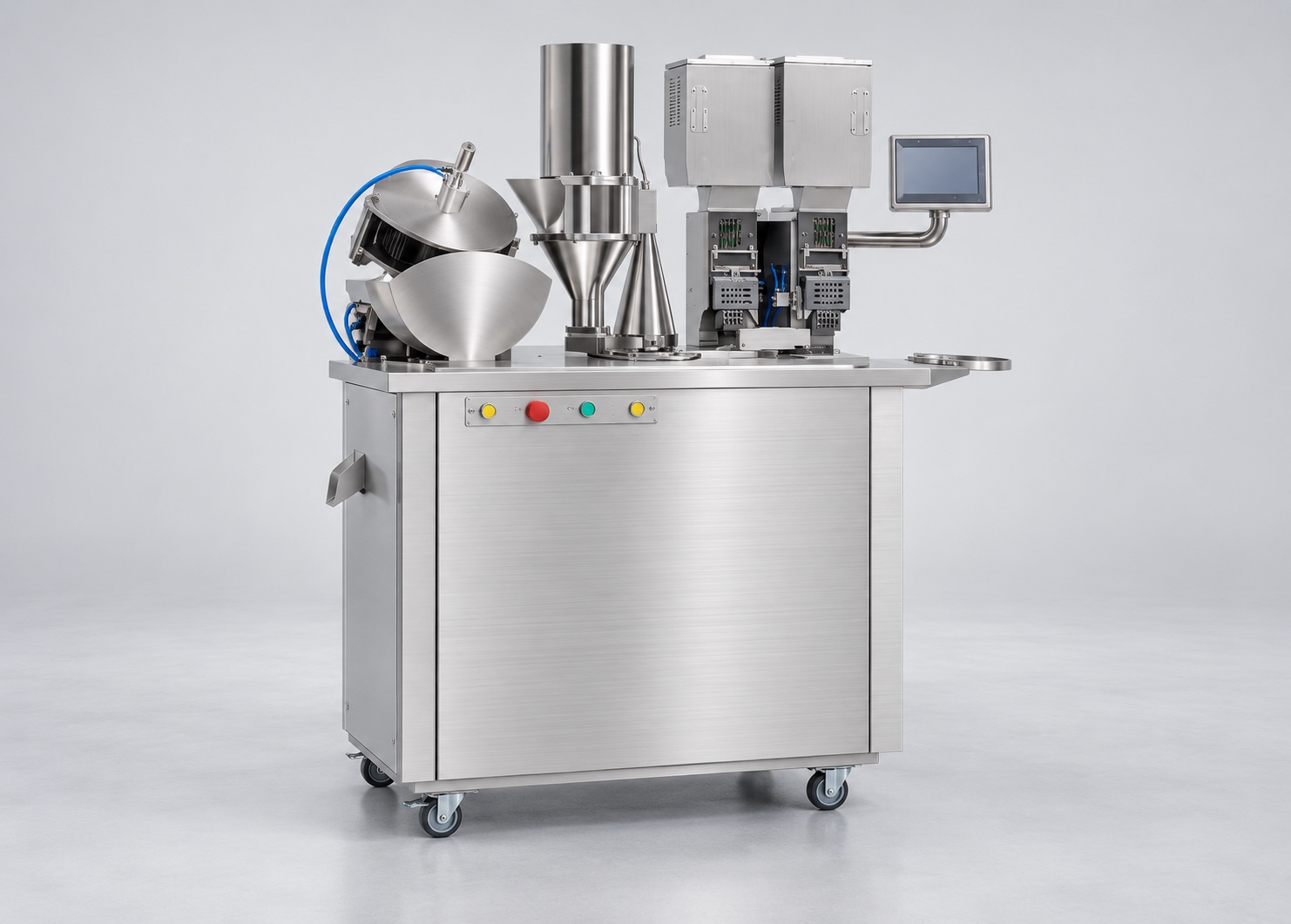
The FI-SCF product description lists capsule positioning, separation, filling, and locking among its automated actions. It also specifies programmable control, a touch panel, variable speed adjustment, and an electronic counter. These functions reduce the need to perform every handling action by hand. They do not remove the need to prepare material, set up the correct capsule format, observe the run, and assess the filled capsules.
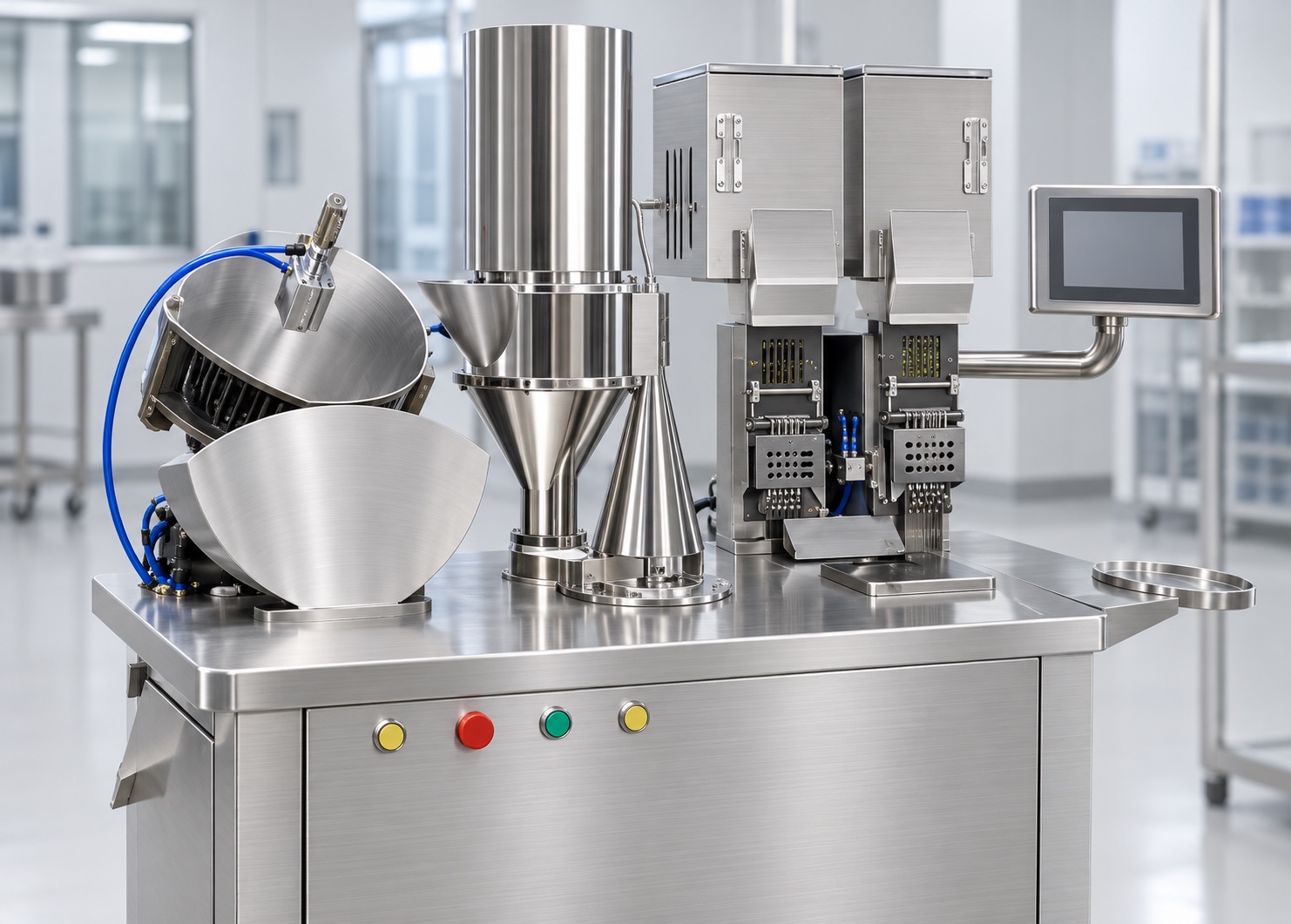
Think of the process as a sequence. Empty capsules must be presented in a way the machine can orient and separate. Fill material then has to reach the dosing area consistently. Once filled, the capsule halves are brought together and locked. If a batch has poor fill consistency, it is worth looking at the material and setup as well as the machine setting; the equipment cannot make an unsuitable powder behave like a free-flowing one simply by running faster.
Start With The Capsule And The Formulation
The FI-SCF specification lists capsule sizes 00 through 5. Confirm the exact size you intend to use and ask which matching parts are supplied for that size. A machine that covers a size range on paper still needs the correct setup for the capsules in the actual batch. If your product uses a special capsule style, confirm compatibility rather than assuming that every capsule within a familiar size label will run identically.
The published fill forms are powder, granules, and pellets. Those broad labels are a starting point, not a complete formulation assessment. Materials within one category can behave differently when fed and filled. For a meaningful trial, bring the actual capsule shells and a representative amount of the finished blend. Watch whether capsules separate cleanly, whether material reaches the fill area steadily, and whether the closed capsules look sound after locking. Record the settings used so a promising trial can be repeated.
How To Interpret The Output Figure
FI-SCF is listed with a maximum output of 15,000 capsules per hour. Treat that as a model specification, not a promise that every formulation and shift will produce 15,000 acceptable capsules. Real output depends on capsule handling, fill behavior, the selected speed, operator work around the machine, and any checks or adjustments needed during a run.
Work backward from the batch instead of choosing equipment by the largest number in a brochure. Estimate how many acceptable capsules you need in a day, how often you change products or capsule sizes, and how much time is available for preparation and checks. Then use a trial to measure a stable running rate with your own material. That comparison is more useful than comparing headline capacities alone.
Check The Installation Before The Trial
The FI-SCF catalog specifies an AC 380 V, 50 Hz power supply. Verify that the intended site can provide the required supply and confirm the final electrical specification for the machine being ordered. The listed machine weight is 380 kg, so plan its delivery route and installation position as part of the purchase discussion. Allow enough access for the operator to load, observe, and attend to the machine comfortably.
The product image shows a cabinet-style unit with several work areas and a separate touch panel. Use that layout as a prompt for practical questions: where will the operator stand, where will materials be staged, and how will filled capsules move to the next check or packaging step? A sensible layout prevents a capable machine from becoming awkward to use in a small room.
Questions To Settle With A Sample Run
Ask the supplier to demonstrate the exact capsule size and material you plan to process. Note the setup steps, the settings chosen, the observed running rate, and the condition of the filled capsules. Ask what the operator must do between batches and when changing capsule sizes. If cleaning access or format changes are important to your schedule, review those tasks directly on the machine rather than relying on a short demonstration of steady running.
A semi-automatic capsule filling machine is a good fit when its assisted handling stages match your workflow and its proven rate meets your real batch target. For the FI-SCF, the clearest starting checks are capsule sizes 00–5, powder, granule, or pellet filling, the 380 V/50 Hz site requirement, and a representative trial. Keep the decision grounded in what your own capsules and formulation do on the equipment.