
Herbal Capsule Machine: How To Choose For Plant Powder
A botanical powder can look ready for encapsulation and still behave differently once a filling machine starts cycling. Fine material may cling to contact surfaces; a coarser blend may feed unevenly. The useful question is therefore not simply whether a herbal capsule machine accepts powder. It is whether the machine can fill your prepared material into your chosen shell repeatedly, close the capsules cleanly, and remain practical to clean between batches.
What The Machine Actually Fills
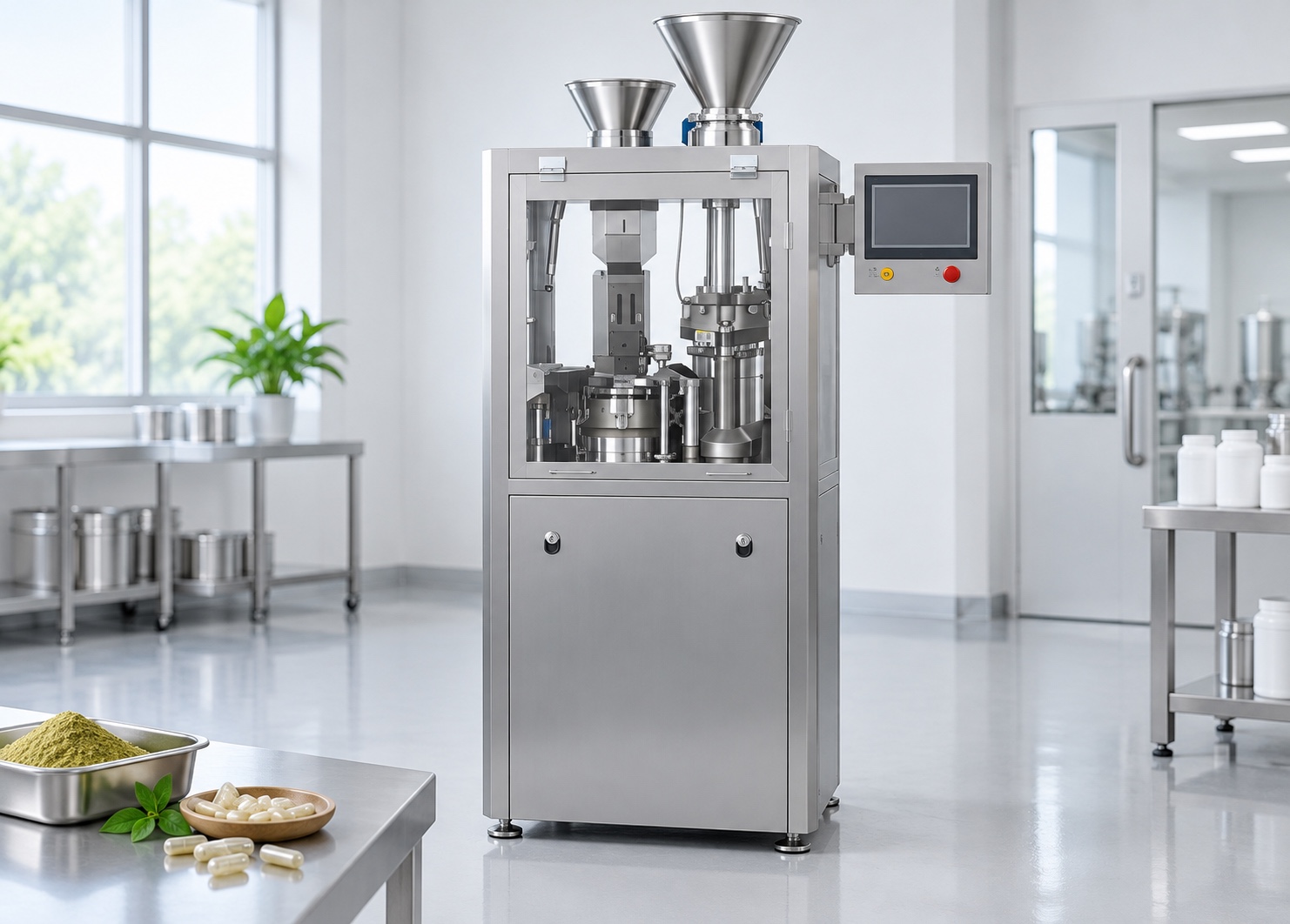
In this context, a herbal capsule machine fills empty, two-piece hard capsules with a prepared botanical material. Fimachinery’s powder capsule filling range lists powder, granules, and pellets as supported filling forms. That description refers to processed material ready for dosing. Whole leaves, stems, or other unprepared plant pieces should not be assumed to work in a powder filling system.
An automatic capsule filler does more than push material into a shell. Its cycle feeds empty capsules, separates the cap from the body, doses the fill, rejects faulty capsules, locks the filled halves together, discharges the finished capsules, and cleans the tooling area for the next cycle. Each stage matters. A good dose is of little use if capsules do not separate reliably or close properly.
Start With The Powder, Not A Machine Rating
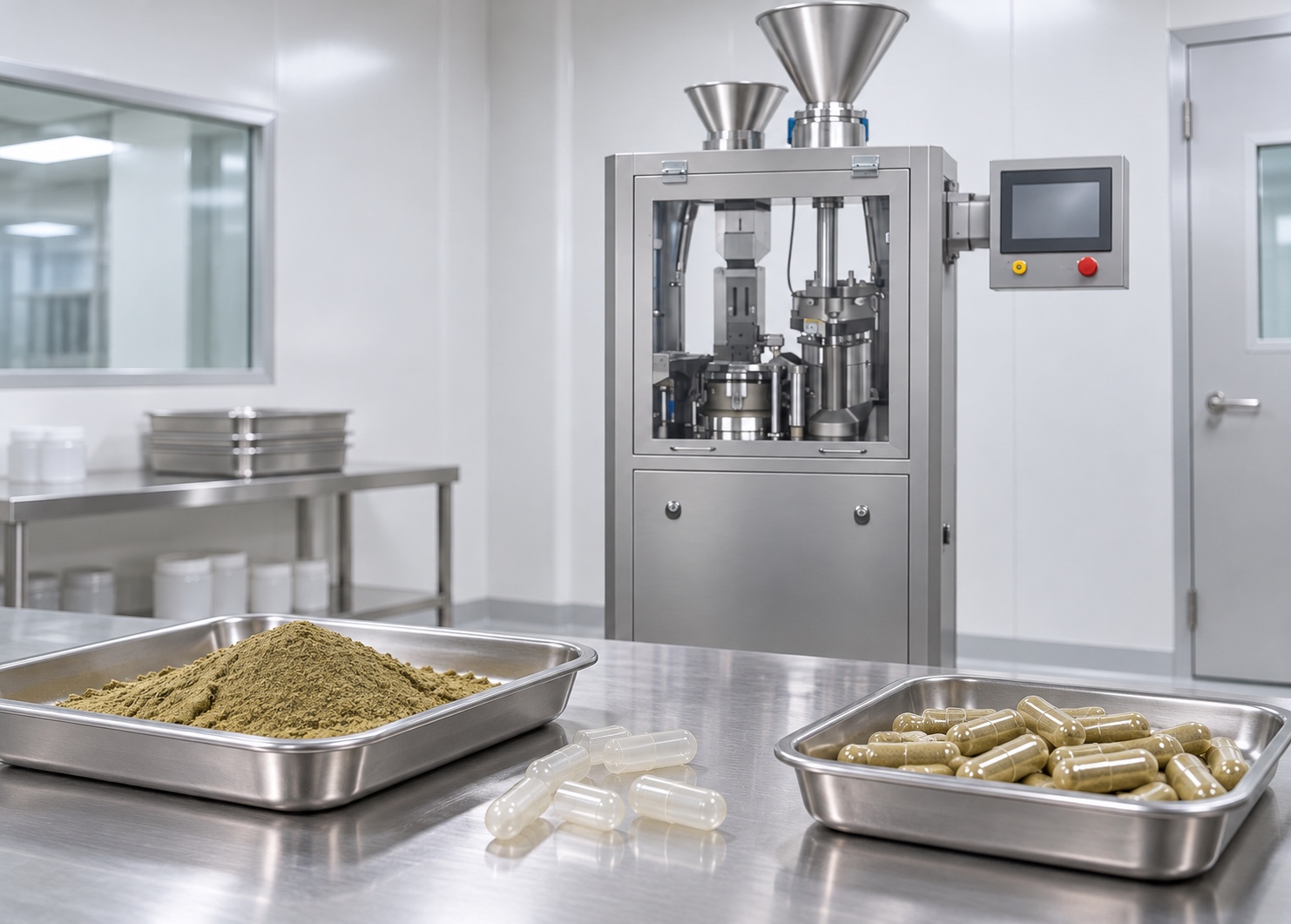
Prepare a representative sample of the actual formulation before comparing equipment. Include the capsule shell and size you intend to use, the desired fill target, and any blend or granulation step that will be part of normal production. A demonstration with an unrelated free-flowing powder can show that a machine runs, but it cannot establish how your herbal blend will feed.
During a short trial, watch whether the material reaches the dosing area consistently. Inspect several finished capsules for visibly incomplete fills, material on the outside of the shell, poor closure, or damage. Weigh a suitable sample across the run and compare the results with your own product specification. If the result drifts, investigate the material feed and dosing setup before assuming a higher machine speed will solve it. Fimachinery’s NJP-1200 operating manual describes a powder-level sensor and adjustable filling components, which is a reminder that stable feeding and correct setup are part of dose control.
Choose A Level Of Automation That Fits The Job
For smaller operations or development work, a semi-automatic machine may provide a sensible starting point. Fimachinery’s FI-SCF series is described for medium and small pharmaceutical facilities and preparation labs. It uses a programmable control system and touch panel, while still requiring more operator involvement than a fully automatic line. Its catalog lists powder, granules, and pellets as filling forms.
The fully automatic range is intended to link capsule handling and filling into one cycle. The FI-200CF is presented in the catalog as a compact option for small-batch trial work. The FI-400CF and larger CF models serve different production scales. Treat the catalog’s maximum output as a model comparison figure, not a guaranteed rate for a particular botanical formula. Actual usable output depends on the material, shell, setup, and acceptable finished-capsule quality.
Check Capsule Size And Change Parts Early
Confirm the capsule size before ordering a machine or arranging a trial. Fimachinery’s catalog lists sizes 00 through 5 for the FI-SCF and several automatic powder-filling models. A size range on a catalog page does not mean every size is ready to run with the same installed tooling.
The NJP-1200 manual identifies multiple parts involved in a capsule-size change, including upper and lower modules, transfer forks, a correction block, filling rods, and a dose plate. The exact changeover package depends on the model and configuration. Ask the supplier to specify which parts are included for your selected sizes, how changeover is performed, and how the machine is checked before production resumes.
Make Cleaning Part Of The Comparison
Botanical powders can leave residue around contact parts and the capsule path. The NJP-1200 manual calls for cleaning parts that contact powder, especially when changing materials or after extended use, and for regular attention to the vacuum system filter. In a trial, look at how easily operators can reach the filling area, remove residual powder, and inspect the capsule modules. Confirm the cleaning method for the exact machine and product before committing to a process.
A Practical Buying Decision
Ask for a trial using your prepared blend, intended capsule shell, and target fill. Record the settings, sample the capsules throughout the run, and discuss any feed, dust, closure, or changeover issues with the supplier. Then compare the FI-SCF or a suitable automatic model against the output your operation actually needs, the available operators, and the time required for cleaning and size changes.
Fimachinery can provide machine options for these different production stages. The strongest choice is the one that produces acceptable capsules from your own botanical material under a repeatable setup—not simply the model with the largest number on a specification sheet.