
How Capsule Filling Machine Works: A Practical Cycle Guide
An automatic hard capsule filler is easier to understand when you follow one empty shell through the machine. The shell must enter in the correct orientation, open without damage, receive a measured fill, close securely, and leave the tooling. Those actions happen in a repeating cycle, but a good result depends on each station doing its part. Here is how capsule filling machine works in practice, using Fimachinery's automatic powder capsule filling equipment as a reference.
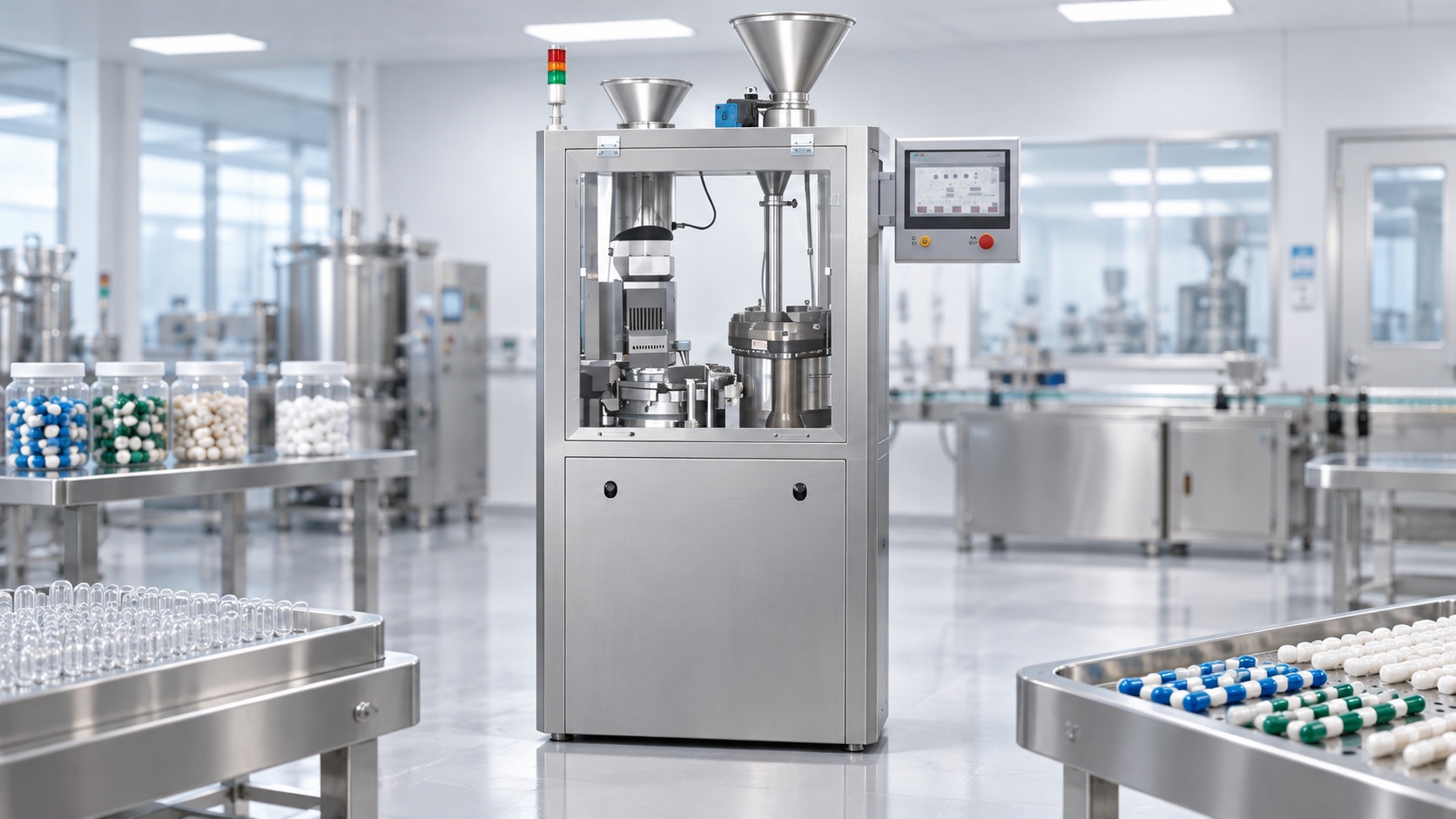
The Cycle Starts With The Empty Shell
An empty hard capsule has a cap and a body. Capsules move from a hopper into a feeder, which presents them to the machine's carrier in a consistent position. If the feeder misses a shell or lets one enter incorrectly, the dosing station cannot fix the problem later. An operator seeing empty carrier holes should therefore inspect the capsule supply and feeding path before adjusting the powder system.
The cap and body are then separated. In the NJP-1200C operating sequence, vacuum helps pull the two pieces apart while the tooling holds them in their respective positions. The open body travels toward filling; the cap waits to be joined again. Vacuum that is too low can leave shells unopened. Excessive vacuum, obstructed air passages, worn tooling, or poor alignment can also interfere with separation. The useful check is simple: confirm that a sample of shells enters, opens, and remains undamaged before evaluating fill weight.
The Fill Is Measured Before It Enters The Body
For powder, the machine does more than let material fall into a capsule. A dosing disk presents cavities beneath the powder chamber. Tamping pins compact powder in stages to form a plug, which is then transferred into the open body. The NJP-1200C manual describes five compression actions at its powder filling station. This is metering powder for a capsule, not tablet compression.
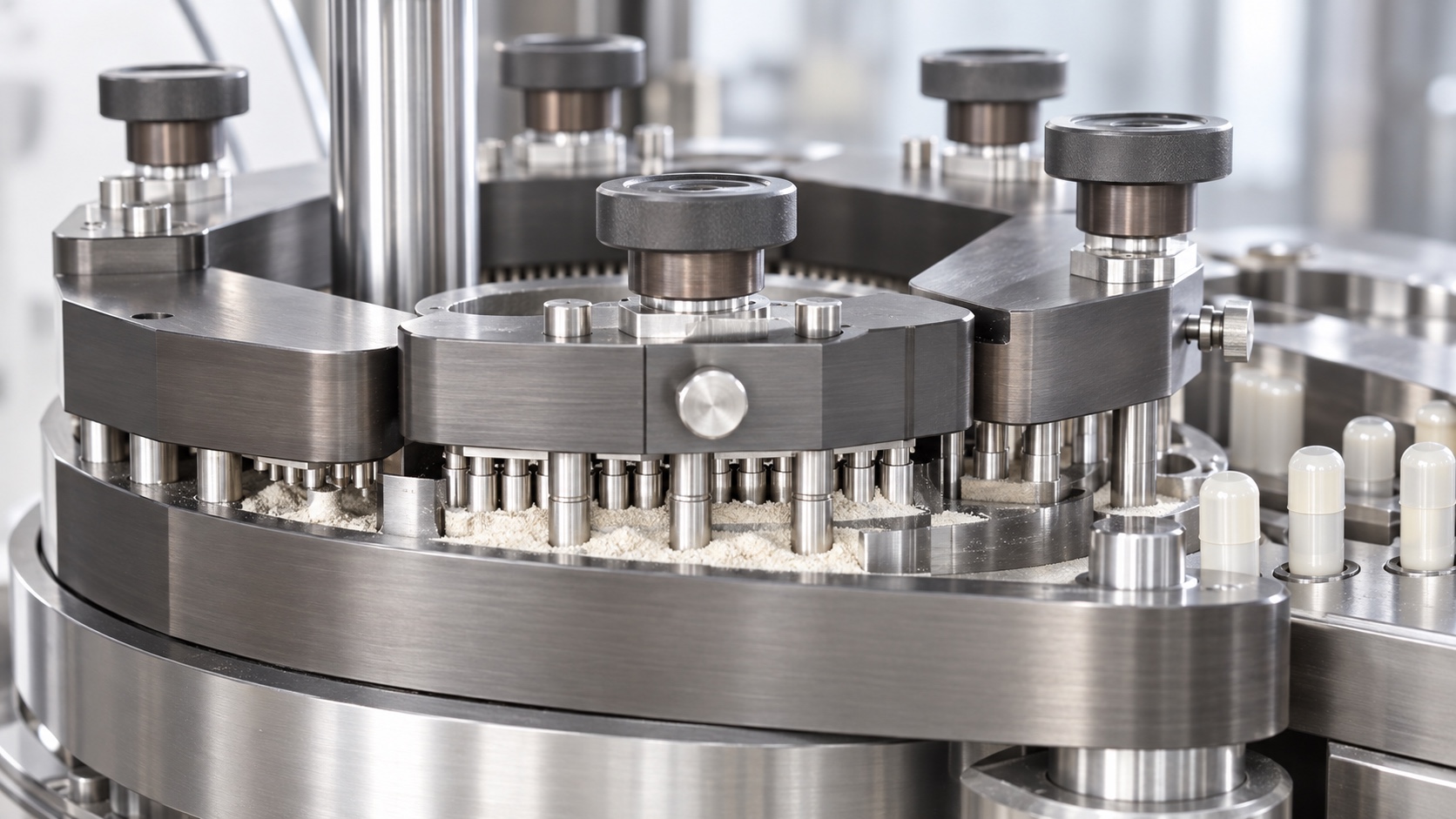
The measured dose can still vary when the material changes. Powder flow, bulk density, the level of material in the chamber, dosing disk setup, and pin adjustment all affect what reaches the capsule. If fill weights begin to drift, first establish whether the capsule bodies are present and correctly opened; then examine material supply and the metering setup. Increasing machine speed does not correct an unstable dose.
Fimachinery's FI-1200CF catalog lists powder, granules, and pellets among its filling forms. That list should be read with the installed configuration in mind. The NJP-1200C manual, for example, describes a pellet unit at a reserved station. A standard powder dosing setup should not be assumed to handle another material form without the appropriate feeding and metering parts.
Faulty Capsules Leave The Accepted Path
A shell that failed to separate cannot be treated as a properly filled unit. The NJP-1200C station sequence includes a rejection point for defective capsules before the closing stage. This is distinct from the normal discharge of finished capsules. During a trial, it is worth deliberately observing what happens to an unopened or visibly damaged shell: the reject mechanism must remove it without pulling good open capsules away with it.
The machine then brings the cap and body back into line. A locking rod pushes them together, and the closed capsule moves to discharge. Poor alignment or an incorrect locking position can leave a loose cap, an overly long closed capsule, or a damaged shell. When those defects appear, check the closing tooling and capsule size setup rather than treating the fault as a powder problem.
After discharge, the empty tooling passes a cleaning point before it receives another shell. The FI-CF product description includes die-hole cleaning in the automatic cycle. On a running line, this limits residue in the carrier holes; it does not replace cleaning and inspection during product changeover.
What The Operator Should Verify During A Trial
Watch several consecutive cycles with the actual shell and material planned for production. At the feeder, look for missed positions and misoriented capsules. At separation, check that caps and bodies open cleanly. At filling, weigh a sensible sample of finished capsules according to your own quality procedure and look for variation. At rejection, verify that faulty shells are removed from the good product path. Finally, inspect closure, shell damage, discharge, and any powder left around the tooling.
This order helps locate a cause without changing several settings at once. A missed fill may begin with an absent or unopened body. A variable dose may come from the powder or dosing system. A loose capsule points toward locking height or alignment. Residue building up in carrier holes calls for a look at the cleaning station and the material's behavior.
Does Every Capsule Filler Work The Same Way?
The broad path of opening, filling, and closing applies to hard capsule fillers, but the way a machine moves material and capsules differs. A semi-automatic machine leaves more transfer work to an operator, while a fully automatic machine carries capsules through linked stations. Optional pellet equipment and dedicated liquid filling machines use different dosing arrangements. For that reason, the clearest explanation of how capsule filling machine works is always tied to the model, installed tooling, capsule size, and material being run.
For a new product, ask to see a trial with your shells and formulation. The complete cycle matters more than a maximum output figure: capsules should feed consistently, open cleanly, receive a repeatable fill, reject faulty shells, lock without damage, and leave clean tooling ready for the next pass.