
How Do You Fill Pill Capsules? Powder Dosing And Checks
To fill a two-piece hard capsule with powder, separate the cap from the longer body, fill the body to the target weight, then put the cap back on and lock the two pieces together. A manual filling plate directs powder straight into the capsule bodies. An automatic machine with a dosing disc or dosator meters each portion outside the shell before transferring it into the body. In either case, net fill weight is the weight of the powder alone. In-Cap filling study · USP General Chapter <905>
How Do You Fill Capsules With A Manual Plate?
Separate the cap and body. Use a filling plate that matches the capsule size. Hold the bodies upright with their openings facing up and set the cap plate aside.
Spread the powder. Draw a scraper across the plate to distribute the prepared blend into the open bodies. If the procedure calls for tamping, use the tamper to settle the powder before adding more. The same capsule body can hold more powder by weight when the powder packs more tightly. Saskatchewan pharmacy compounding guidance · In-Cap filling study
Close and inspect. Align the cap plate over the filled bodies and press the two halves together. Check for cracked shells, loose caps, and incomplete closure. Weigh samples to check how much powder went in. Saskatchewan pharmacy compounding guidance
The capsule size tells you the shell dimensions and available volume. Two powders can reach the same level in the shell and weigh different amounts. During a trial, use the actual blend and the intended tamping method to check both fill weight and closure. If powder sits above the rim at the target weight, review the shell capacity and how the powder packs before trying to close the capsule. Hard capsule filling study
Where Does An Automatic Filler Meter The Powder?
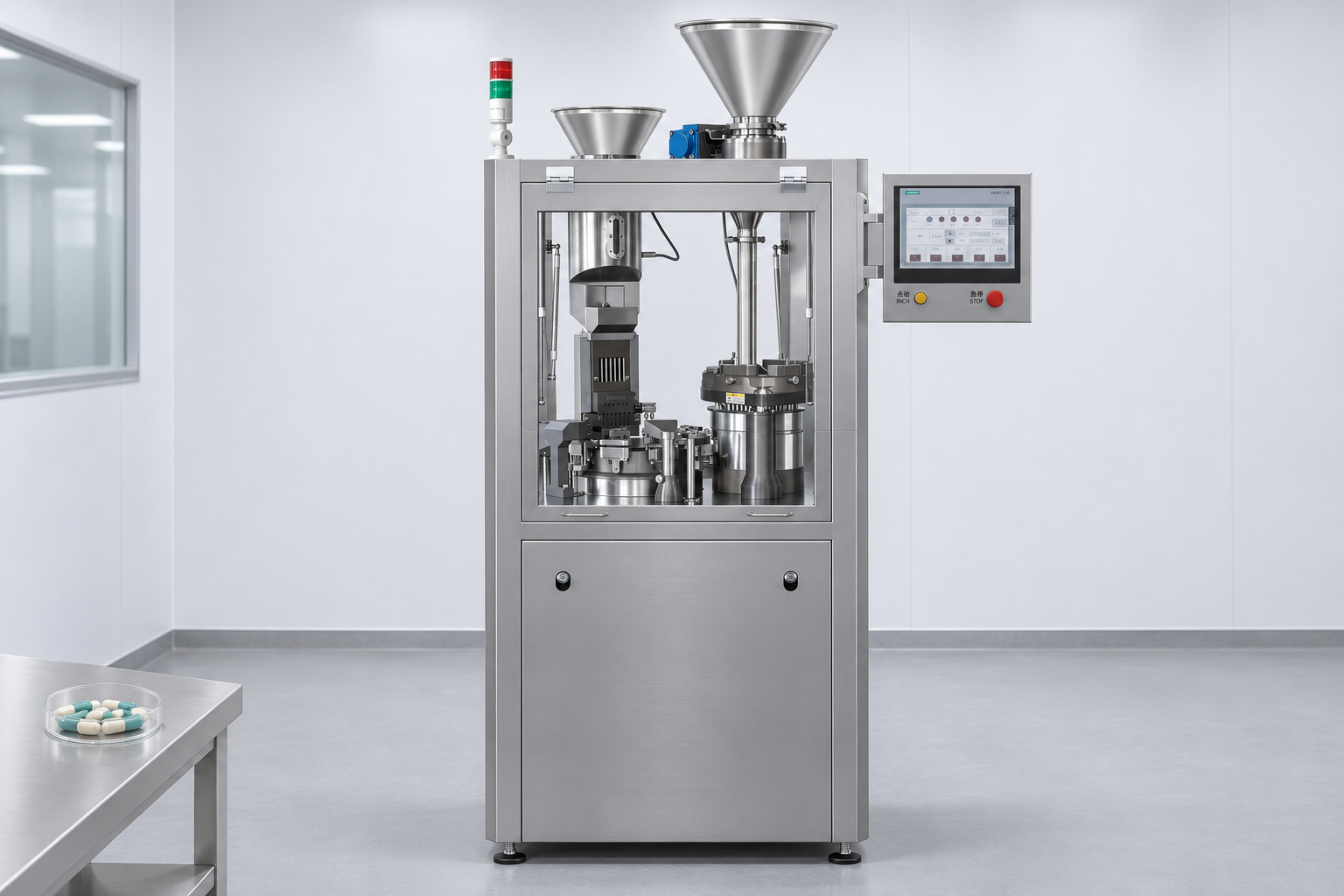
Dosing disc. Powder flows into holes in a rotating disc. Tamping pins compact it at successive stations, where more powder can enter the holes. An ejection pin then pushes each formed plug into a capsule body. In a study on the In-Cap machine, tamping pin settings affected both mean fill weight and variation between capsules. The powder bed height also affected the fill weight of the poorly flowing materials tested. In-Cap filling study
Dosator. A hollow tube with an internal piston dips into the powder bed to pick up a portion. The tube holds the powder as it moves over the capsule body, then the piston ejects the portion into the shell. Two powders can pack differently in the same metering chamber and produce different fill weights. When moving from a manual plate to an automatic filler, or switching between a dosing disc and a dosator, trial the actual blend and check mean fill weight, individual variation, and closure. Graz University of Technology dosator study
How Do You Check Net Fill Weight?
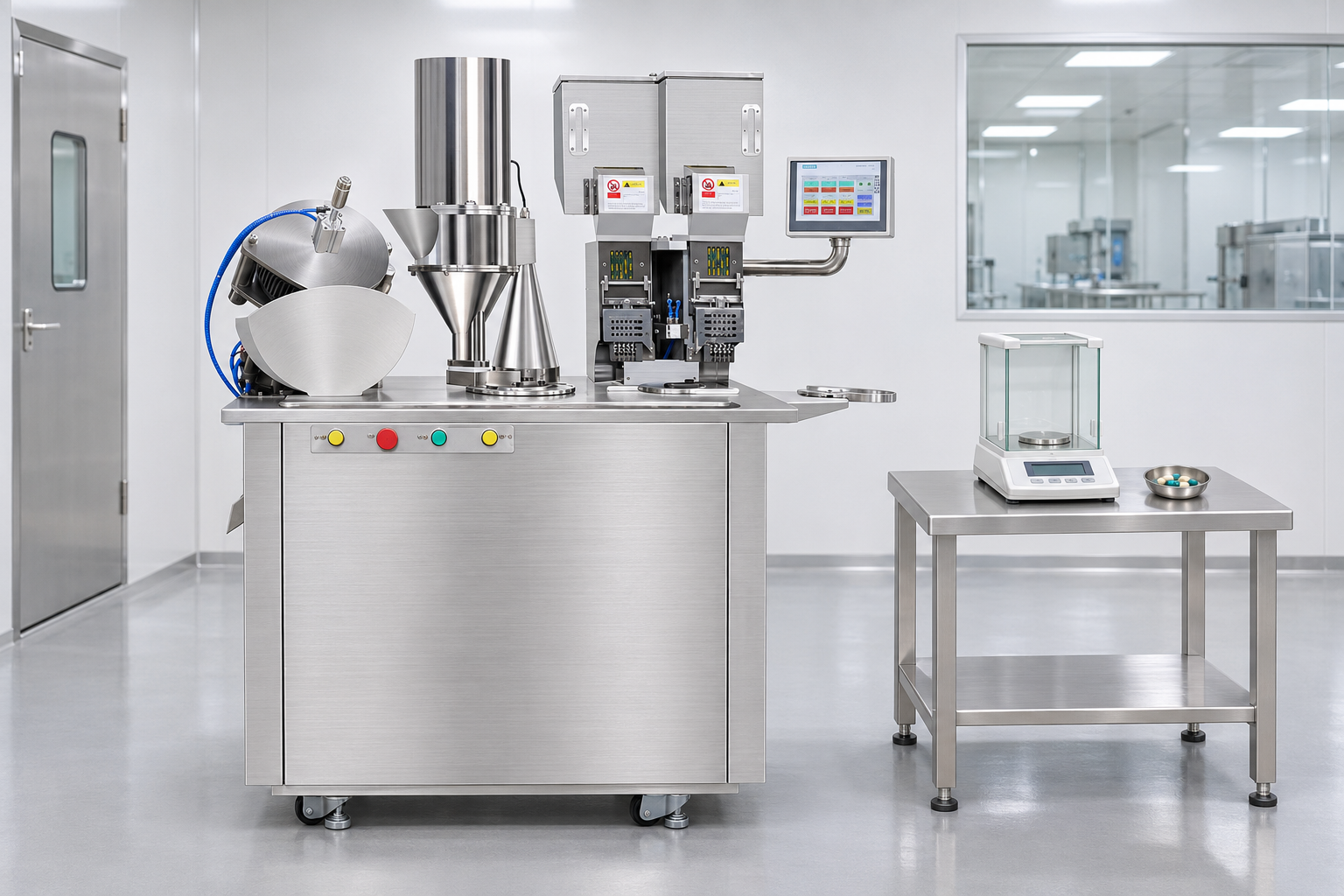
Weigh the intact capsule, empty it, and weigh the same shell again. Subtract the empty shell weight from the intact weight. Pairing both readings for each capsule accounts for differences in shell weight. USP General Chapter <905>
| Trial Sample | Intact Capsule | Empty Shell | Net Fill Weight |
|---|---|---|---|
| Capsule 1 | 380 mg | 100 mg | 280 mg |
| Capsule 2 | 420 mg | 100 mg | 320 mg |
| Mean | 400 mg | 100 mg | 300 mg |
In this example, the target is 300 mg. The mean meets the target, while each capsule is 20 mg away from it in opposite directions. Record the mean and the individual values, then compare them with the product’s specified limits. If the results are consistently low, check the dosing setting and powder supply. If the mean is on target but individual weights vary widely, check the consistency of spreading, tamping, or powder feed, depending on the filling method. In-Cap filling study
When Do You Need A Content Uniformity Test?
Net fill weight measures the total powder in the shell. If the active ingredient is unevenly distributed in the blend, two capsules with the same fill weight can contain different amounts of that ingredient.
For hard capsule drug products covered by USP <905>, an active ingredient meets the general eligibility thresholds for the Weight Variation procedure if each capsule contains at least 25 mg of the ingredient and that ingredient makes up at least 25% of the weight of the capsule contents. The procedure uses individual net fill weights and the assay result to estimate individual contents. If either threshold is unmet, the chapter generally calls for Content Uniformity testing, which measures the active ingredient in individual capsules. USP General Chapter <905>