
How To Fill Pill Capsules With Liquid On An Automatic Line
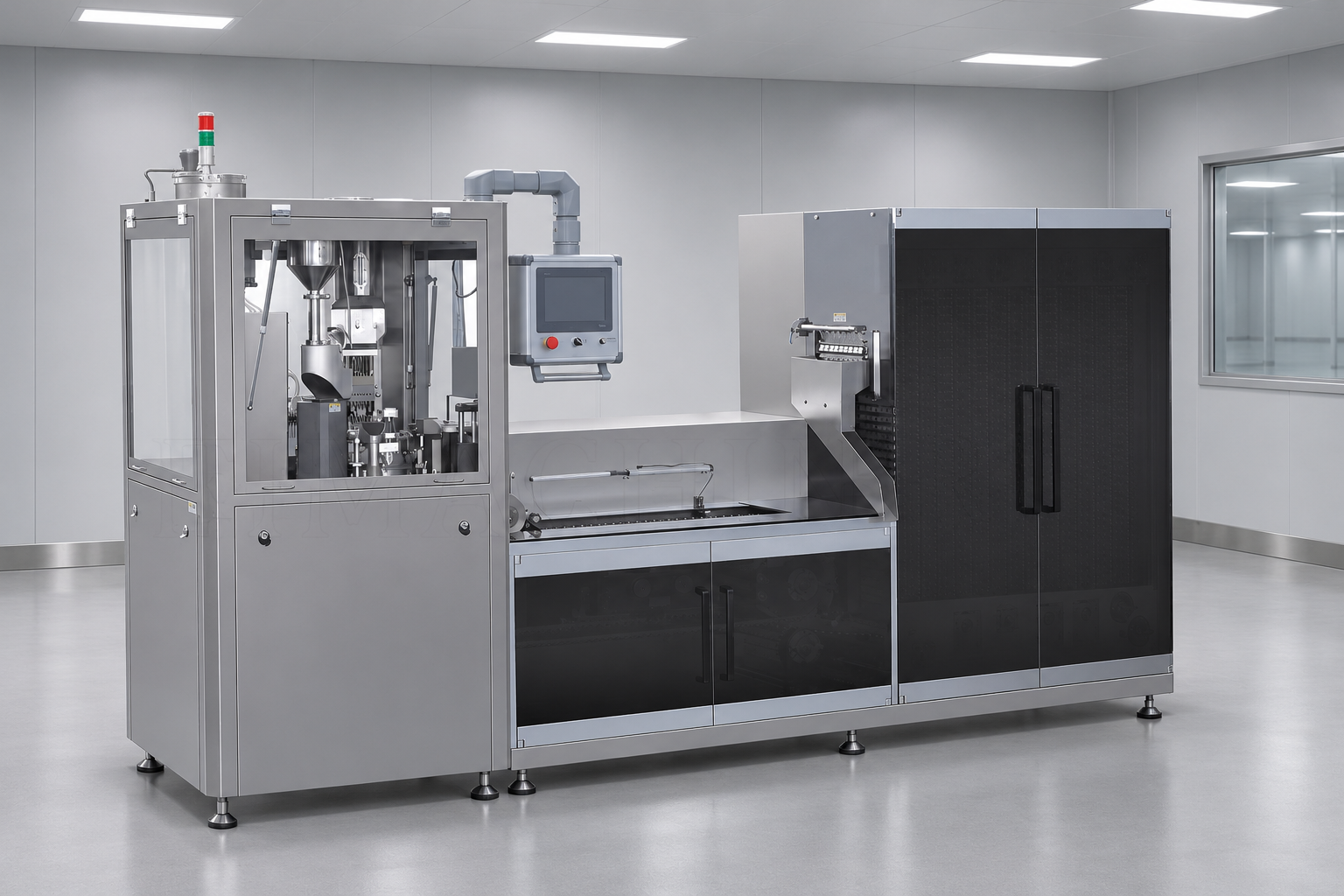
An automatic line separates the cap and body of each two-piece hard capsule, meters liquid into the body, and locks the two halves together. Fimachinery’s FI-300CF/L handles automatic liquid filling. The FI-300CF/LS links filling with a station that seals the cap–body joint. In a production trial, measure the net fill per capsule and check where any liquid first appears on the outside. FI-300CF/L model page · FI-300CF/LS model page
How Does The Line Meter Liquid Into Each Capsule?
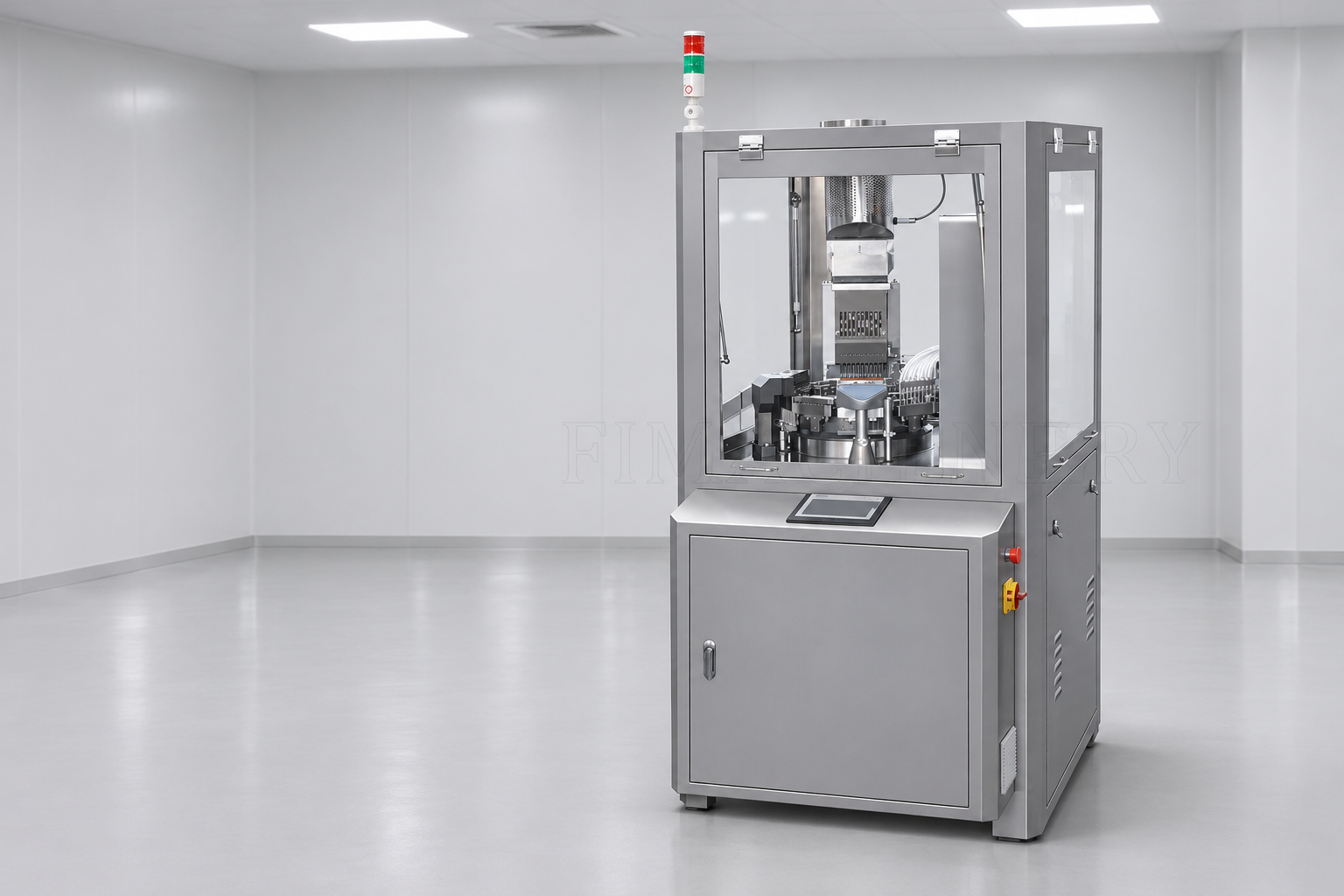
The machine feeds and orients empty capsules, separates the caps, and presents the open bodies to the dosing station. The FI-300CF/L uses a ceramic pump for liquid delivery and servo control for dosing. Fiber-optic detection lets the machine skip dosing when a capsule is missing, and the unit has an automatic rejection function. Sample capsules from the run to verify the actual dose. FI-300CF/L filling system
When the machine is set by volume and the trial is assessed by weight, use the liquid’s density at the filling temperature. For example, 0.40 mL of a liquid with a density of 0.90 g/mL has a target net fill of 360 mg. Use the agreed weighing method to exclude the shell weight and record the net fill of each sampled capsule.
If the average is off target, check the dosing setting. If the average is on target but individual weights vary widely, observe the nozzle for dripping and check for splashing at the capsule opening. With suspensions, also check for settling during the run. The amount of active ingredient can vary between capsules even when their fill weights match. Study of splashing and fill-weight variation · Fimachinery’s guide to automated liquid filling
Fimachinery lists hard capsule sizes 00 through 4, a maximum output of 1,800 capsules per hour, and a liquid filling accuracy of ±2% for both models. To establish acceptance data for your product, run the intended shells and a representative fill at the agreed line speed. Record individual net fill weights, rejects, and the number of acceptable capsules discharged. FI-300CF/L specifications · FI-300CF/LS specifications
How Does The FI-300CF/LS Seal The Cap–Body Joint?
The closing station locks the cap and body together. On the FI-300CF/LS, the linked sealing station then treats the overlap between them. A thin liquid can splash onto the rim during dosing or squeeze out during closing. The same capsule can end up underfilled and develop a leak at the joint. Check when the rim first becomes wet before adjusting the sealing station. FI-300CF/LS sealing function · Study of rim contamination and leakage
Leave enough space below the rim for the cap to close cleanly. In a laboratory study using medium-chain triglycerides, size 1 hard gelatin capsules, and a microspray sealing system, leakage increased significantly when the fill approached 95% of nominal shell volume. Establish the fill level for your own product using the intended liquid, shell, and line speed. Watch for liquid on the rim before closing and check for leaks after sealing. Fill-volume and leakage study
Where Should You Check For Leaks?
Set two checkpoints during the trial. After dosing and before closing, look for liquid on the rim. At the sealer discharge, sample capsules at the agreed time and check the joint and shell wall for leakage. Repeat the inspection after representative downstream handling if capsules will move through transfer or packaging equipment. For small leaks, agree on the detection method, sample size, timing, and acceptance criteria before the run. Published laboratory work used visual inspection after controlled exposure to reduced pressure. Validate the test conditions for your own capsule and sealing process. Fimachinery production-trial guide · Reduced-pressure leak inspection study
| When You First See Liquid Or Shell Damage | What To Check First |
|---|---|
| Droplets are on the rim before the cap closes. | Check for splashing or dripping at the nozzle and verify the space below the rim. |
| The rim is dry before closing, then liquid appears as the cap locks. | Check the fill level and cap-to-body alignment for signs that closing forces liquid out. |
| Liquid appears at the joint after sealing or downstream transfer. | Check that the cap is seated, inspect the joint for gaps, and review the sealing settings. |
| The shell softens, cracks, or leaks during sample storage. | Check shell–fill compatibility and storage conditions. Record whether leakage starts at a crack in the shell wall or at the joint. |
For FI-300CF/L acceptance, record individual net fill weights, rim condition, and closure quality. For FI-300CF/LS, record post-seal leak results as a separate acceptance item. The production trial shows how the line performs under the agreed conditions. For a drug product, evaluate shelf-life performance through stability studies in the proposed market packaging. Fimachinery equipment-trial guide · FDA’s ICH Q1A(R2) stability guidance