
How To Fill Capsules With Liquid On An Automated Line
For a production team, the question of how to fill capsules with liquid begins with the capsule and the formulation, not the filling speed. A two-piece hard capsule must be compatible with its fill, the dosing system must deliver a repeatable volume, and the finished capsule must stay closed through downstream transfer and packaging. Those decisions shape the equipment trial long before a batch reaches full production.
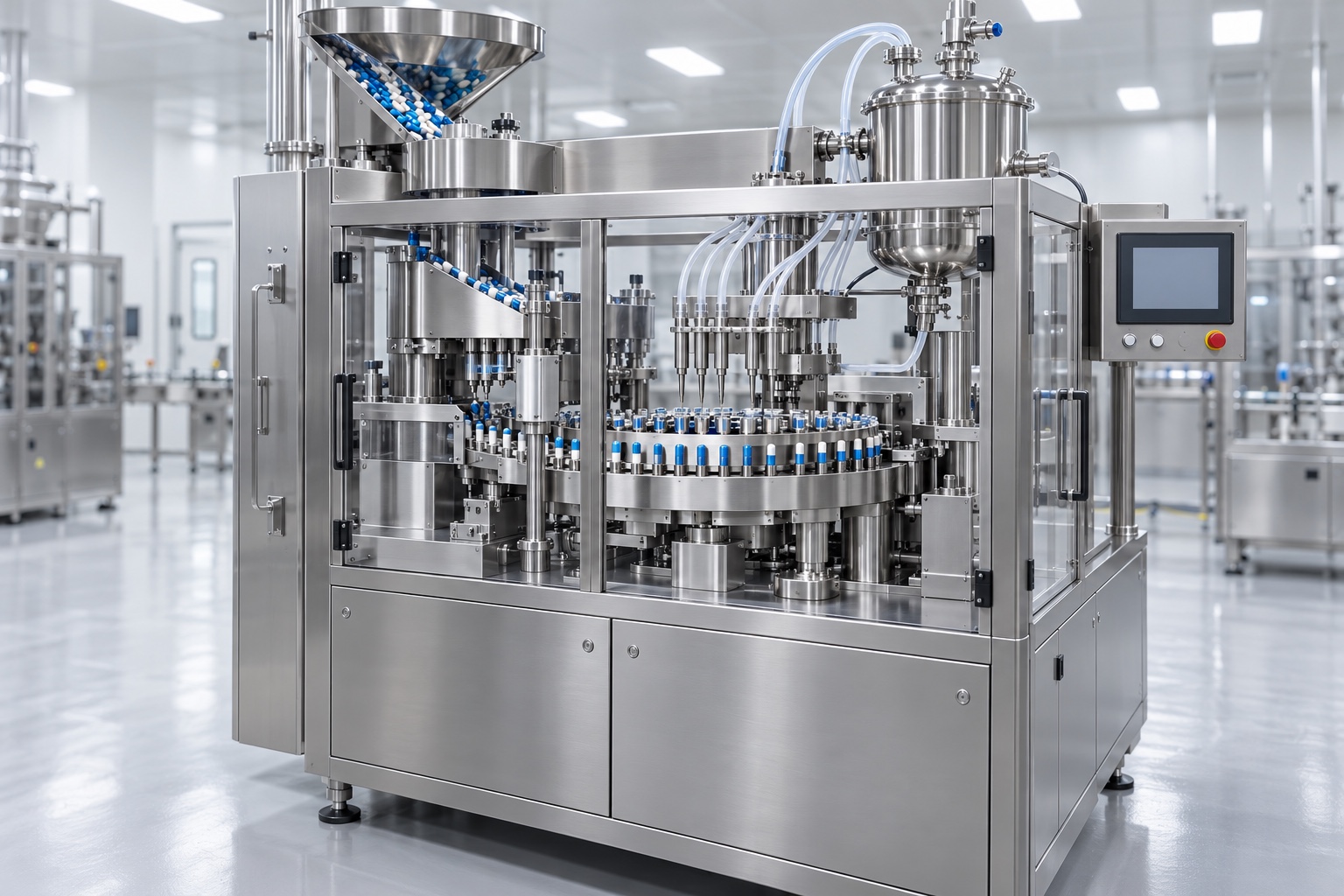
Fimachinery offers two relevant configurations. The FI-300CF/L is a fully automatic hard capsule liquid filling machine. The FI-300CF/LS links liquid filling with sealing at the cap-body joint. Both are industrial production equipment. The right choice depends on the actual formulation and whether the finished capsule needs that additional sealing step.
Start With The Fill And The Shell
The FI-300CF/L product information lists solutions, suspensions and microemulsions as filling applications. The FI-300CF/LS description also discusses oily liquids and other liquid formulations. This does not mean every liquid can run unchanged on the same setup. Viscosity, suspended solids, temperature and the way the fill contacts the shell need to be checked with the intended formulation and capsule material.
Specify the hard capsule size and the target fill before choosing change parts or setting a trial. The listed FI-300CF/L and FI-300CF/LS configurations cover hard capsule sizes 00 through 4, but a size range on a product sheet does not establish that a particular shell and formulation will run well together. Use the actual shells and a representative fill for acceptance work.
What Happens Inside An Automatic Liquid Filling Cycle?
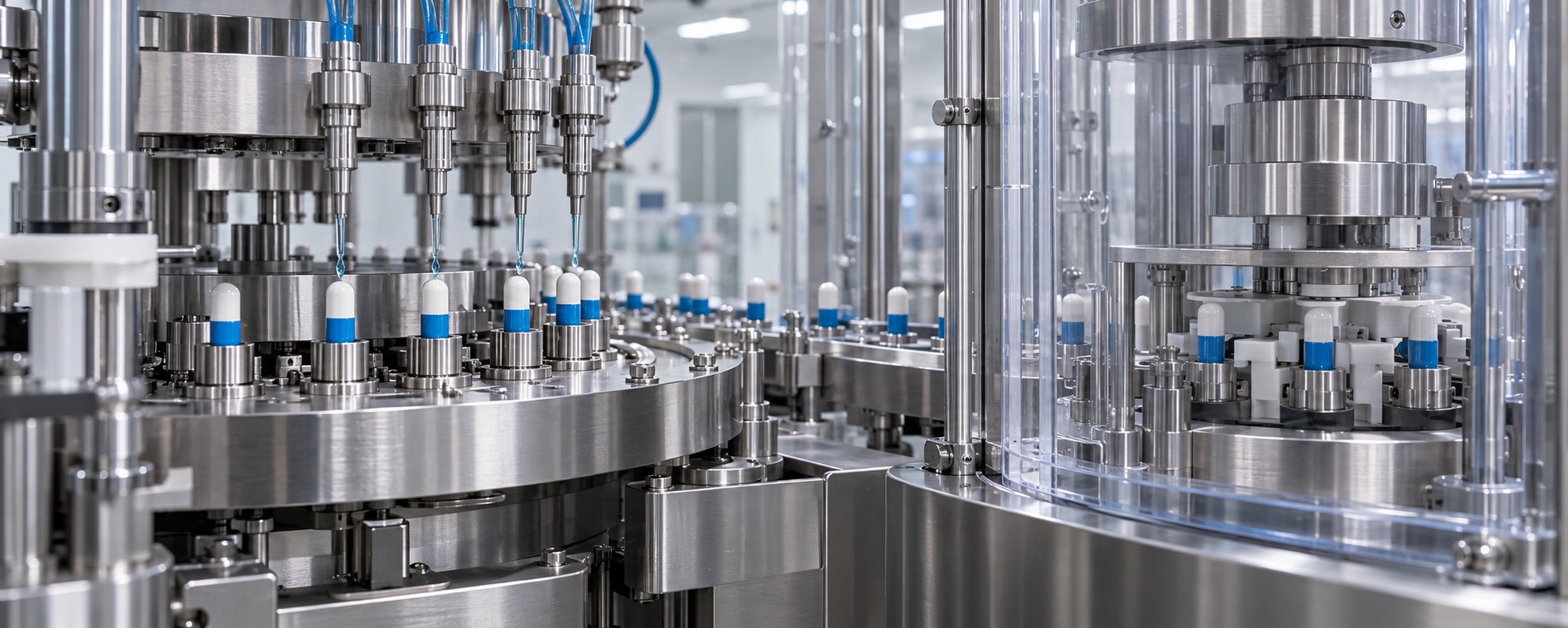
In a liquid capsule line, empty hard capsules are fed into the machine, oriented and separated so the bodies can receive the fill. A dosing system then delivers liquid to each body. The FI-300CF/L catalogue describes a ceramic pump feed and servo-controlled loading system. It also lists optical detection, a no-capsule/no-fill response and automatic rejection. These features help the line avoid dosing an absent capsule and remove units identified as defective, but they do not replace checks on finished capsules.
After dosing, the cap and body are joined. Where the product requires sealing at that joint, the FI-300CF/LS combines filling and sealing in a linked line. That distinction matters: filling a capsule and sealing its joint are separate process requirements. A buyer should state clearly whether sealing is part of the required finished product, then confirm the proposed machine configuration and inspection points during a product trial.
Set Up A Trial Around Acceptable Output
Begin with the intended shell, fill material and target dose. Agree on the trial duration and a practical operating rate. Record the number of acceptable capsules leaving the line, rather than relying only on the machine's nominal output. Examine fill consistency, visible leakage, shell damage, incomplete closure and rejects. If sealing is specified, inspect the sealed joint after the line reaches stable operation and again after the downstream transfer steps planned for the product.
Suspensions deserve particular attention during a trial because the fill must remain representative while it is supplied to the dosing system. A short run with a substitute liquid can show that the equipment cycles, but it cannot establish performance with the final formulation. Any substitution should be recorded, with the remaining product-specific checks scheduled before production approval.
Also observe changeover and cleaning. Ask the equipment supplier to show which product-contact parts are removed, how the dosing path is cleared, and which capsule-size parts must be exchanged. Write those details into the proposed configuration and operating procedure. A machine may fill accurately during a demonstration yet still be a poor fit if routine cleaning or format changes disrupt the planned batch schedule.
Choose The Filling And Sealing Configuration Deliberately
The FI-300CF/L addresses automatic liquid dosing into hard capsules. The FI-300CF/LS adds linked sealing of the capsule cap-body joint. For an industrial buyer, that is the central equipment decision behind how to fill capsules with liquid. Confirm the formulation, shell, dose and sealing requirement first; then use a representative trial to assess dosing, rejects, closure quality and net acceptable output. The resulting specification gives the production team a clearer basis for commissioning and ongoing operation.