
How To Fill Gel Capsules With Powder And Check Fill Weight
To fill a two-piece hard gelatin capsule, separate the short cap from the longer body, load the powder into the body, and press the two pieces together until they lock. A one-piece softgel, such as a typical fish oil capsule, is filled and sealed as its shell forms. The steps below cover dry powder in preformed hard gelatin shells. Hard capsule structure and filling
Choose A Capsule Size By Fill Weight And Bulk Density
Capsule size tells you the shell volume. To estimate the volume you need, divide the target net fill weight per capsule by the loose bulk density of the actual powder blend. Compare that estimate with the nominal capacity in the shell specification. Use the weight of the whole blend, including any excipients, in this calculation. Hard gelatin capsule filling study
For example, 300 mg of blend at 0.60 g/mL takes up about 0.50 mL. At 0.40 g/mL, the same weight takes up about 0.75 mL. If the estimate is close to the nominal capacity, run a trial with the actual blend and check that the capsule locks at the target fill weight. Tamping changes how densely the powder packs, so verify the result by weighing the filled capsules. Powder tamping and fill weight study
Fill And Lock Capsules With A Manual Tray
1. Separate and position the shells. Use a clean, dry tray that matches the capsule size. Place the longer bodies open end up in the body plate. Keep the caps in the cap plate or set them aside, depending on the tray design.
2. Spread the powder. Sweep the blend across the body plate with a spreader and check the edge and corner holes for underfill. If the trial calls for tamping, apply it consistently across the plate, then top up and level the powder. Record the number of spreading and tamping passes for the next tray.
3. Clear the rims and lock the caps. Remove excess powder from the plate, align the caps with the bodies, and press them together. Check the finished capsules for cracks, crooked caps, and incomplete locking. If a capsule resists closing, look for powder above the rim or misalignment before trying again. Manual tray filling study · Overfill and capsule defects study
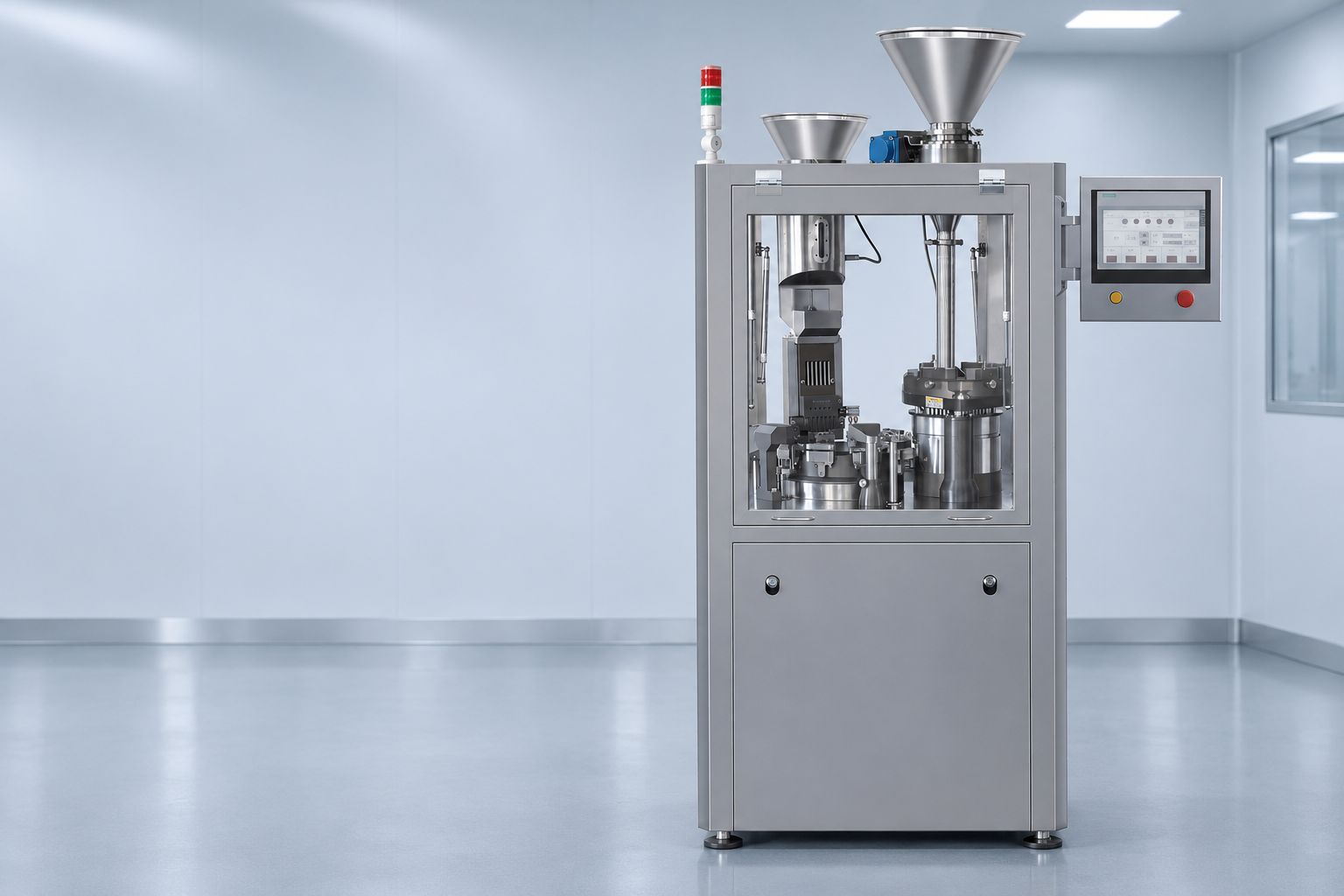
On an automatic machine such as the Fimachinery FI-800CF, the same basic sequence runs through separate stations for shell feeding and separation, powder dosing, locking, and discharge. The manual tray steps above apply to bench trials. FI-800CF product details
Check Net Fill Weight One Capsule At A Time
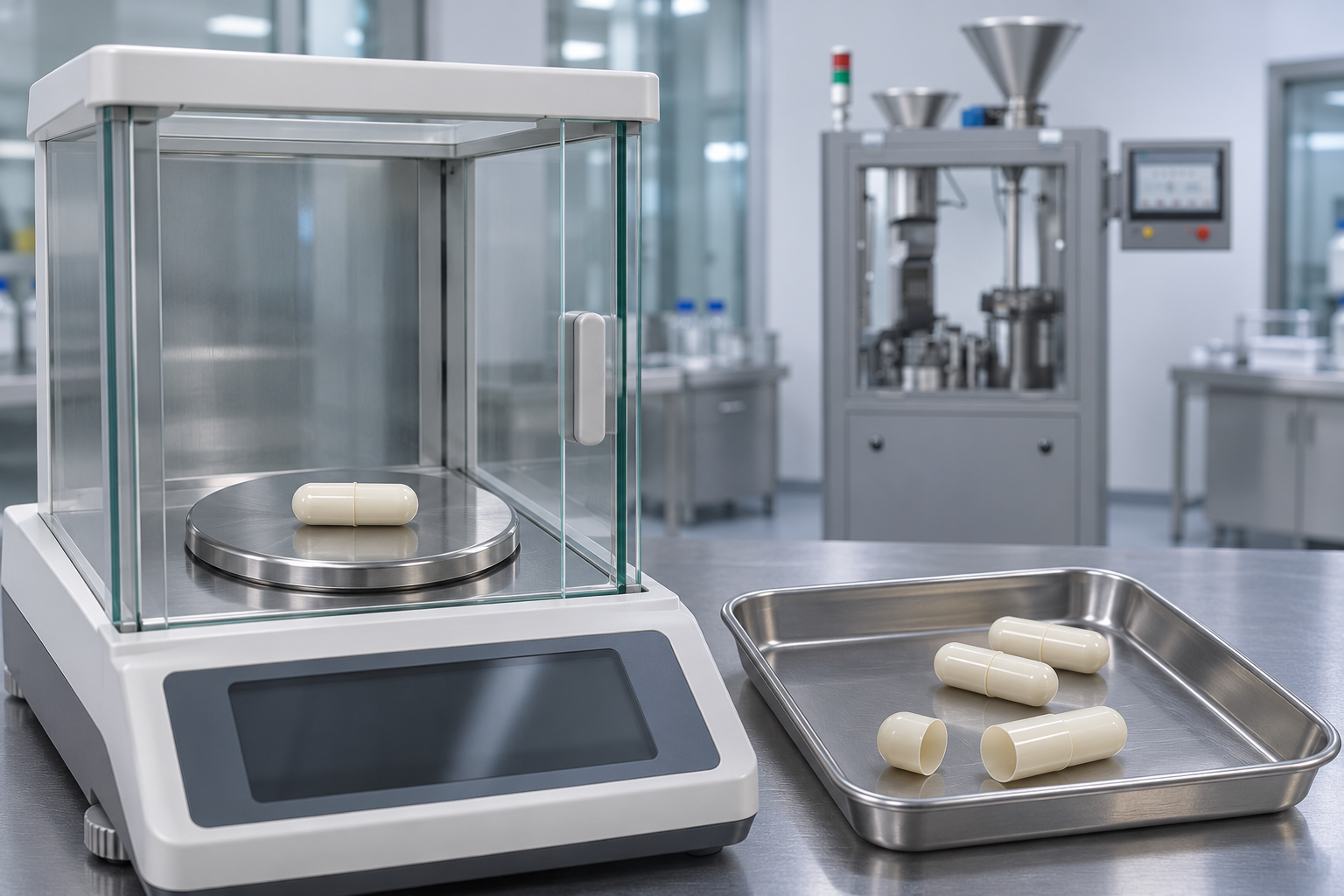
Number and weigh each empty shell selected for the trial. Weigh each of those same capsules again after filling and locking. Subtract the empty shell weight from the filled capsule weight to get the net fill weight. Record the tray position for each sample so you can tell whether low weights cluster in one area. Single-capsule weighing and position tracking study
Most capsules are consistently light. Recheck the target fill weight, shell capacity, and powder density. If the powder reaches the rim before the target weight, trial a larger shell or reassess the tamping setup.
The average is on target, but individual weights vary. Check whether the lighter capsules come from a particular row, corner, or edge. A recurring pattern gives you a place to inspect the spreader path and tamping consistency.
Matching net fill weights show that the capsules contain similar amounts of blend. If the blend segregates, capsules of the same weight can contain different amounts of active ingredient. For drug products, assess dosage unit uniformity under the applicable pharmacopeial method and product specifications. USP dosage unit uniformity harmonization material
Verify Shell Compatibility And Sealing For Oil Fills
A powder tray distributes dry material across open capsule bodies. An oil fill calls for individual liquid dosing and a validated seal at the cap-body joint. If you use a two-piece hard shell, confirm that it is suitable for liquid filling, then verify dose volume, shell compatibility, and sealing with the actual formulation. Band sealing adds a separate band around the joint. Check trial samples for leaks, deformation, or brittleness under the intended storage conditions. Liquid fill compatibility study · Capsule band sealing
For one-piece softgels, a rotary-die machine meters the fill between two gelatin ribbons. The dies shape, seal, and cut the capsules, which then go through drying. Rotary-die mechanism · FSSAI softgel manufacturing flow