
How A Pharmaceutical Capsule Filling Machine Controls Fill Weight
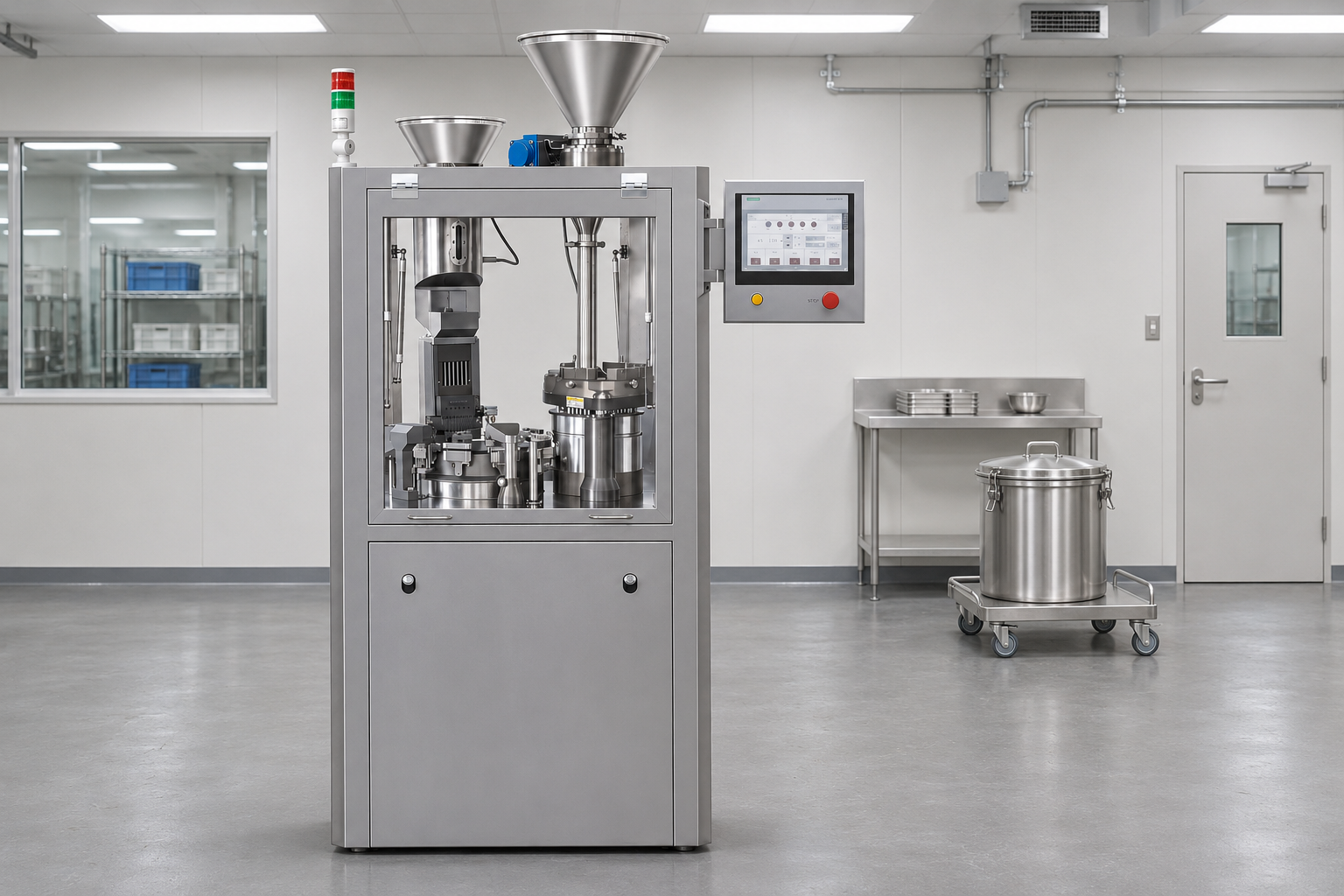
A pharmaceutical capsule filling machine opens preformed two-piece hard capsules and delivers a measured amount of powder into each body. A dosing disc forms the powder plug in a hole in the disc. A dosator picks up powder from a powder bed and carries it inside a tube. Because the two mechanisms form and transfer the plug differently, a change of equipment calls for a material trial even when the formulation, capsule size and target fill weight stay the same. Comparative Encapsulation Study
How The Machine Opens, Fills And Locks Hard Capsules
In a typical automatic filler with upper and lower segments, the machine first aligns the empty shells. Vacuum pulls the smaller capsule body into the lower segment while the wider cap stays in the upper segment. The segments move apart to expose the body. After dosing, they realign, closing pins press the cap and body together, and the machine ejects the finished capsule. Automatic Filling Process, Section 4.3
If you find underfilled capsules, check whether the shells opened correctly. A shell that stays closed cannot receive powder. If the shells open normally but powder remains in the tooling after transfer, inspect the dosing and transfer stations. Recording shell separation and net fill weight separately helps narrow down the cause.
How Dosing Discs And Dosators Transfer Powder
Dosing disc. A backing plate closes the bottom of each hole while the disc indexes through the tamping stations. Powder enters the holes, and tamping pins compact successive additions into a plug. At the transfer station, a transfer pin pushes the plug out of the disc and into the open capsule body. Hole dimensions set the available volume. The mass delivered depends on how much powder enters the hole, how it compacts and how completely the plug transfers. Dosing Disc Process, Section 4.3
Dosator. A hollow tube enters the powder bed. An internal piston defines the effective length of the dosing chamber. The tube picks up a plug, carries it over the capsule body and ejects it with the piston. The plug must stay in the tube during transfer and release into the capsule at discharge. Equal chamber volumes can deliver different fill weights when powder uptake, compaction or release changes. Dosator Process Study
In a study using two machines and model formulations, the equipment differed in its requirements for powder flow and plug formation. Under some test conditions, the same formulation produced different dissolution profiles at comparable compression forces. When transferring a specific product, check net fill weight and assess dissolution where the product’s validation plan calls for it. Comparative Encapsulation Study
How To Read Net Fill Weight After A Machine Or Speed Change
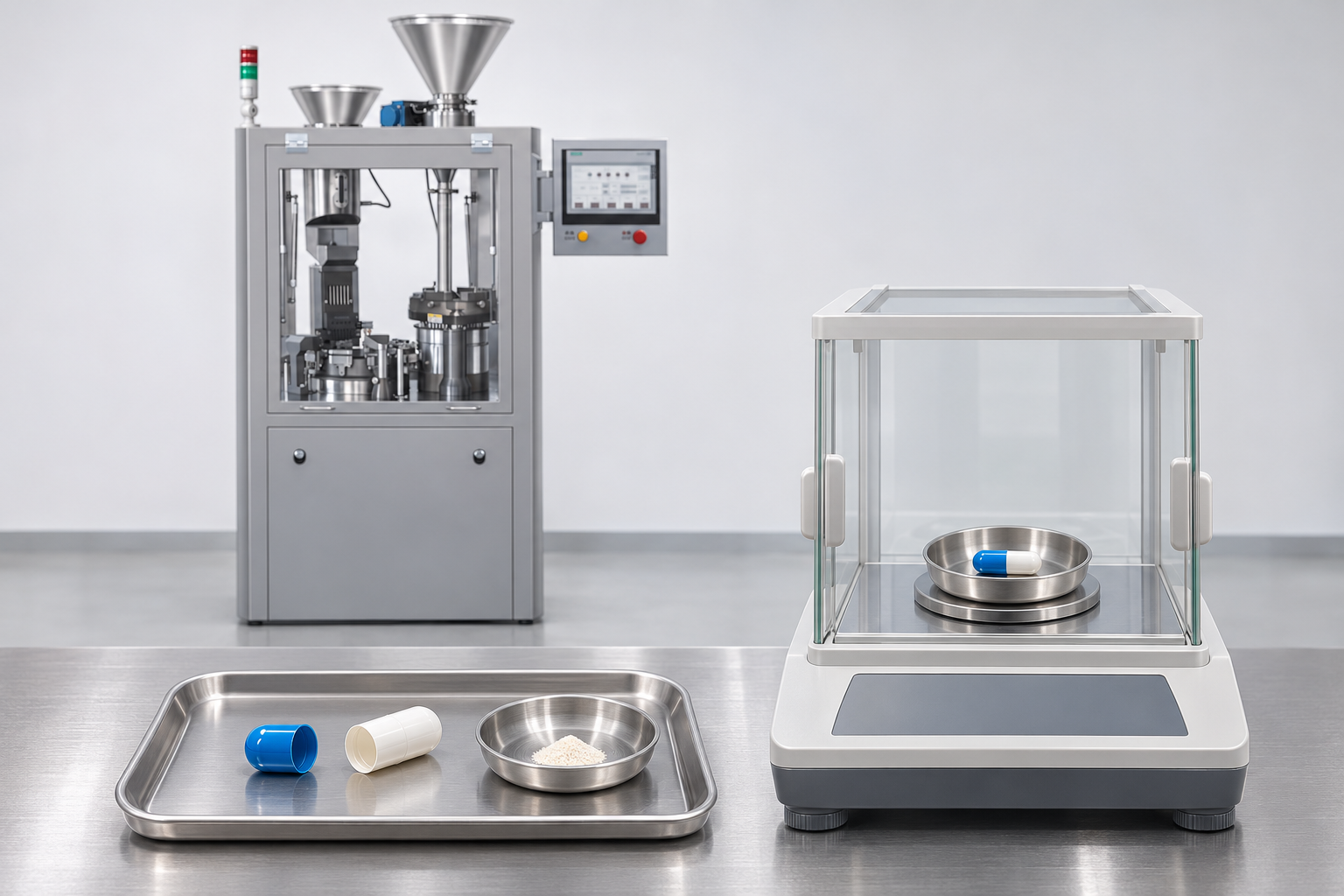
Record the capsule size, formulation lot, dosing tooling and running speed alongside individual capsule measurements. Start with the weighing method. If a filled capsule weighs 355 mg and its cap and body together weigh 75 mg after emptying, that capsule contains 280 mg of fill. Gross capsule weights include variation in shell weight. USP Dosage Unit Uniformity Reference
| Trial Result | What To Check First |
|---|---|
| The mean moves away from target, while individual weights show a similar spread. | Check the disc or chamber setting, then compare powder feed and compaction conditions. This pattern suggests a shift in the overall fill level. |
| The mean stays near target, but individual weights spread out. | Compare samples by time. Look for changes around powder replenishment or speed changes, then check feed and plug transfer. The mean can hide individual deviations. |
Both patterns can occur in the same trial. A dosator study tested six powders in size 3 capsules at three chamber volumes and two speeds. The researchers found that process settings affected fill weight and its variability. Once a low-speed trial reaches the target, recheck the mean and the spread of individual net weights at the intended production speed. Dosator Fill Weight Study
What Net Fill Weight Can Tell You About Dose Uniformity
Net fill weight measures the amount of formulation in each capsule. Content uniformity looks at the amount of active ingredient in each dosage unit. Two capsules can each contain 280 mg of formulation and deliver different doses if the proportion of active ingredient differs between them.
Use net fill weight to monitor the filling process. Assess finished-dose uniformity using the method applicable to the product. Under USP <905>, the content uniformity procedure assays individual units. Where the weight variation procedure is permitted, it uses individual weights together with an assay result to estimate individual contents. USP <905> Uniformity Of Dosage Units