
Capsule Filling Machine Selection Guide | Fimachinery
A capsule filling machine should be chosen around the capsule you intend to make, not around a headline speed. The same machine can behave differently when the shell, fill material, target dose, or batch size changes. A useful comparison starts with a sample of the real product and a short list of conditions the machine must meet every day.
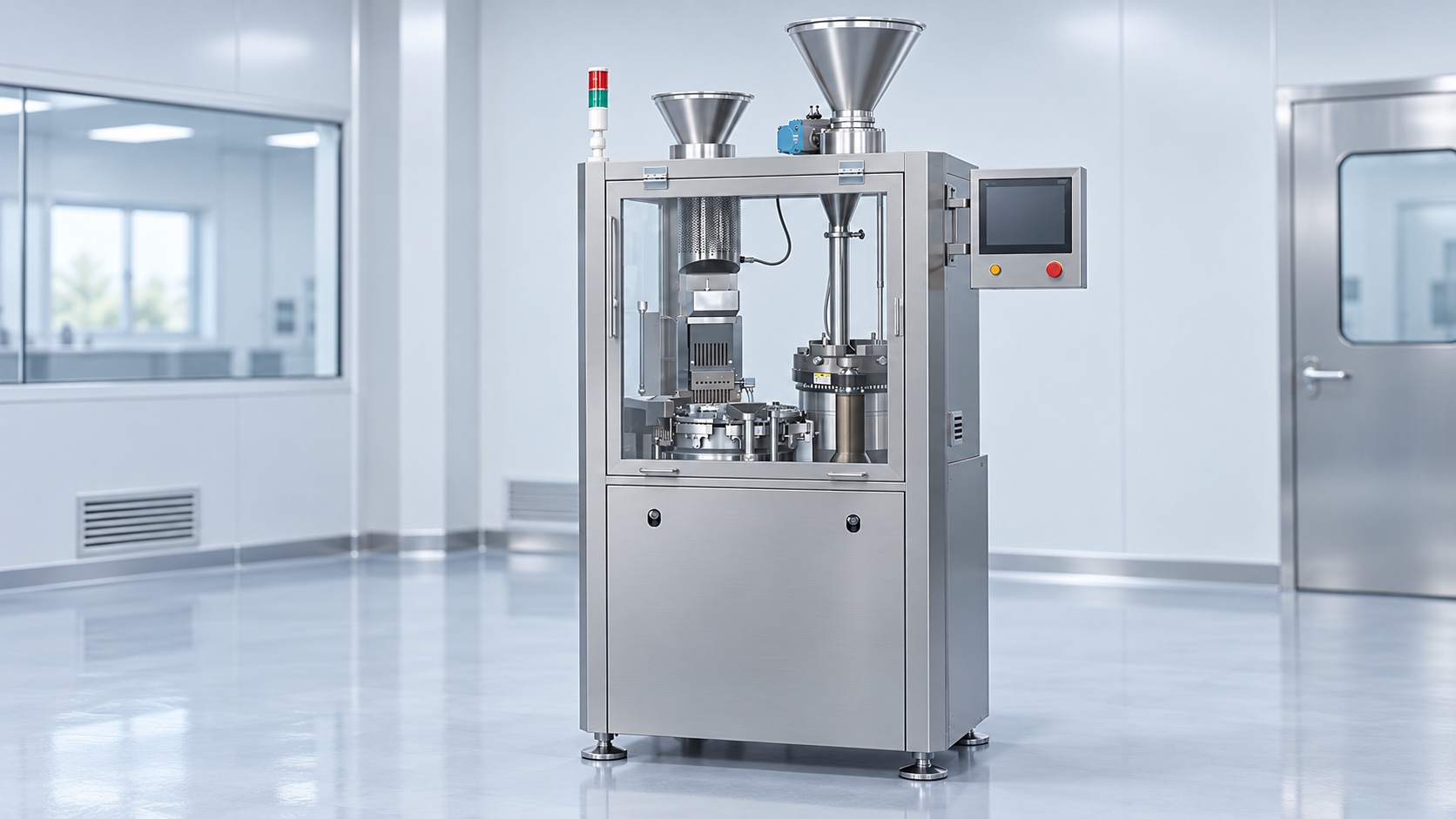
Define The Capsule And The Fill
Begin with the empty shell: its manufacturer, material, size, color, and locking design. Then describe what will go into it. Powder, granules, pellets, tablets, and liquids do not use the same feeding and dosing arrangements. “Capsule filler” is too broad a specification when the intended fill has not been identified.
For a powder project, provide the target fill weight and a representative material sample. Its flow and tendency to form a plug can affect how consistently the machine fills each body. If the formulation changes often, include the most difficult product in a trial rather than testing only a free-flowing sample. A successful run with a substitute powder is useful, but it does not prove that the final formulation will behave the same way.
Liquid filling needs an additional distinction: are you filling a two-piece hard capsule, and does the process also require sealing the cap-body joint? Fimachinery’s FI-300CF/L is listed for filling liquids, suspensions, and microemulsions into hard capsules. Its FI-300CF/LS configuration pairs liquid filling with capsule sealing. Those are process choices, not interchangeable names for a standard powder machine.
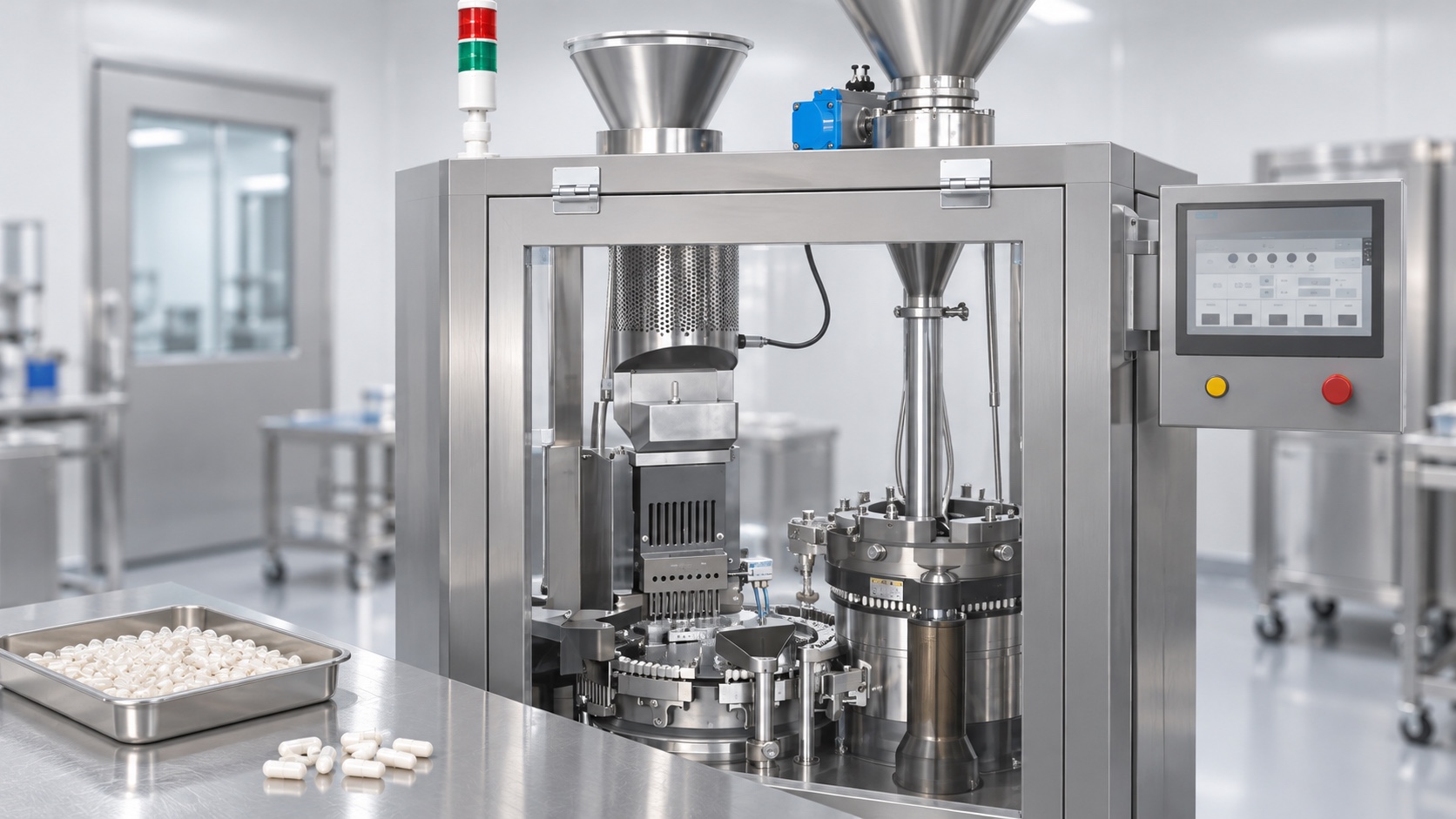
Match The Automation Level To The Workload
Manual, semi-automatic, and fully automatic setups differ most in the amount of operator handling between stages. A semi-automatic machine can be appropriate when batches are moderate and staff can manage transfers and checks. Fimachinery’s FI-SCF series is a semi-automatic powder option described for small and medium batch settings. Its fully automatic FI-CF range is a different class of equipment for a more integrated filling cycle.
Ask where an operator must load shells, move a tray, top up material, check rejects, or collect finished capsules. Those points determine labor and the rhythm of production. A nameplate output figure alone will not tell you how many acceptable capsules reach the next operation during a shift.
For comparison, define your required net output, batch size, number of shifts, and planned changeovers. Have each supplier explain the test conditions behind a quoted speed: capsule size, fill material, target dose, run duration, and acceptable output. A machine that fills quickly but requires frequent stops or lengthy cleaning may deliver less usable production than expected.
Check Size Changes And Format Parts
Changing capsule size is more than selecting a new number on a screen. The shell must be oriented, separated, held, filled, and locked with parts that match its geometry. For the NJP-1200 described in the product manual, a size change calls for matched upper and lower modules, horizontal and vertical forks, an alignment block, filling rods, and a dosing disc.
That list is an example for one model, not a universal changeover kit. Ask for a written parts list for every capsule size in your production plan. Confirm which parts are included with the base machine, which are optional, and how they are stored and identified. During a trial, watch the full changeover and the first stable run after it. The practical cost of a second capsule size includes parts, setup time, cleaning, and verification.
Plan For The Room And The Rest Of The Line
Before ordering, check the machine’s footprint, service clearance, electrical supply, vacuum, compressed air, dust extraction, and the way product enters and leaves the machine. The NJP-1200 manual, for example, specifies a dry vacuum pump for separating capsule caps and bodies, as well as a dedicated powder recovery path. Its stated installation and utility requirements belong to that model; they should not be assumed for every capsule filler.
Downstream equipment can also change the effective output. A polisher or sorter may remove dust, empty shells, or broken capsules; later checks and packaging must keep pace with the filler. Define the transfer points and the responsibility for each interface before treating separate units as one production line.
Make The Trial Answer A Real Production Question
An equipment trial should use the agreed capsule shell and a representative material whenever possible. Set a target speed and run duration, then record acceptable output, fill-weight variation, damaged shells, rejects, and interruptions. Review how the machine is cleaned and how long a changeover takes. If the real formulation cannot be supplied to the factory, agree on what a substitute trial can establish and what must be checked later on site.
The request for quotation should carry these same conditions. Include the capsule sizes, fill type, target dose, batch range, net output, utilities, contact materials, change parts, spare parts, manuals, training, and acceptance checks you require. This makes it easier to compare two offers whose base prices may cover very different configurations.
What Makes A Capsule Filling Machine The Right Fit?
The right fit is the machine that produces the specified capsule reliably under your actual process conditions and can be cleaned, changed over, and supported within your production plan. Start with the product, test the difficult cases, and put the agreed performance and configuration in writing. That approach gives the supplier a clear target and gives your team a practical basis for acceptance.