
Pill Filling Machine: Which Capsule Process Do You Need?
Ask for a pill filling machine and you may receive quotes for three different jobs: putting a formulation into empty capsules, pressing powder into tablets, or counting finished tablets into bottles. The machines are not interchangeable. Before comparing models or prices, describe what enters the machine and what should come out.
For a two-piece hard capsule, the usual equipment name is capsule filling machine or capsule filler. It handles a preformed cap and body, places the fill in the body, and closes the shell. That is the process covered here. If your finished product is a compressed tablet, you need a tablet press. If you already have finished tablets and want a specified count in each bottle, you need a tablet counter or bottling line.
Start With The Finished Capsule
Give the supplier a sample or a clear specification of the empty shell: size, material, supplier, and locking design. The machine must hold, separate, fill, and close that particular shell reliably. Changing size can require matched format parts rather than a setting on the screen. It is sensible to request a written change-parts list for every size you intend to run.
Then define the contents. A powder is not automatically suitable for equipment set up for pellets, tablets, or liquid. Powder flow, bulk density, and the way a formulation compacts can affect filling behavior. State the target fill weight and acceptable variation, and provide a representative sample for testing. A trial with an easy-flowing substitute cannot establish how your actual formulation will perform.
Liquid filling is a separate project. The fill path, metering, and potential need to seal the cap-body joint must be assessed together. Closing a hard capsule and applying a band seal are distinct operations. If the formulation is a suspension or temperature-sensitive liquid, describe that at the outset instead of asking for a generic powder filler.
Choose The Level Of Operator Involvement
Manual plate-style fillers suit very small batches and hands-on formulation work. The operator handles shell loading, separation, powder spreading, and closing. Their low equipment complexity comes with substantial manual work and a different production rhythm from a powered machine.
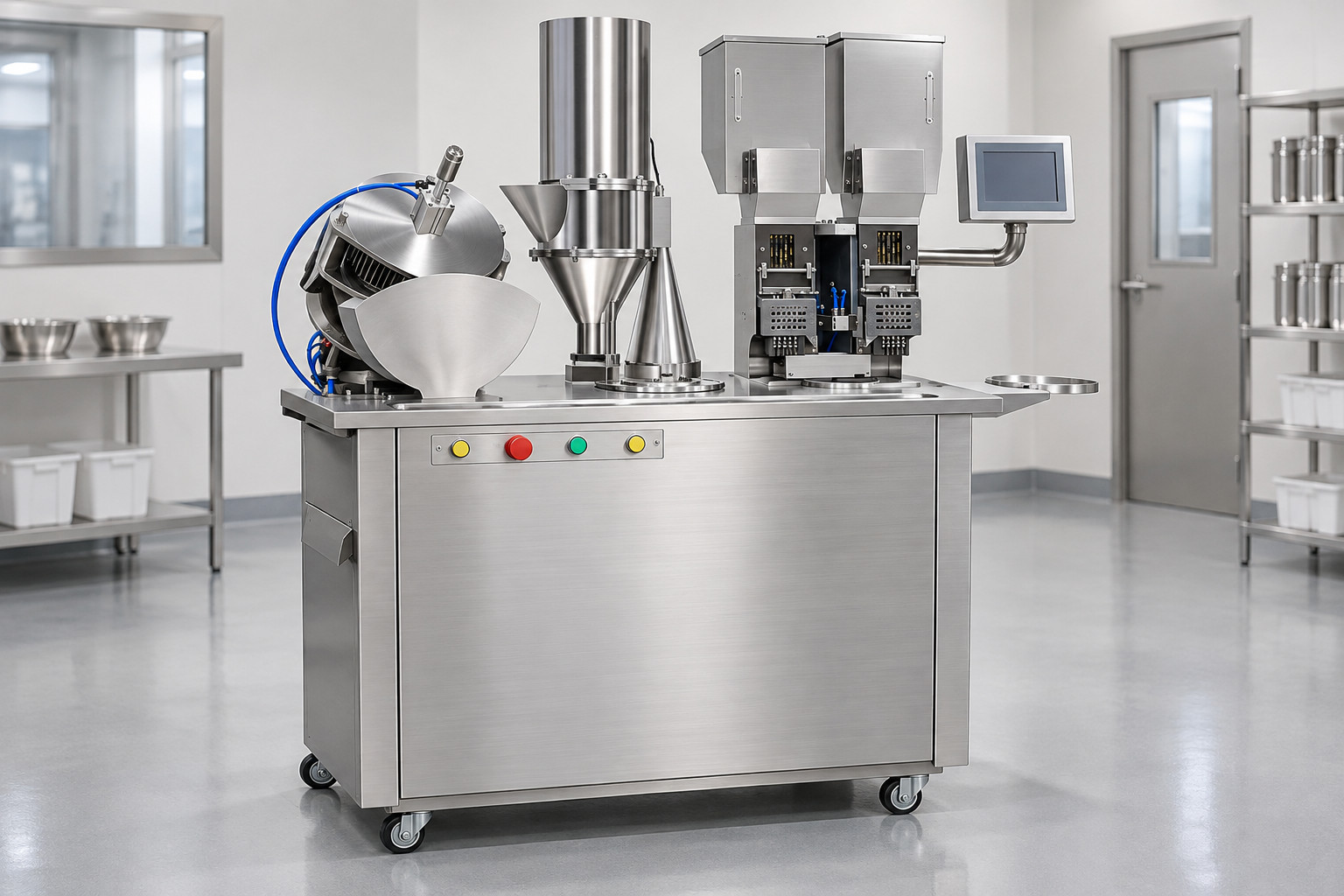
A semi-automatic capsule filler powers some operations while an operator still transfers trays, rings, or modules between stages. That can be a practical match for moderate batches and frequent product changes, provided the handling time and staffing fit the production plan. Fimachinery’s FI-SCF series is an example of a semi-automatic powder capsule filling layout.
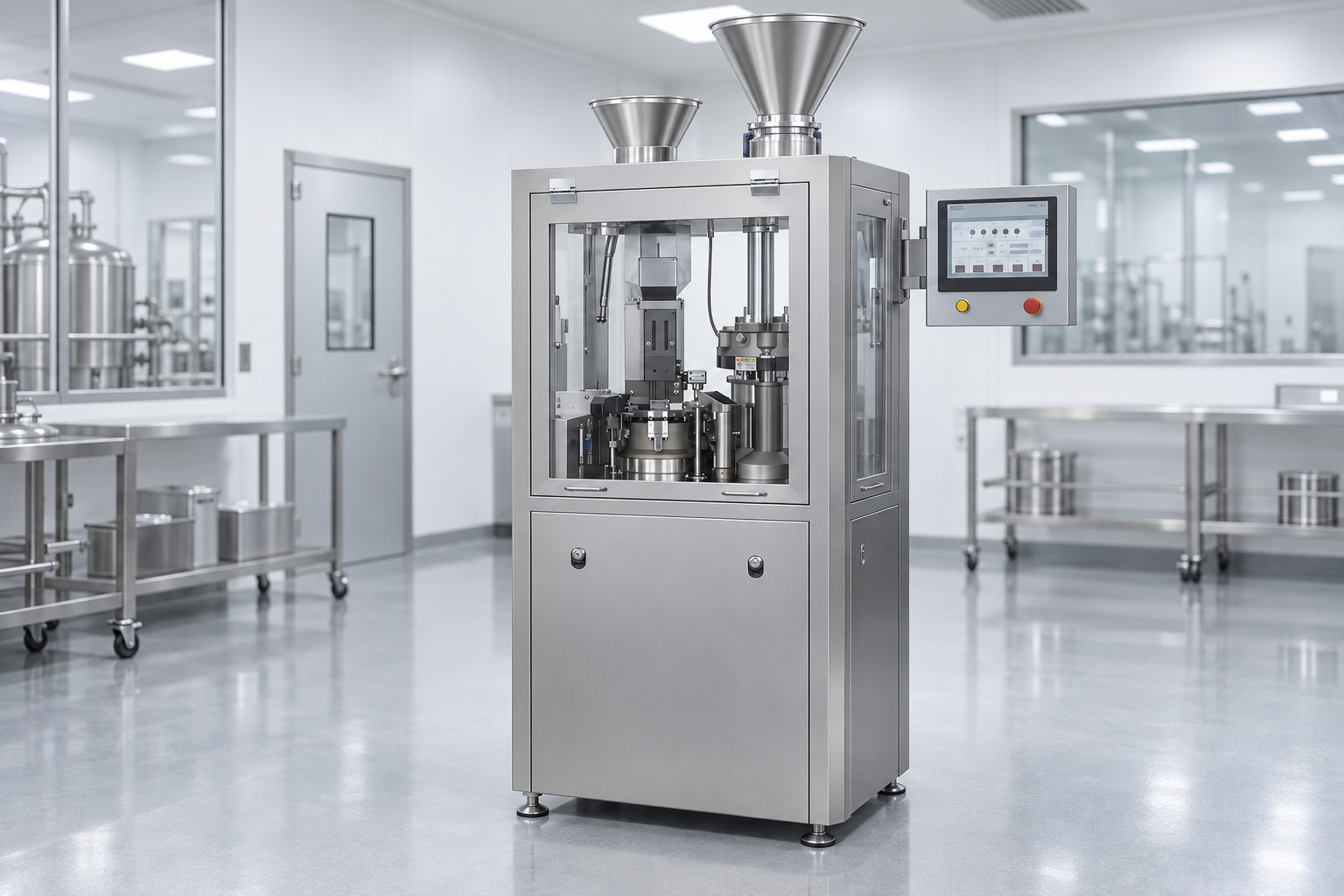
A fully automatic machine links shell feeding, separation, dosing, rejection, locking, and discharge in a coordinated cycle. It still needs people to prepare material, replenish supplies, monitor results, take samples, change formats, and clean the equipment. Fimachinery’s FI-CF range illustrates the enclosed automatic powder-filling category; the configuration for a particular project needs to be confirmed separately.
Compare usable output, not just a maximum speed. Ask what capsule size, fill material, target dose, and run duration were used for a quoted figure. Include start-up losses, rejects, cleaning, and changeovers when estimating how many acceptable capsules a shift can deliver.
Check The Whole Filling Setup
The filling machine is one part of the work area. Confirm its electrical supply, vacuum, compressed air, dust collection, footprint, and access for cleaning and maintenance. These requirements vary by model. Also decide how empty shells and fill material arrive, and how finished capsules move to polishing, inspection, or packaging.
Where several units form a line, agree on the hand-off between them. A fast filler does not raise net output if the next operation stops or rejects product faster than it can be handled. Specify which supplier is responsible for each interface and for the acceptance test of the complete setup.
Make The Trial Answer Your Production Question
The strongest comparison uses your intended shell and a representative fill. Agree on the target output and run time before the test. Record acceptable capsules, fill-weight results, damaged shells, rejected capsules, stoppages, and the time needed to clean and change formats. If the final formulation is unavailable, state what the substitute test can and cannot prove, then plan a later test with the real material.
Your request for quotation should include the dosage form, shell sizes, fill material, target fill weight, batch size, required net output, changeover frequency, utilities, and downstream equipment. Ask for the included format parts, optional modules, spare parts, manuals, and acceptance criteria in writing. With those details, two offers can be compared on the same job instead of on similar-sounding machine names.
The right pill filling machine is the one that completes the specified capsule process with your material, shell, batch size, and quality targets. Define that process first; the machine category and useful questions for suppliers follow naturally.