
Gel Capsule Filler: Choosing A Machine For Hard Capsules
The phrase gel capsule filler sounds specific, but it can point to two different products. Some buyers use “gel capsule” for a pre-made, two-piece hard gelatin shell. Others mean a one-piece softgel. A hard capsule filling machine works with separate caps and bodies: it opens an empty shell, fills the body, and closes it. Softgel equipment forms and seals the shell as part of the production process. Before comparing machines, put a sample of the intended capsule on the table and confirm which structure you actually need.
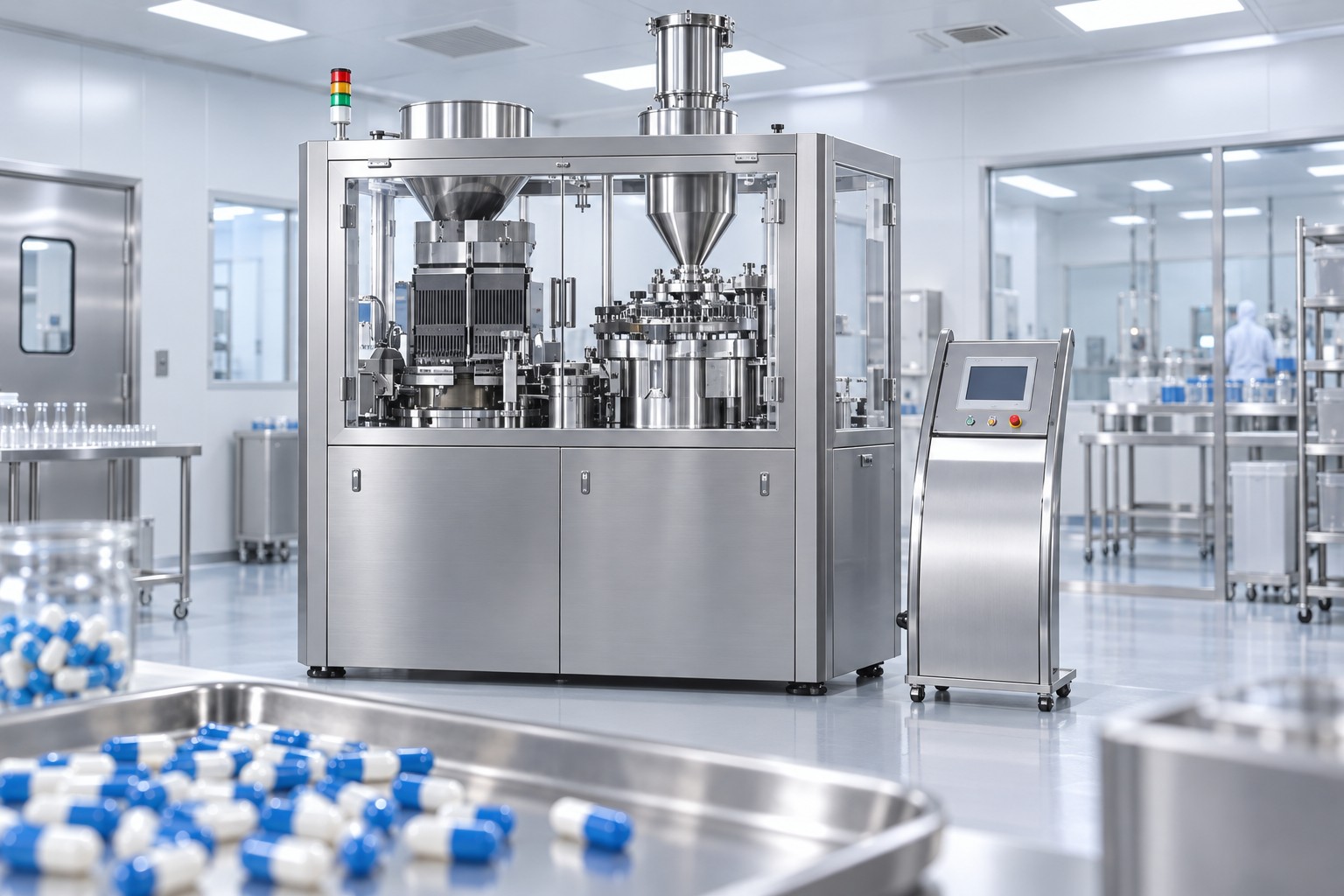
Start With The Shell
A two-piece hard capsule has a longer body and a cap that fits over it. “Hard” describes the shell structure, not necessarily its material. Hard capsules may be made from gelatin, HPMC, or another suitable material. A hard gelatin capsule is one type of hard capsule; an HPMC shell should not be specified as gelatin simply because both have a cap and body.
For a meaningful equipment trial, identify the shell material, size, supplier, locking design, color or print if relevant, and the sample batch. A machine’s stated size range is only a starting point. Shell dimensions, moisture, elasticity, and static behavior can affect how consistently capsules feed, separate, and close. The same nominal size from a different shell supplier deserves another check.
Watch the shell through an actual run. Does it enter the orienting system without frequent jams? Do the cap and body separate cleanly? After filling, is the capsule fully locked without a loose cap, dent, or crack? If a new shell batch begins to split, check its specification, handling, and room conditions before changing machine settings. Raising the separation vacuum indiscriminately can increase damage.
What The Filler Does During A Cycle
In an automatic hard capsule filling cycle, empty shells are fed and oriented so their caps and bodies enter the corresponding machine segments. Vacuum or a mechanical system separates the two parts. The bodies then travel to a dosing station, where a measured quantity of the chosen fill is transferred. The segments align again for locking, and finished capsules leave the machine. The equipment also needs a way to identify and reject missing, damaged, or unseparated capsules; segment holes are cleaned before reuse.
This sequence explains why a capsule filler is different from a machine that makes empty shells. Filling starts with pre-made capsules. Polishing, weight checking, metal detection, and packing may be separate operations after the capsule leaves the filler. If a quotation uses the broad term “capsule machine,” specify the exact operation that needs to be included.
Match Dosing To The Actual Fill
Powder filling is common, yet two powders with the same target weight may behave very differently. Flow, bulk density, cohesion, compressibility, particle size, and static can change how reliably a dose forms and transfers. In a dosing-disc system, powder is compacted in disc holes to form plugs, which are then pushed into capsule bodies. A trial should check the target fill weight, variation between capsules, plug integrity, and whether the material remains stable during a longer run.
Granules, pellets, tablets, and liquids need their own suitable dosing or counting arrangements. A liquid hard-capsule project also calls for evidence that the formulation and shell are compatible, that the liquid can be dosed at the intended temperature and viscosity, and that locking or any subsequent sealing controls leakage. A powder filler does not become a validated liquid filler just because its hopper is changed.
Choose The Level Of Automation Around The Whole Line
Fimachinery lists the FI-SCF series as a semi-automatic powder capsule filler and FI-CF models as fully automatic powder filling machines. Semi-automatic equipment can make sense for smaller batches or frequent product changes, provided the operator time, tray turnover, cleaning, and changeover work fit the production plan. Automatic equipment brings more steps into a machine cycle, but its effective output still depends on reliable shell feed, material supply, reject handling, and downstream capacity.
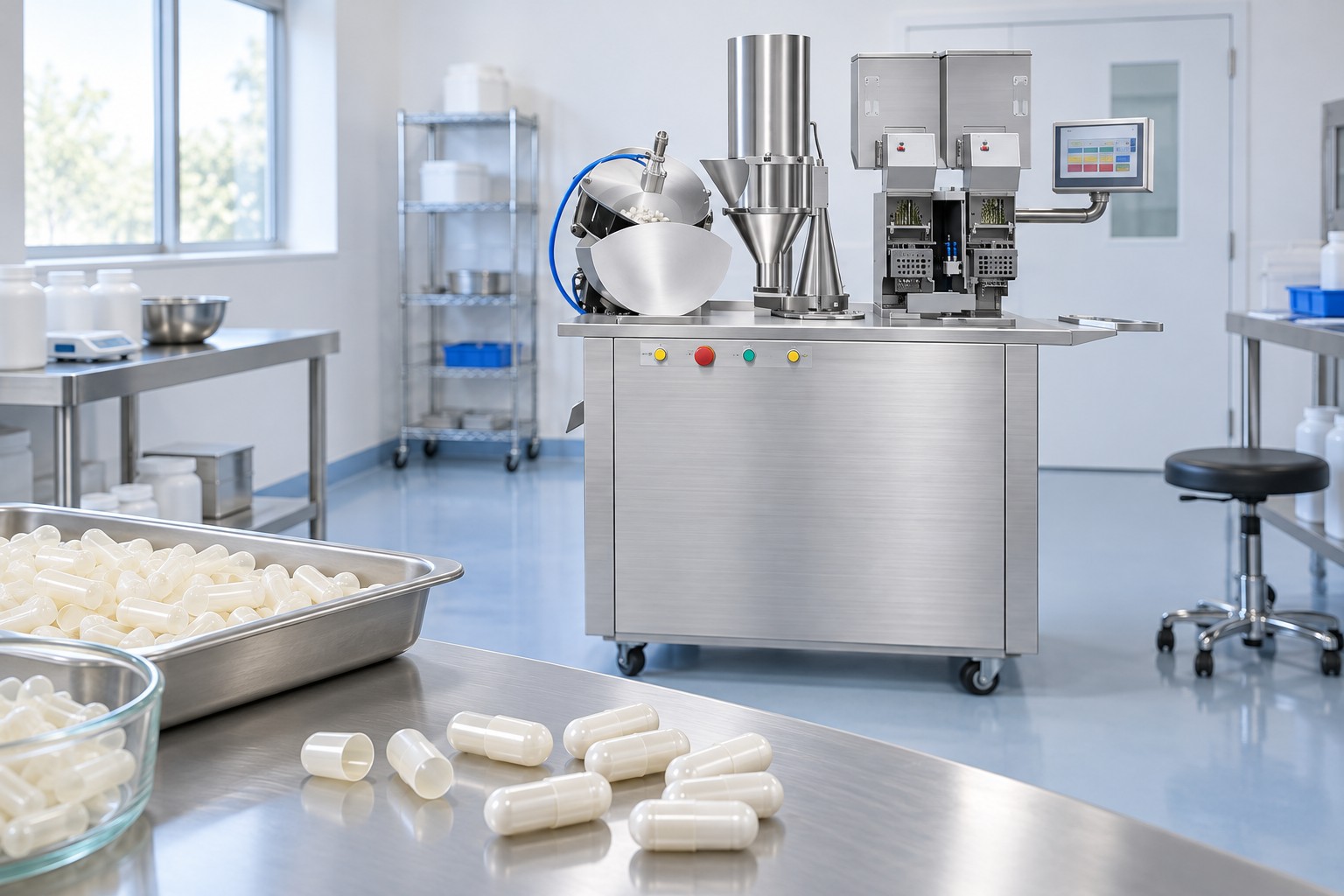
Compare machines using acceptable capsules produced during a representative continuous run, not only a maximum hourly figure. Agree in advance on the shell, formulation, target dose, run duration, allowed stops, sampling, and reject criteria. If the line includes polishing, inspection, or packing, measure the number of capsules that reach the end of that line. A fast filler alone cannot raise output when another step is the constraint.
A Practical Pre-Purchase Trial
Bring a representative batch of empty shells and the intended fill. Ask the supplier to demonstrate feeding, orientation, cap-body separation, dosing, locking, rejection, and discharge with those materials. Record fill weight variation, empty capsules, damaged shells, loose caps, visible powder residue, and the reasons for stops. A few attractive samples taken from a short demonstration are less useful than a traceable run under agreed conditions.
Finally, list the capsule sizes and shell materials the project will actually use. Confirm which orienting parts, upper and lower segments, locking parts, and dosing components are needed for each format, and which are included in the quotation. “Compatible with size 0” does not, by itself, tell you whether a complete size 0 change-parts set will be delivered.
The right gel capsule filler is the one that handles your defined shell and fill repeatedly, closes capsules without damage, and produces the required net output under conditions you can reproduce.