
How Do You Fill Capsules? A Practical Hard Capsule Guide
How do you fill capsules when you have a small batch of powder and two-piece empty shells? Keep the capsule bodies upright, add the prepared powder evenly, bring each cap back over its body, and press the two parts together until they are fully locked. The sequence is simple. Getting a consistent fill takes more care.
This guide covers two-piece hard capsules filled with powder by hand or with a manual filling plate. A softgel is made and sealed by a different process. Liquid filling also needs equipment and checks designed for that material; a powder filling plate is not a substitute.
Start With The Right Shells And A Clean Setup
Choose empty capsules of one size, shell material, and supplier batch for the run. A manual filling kit needs plates or rings that match that capsule size. Its usual parts include a loading plate, separate cap and body plates, a powder tray, a spreader, a tamper, and a closing mechanism. Check the kit's instructions before loading: the way its plates align and separate can vary.
Set up a clean, dry work surface and prepare only the material and shells needed for the batch. Keep other capsule sizes and products away from the station so that caps, bodies, and powders cannot be mixed. Use the shell supplier's storage and handling conditions; shells that have become brittle, sticky, or distorted may split or resist separation.
Load And Separate The Capsules
Place the empty capsules into the loading plate in the orientation required by the kit. Seat them fully before separating the caps from the longer bodies. The body plate should hold the open bodies upright, while the cap plate keeps the matching caps ready for closing. Look across the plate before filling. An upside-down shell, an empty hole, or a damaged body is much easier to correct now than after powder has been spread.
Without a plate, you can separate each two-piece shell individually and keep the bodies upright in a suitable holder. The same need for orientation and batch control still applies.
Fill The Bodies Evenly

Add the prepared powder to the tray or over the body plate, then move the spreader gently across the open bodies. Work across the whole plate rather than piling most of the powder at one end. Powder flow and bulk density affect how much enters each body, so a plate of identical holes does not guarantee identical fill weights.
If the formulation and kit instructions allow it, gentle tapping, vibration, or use of the tamper may help settle powder. Add more powder and spread again where needed. Use the same technique across the batch: changing the number or depth of tamping passes can change how much powder fits in a capsule. Do not force in material that leaves powder above the rim or prevents the cap from closing.
Close, Lock, And Inspect
Clear loose powder from the rims and align the cap plate with the filled body plate. Bring the caps onto the bodies using the kit's closing mechanism and apply even pressure until they reach the intended locked position. Release and remove the capsules without squeezing or twisting their shells.
Inspect the finished batch for empty or partly filled shells, loose caps, cracks, dents, trapped powder at the join, and visible powder on the outside. Set aside any questionable capsules for the batch's defined review or rejection process. A capsule that looks full and closes cleanly may still contain the wrong amount of powder.
Check Fill Consistency Before Repeating The Process
For a controlled batch, take samples from different parts of the plate and compare the net fill amount, allowing for empty shell weight. If the material contains an active ingredient, appearance and weight alone do not establish that each capsule has the intended ingredient content. The applicable product specification and quality procedure determine what additional testing is needed.
When results vary, look first at powder flow, how evenly it was spread, shell placement, and whether tamping was consistent. If caps split or refuse to lock, check shell condition, fill height, rim cleanliness, and plate alignment before trying more pressure. Keeping the method steady makes the next batch easier to evaluate.
When A Manual Kit Is No Longer Practical
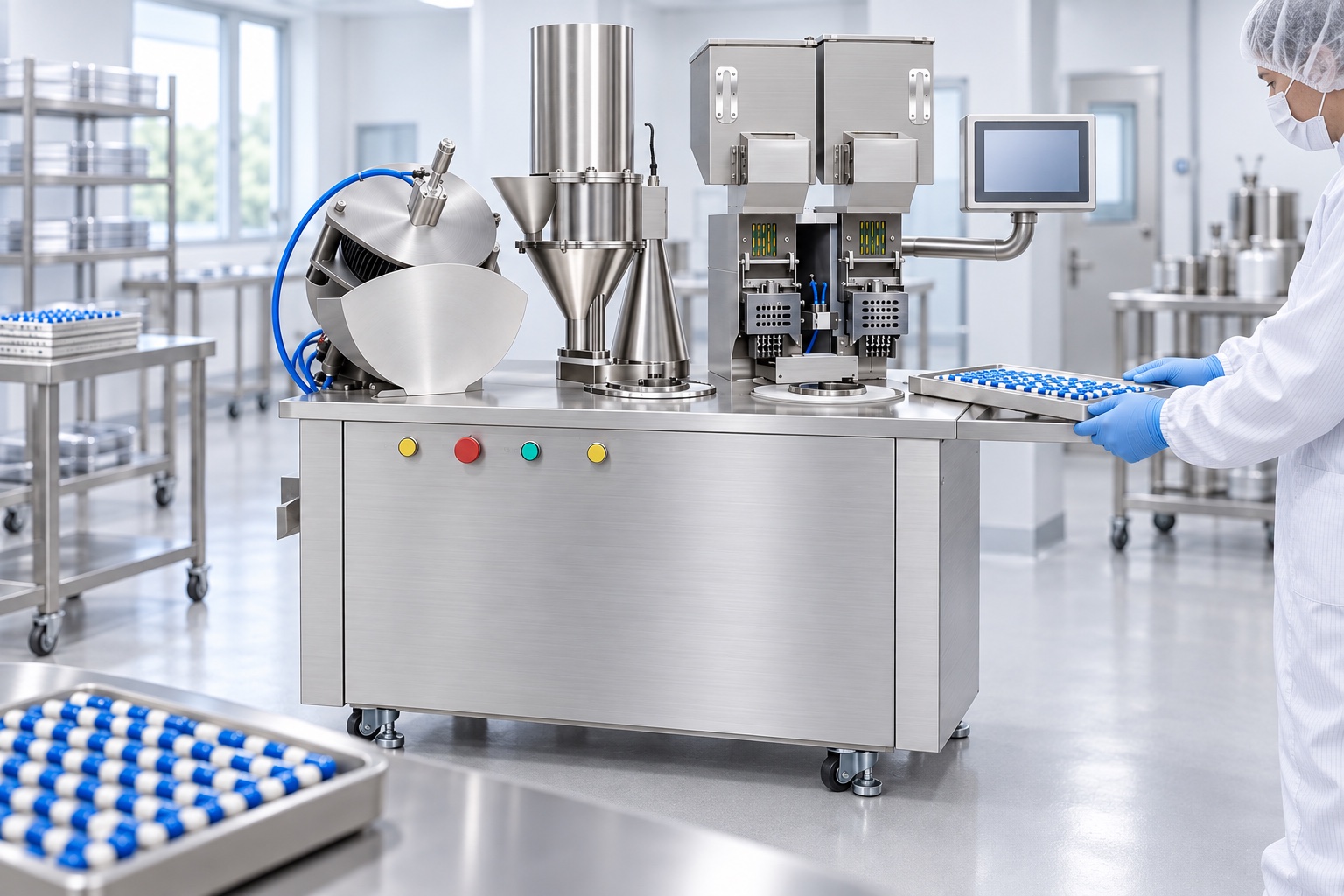
Manual filling suits development work and small batches where the process and quality checks are appropriate. As batch size grows, time spent loading, spreading, tamping, closing, and inspecting every plate becomes part of the real output rate. A semi-automatic powder capsule filler such as the FI-SCF series can take over capsule positioning, separation, filling, and locking while operators continue to handle tray transfer and checks. The change in equipment still calls for a fresh evaluation of fill weight and uniformity; settings from a manual plate do not transfer automatically.
The useful question is not only whether a capsule can be filled, but whether the same material can be filled, closed, and checked consistently across the whole batch.