
How To Calculate Capsule Fill Weight
To calculate the fill weight of a hard capsule, multiply the volume occupied by the powder by its density under the intended filling conditions. If the powder fills 0.70 mL at 0.60 g/mL, the estimated fill weight is 420 mg per capsule. That is the combined weight of the active ingredients and excipients, excluding the shell. To verify what the machine delivers, weigh a filled capsule and subtract the weight of its own empty shell.
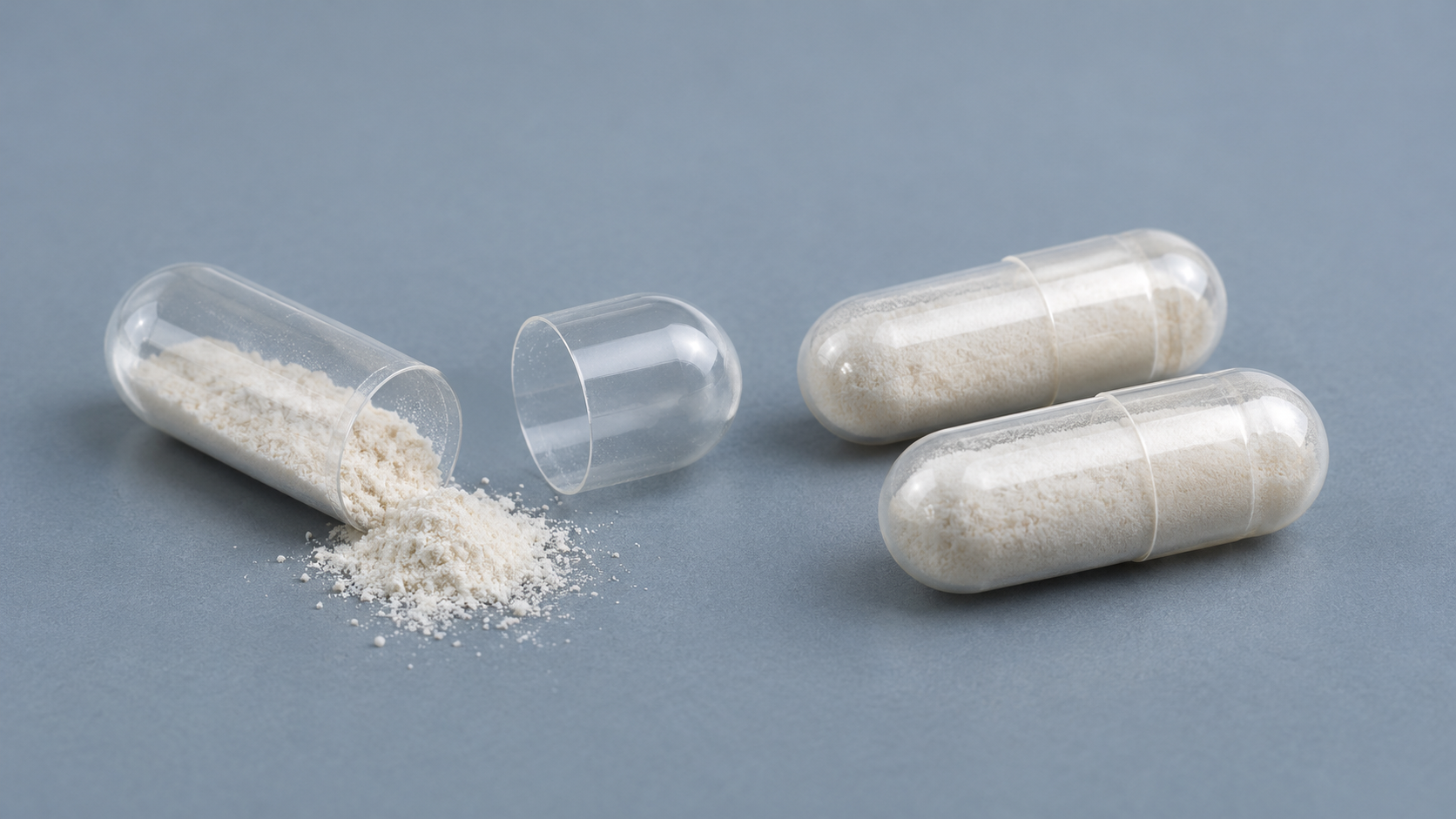
How Much Powder Can A Given Capsule Hold?
Estimated fill weight (mg per capsule) = fill volume (mL) × powder density (g/mL) × 1,000
For an initial size check, use the nominal fill volume from the specification for the shell you intend to run. Using the full volume assumes the powder occupies all of that space. Measure the density of the finished blend. If the formula gives only the active dose per capsule, first account for the actual weights of the active raw materials and excipients to establish the total target fill weight.
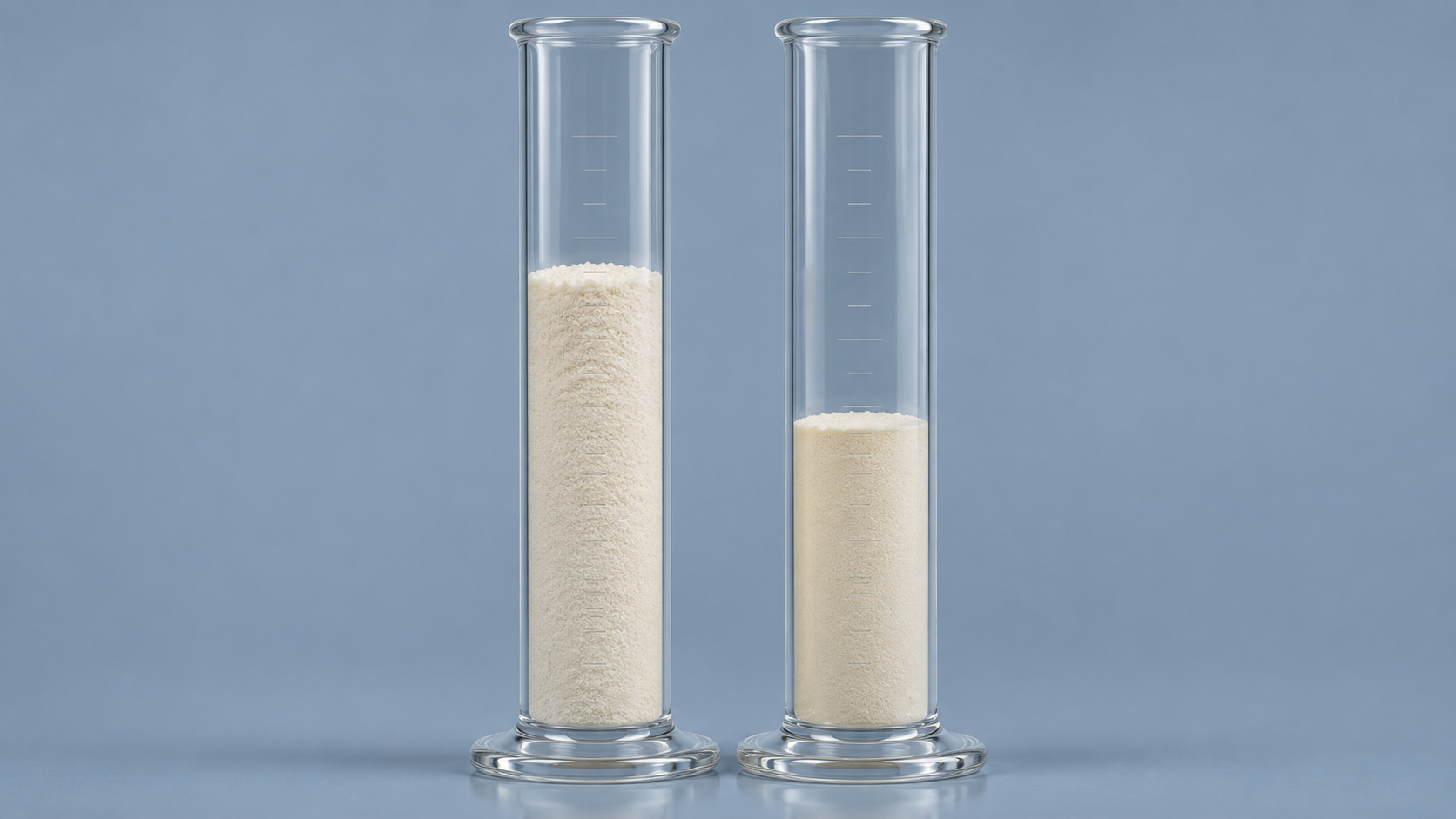
Loose bulk density measures the mass per unit volume of untapped powder, including the spaces between the particles. Tapped density measures that ratio after the sample settles under specified mechanical tapping. Run the calculation with both values to see how powder packing affects your estimate. A capsule filler meters and packs powder differently from a graduated cylinder, so the two estimates do not set upper and lower limits for the machine. The International Pharmacopoeia: Bulk Density And Tapped Density Of Powders
What Capsule Volume Do You Need For The Target Fill?
Required fill volume (mL) = target fill weight (mg per capsule) ÷ [powder density (g/mL) × 1,000]
Suppose the target is 420 mg per capsule and the candidate shell has a nominal fill volume of 0.70 mL. The following values illustrate the calculation.
| Density Used | Estimated Fill At 0.70 mL | Volume Needed For 420 mg | Initial Size Check |
|---|---|---|---|
| Loose bulk: 0.50 g/mL | 350 mg | 0.84 mL | Requires more space than the shell provides. |
| Tapped: 0.70 g/mL | 490 mg | 0.60 mL | Fits at this assumed density. Confirm in a machine trial. |
You can also calculate the minimum density needed if the powder occupies the full 0.70 mL. Divide 420 by (0.70 × 1,000) to get 0.60 g/mL. If the fill occupies less volume, it must pack more densely to reach 420 mg. Use the trial to see whether the filler can hit that weight consistently and whether the shells close properly.
Why Can The Machine Deliver Less Than The Estimate?
On a dosing disc filler, powder enters the dosing holes. Tamping pins pack it into plugs, which the machine transfers into the capsule bodies. The disc meters the dose before the plug reaches the shell, so a capsule can have room left even when the transfer is complete. In a study of one automatic tamping filler, pin settings affected both average fill weight and capsule-to-capsule variation. Powder bed height also affected fill weight for the poorly flowing powders tested. Study Of Fill Weight On An Automatic Tamping Capsule Filler
Run the trial with the blend, shells and dosing components intended for production. If fills are consistently light and individual weights cluster closely, check the dosing components and tamping pin settings before moving to a larger shell. If the mean is close to target but individual weights fluctuate, check the powder bed height and whether the feed keeps the dosing holes supplied consistently. Review individual weights alongside the mean.
How Do You Measure Net Fill Weight After A Trial Run?
Identify each sample and weigh the intact capsule. Open it, remove as much of the contents as possible, then weigh the cap and body from that same capsule together. Net fill weight = intact capsule weight − weight of the corresponding empty shell. For example, 512 mg minus 94 mg gives a net fill weight of 418 mg. An average shell weight can give a rough estimate of mean fill weight, but differences between individual shells can distort the apparent variation in fill. The International Pharmacopoeia: Uniformity Of Mass · National Physical Laboratory: Pharmaceutical Weighing Guide
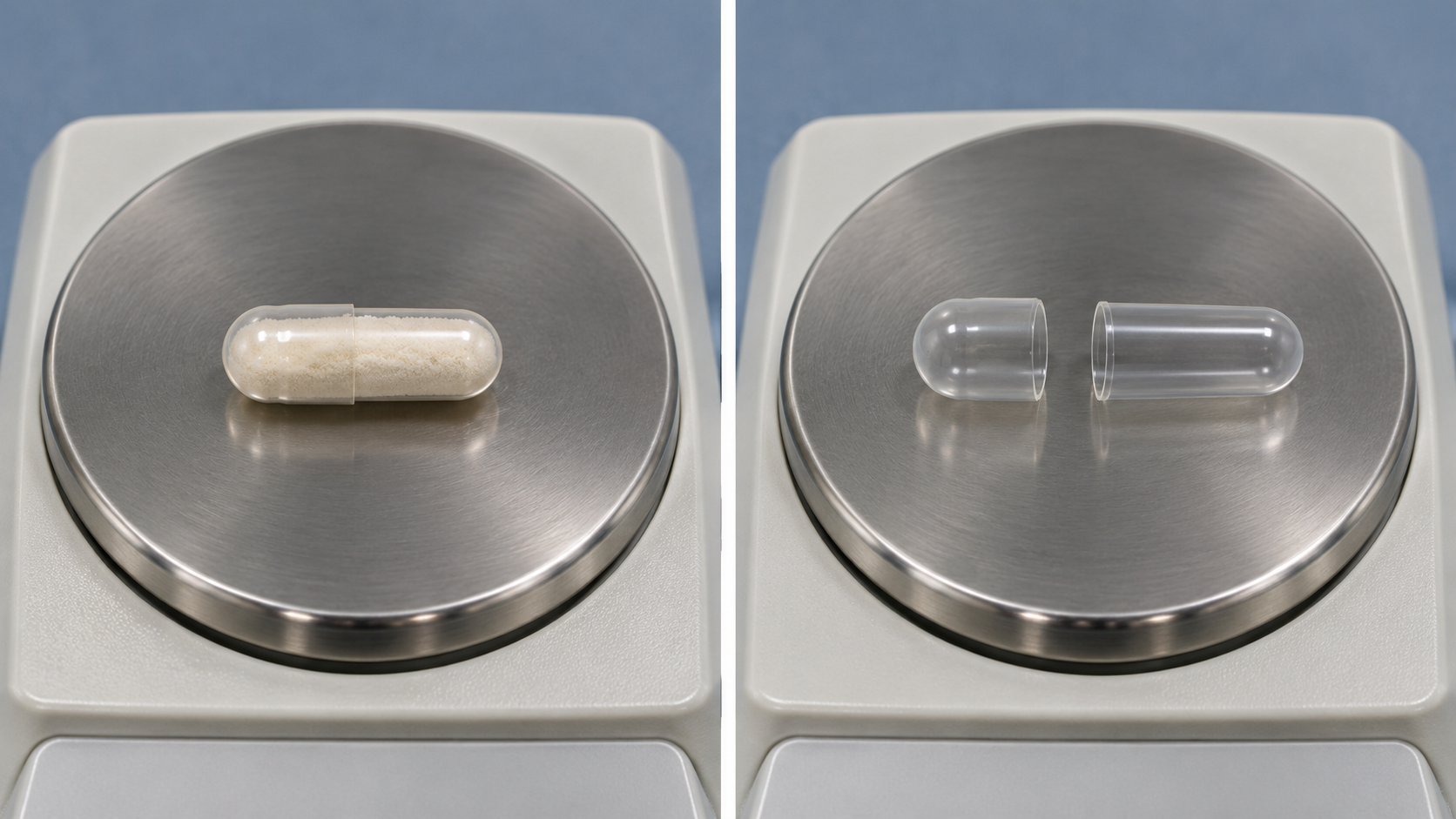
A reading of 418 mg places one capsule 2 mg below the 420 mg target. To assess the trial, compare the mean net fill weight and the individual results with the product’s target and limits, and check that the capsules are properly locked. For drug products that require content uniformity testing, follow the applicable product method. The International Pharmacopoeia: Capsules Monograph