
How To Fill 00 Capsules On Industrial Filling Machines
Filling size 00 capsules in production starts with matching the capsule shells, machine format parts and powder dosing setup. The machine then separates each cap from its body, meters powder into the body and closes the capsule. A stable process depends on how consistently those operations work together across a batch.
For manufacturers planning how to fill 00 capsules, the key decisions are the required fill weight, the behavior of the formulation and the production volume. Fimachinery offers fully automatic FI-CF powder capsule filling machines and FI-SCF semi-automatic equipment. Both equipment families include size 00 within their listed capsule ranges, but the exact shell and format configuration still need confirmation before an order or changeover.
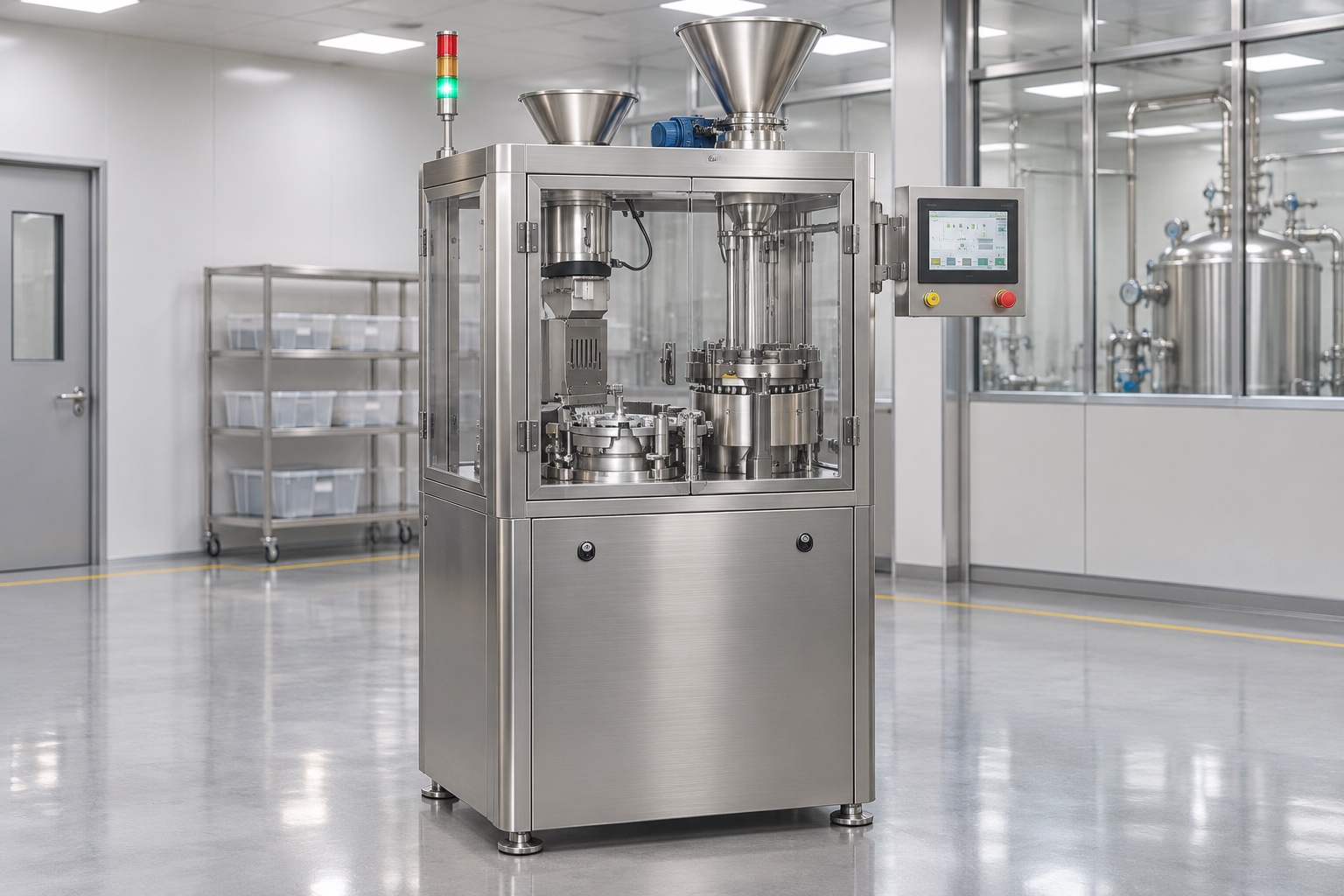
Size 00 Does Not Specify A Fixed Fill Weight
A capsule size identifies a shell format. It does not tell you how many milligrams of every powder that shell will hold. Bulk density, flow and compaction behavior affect the mass delivered by a volumetric dosing system.
This matters when transferring a product from another capsule size or changing a formulation. A powder that reaches the target weight easily in one setup may need a different dosing configuration after its density or flow changes. Increasing compression alone can create further process problems rather than solve the original mismatch.
Define the target net fill weight and acceptable variation before selecting the machine settings. Use representative production material to establish whether that weight fits the selected shell and can be delivered repeatedly. Shell capacity and dosing performance need to be assessed together.
Match The Machine And The Complete Size 00 Parts Set
For sustained production, an FI-CF automatic capsule filling machine links capsule feeding, separation, powder filling, rejection, locking, discharge and hole cleaning in a coordinated cycle. This reduces transfers between separate operating stations and supports continuous batch production.
FI-SCF semi-automatic equipment provides machine-assisted positioning, separation, filling and locking for smaller industrial batches. Its production planning needs to account for the complete station cycle and the transfer of capsule rings between operations. Compare the two approaches using accepted capsules per shift, the number of product changes and the time needed for cleaning and setup.
Size compatibility extends beyond the capsule holding holes. Depending on the machine design, the format set may include feeding and orientation parts, upper and lower segments or rings, guides, separation components, closing parts and ejection components. The dosing disc and filling rods also need to suit the target fill and the selected configuration.
Order or verify the set against the machine model and serial number. Parts that look similar may have different dimensions or alignment requirements. A size 00 shell should travel through feeding, separation and closing without interference; fitting into one component does not establish compatibility with the whole cycle.
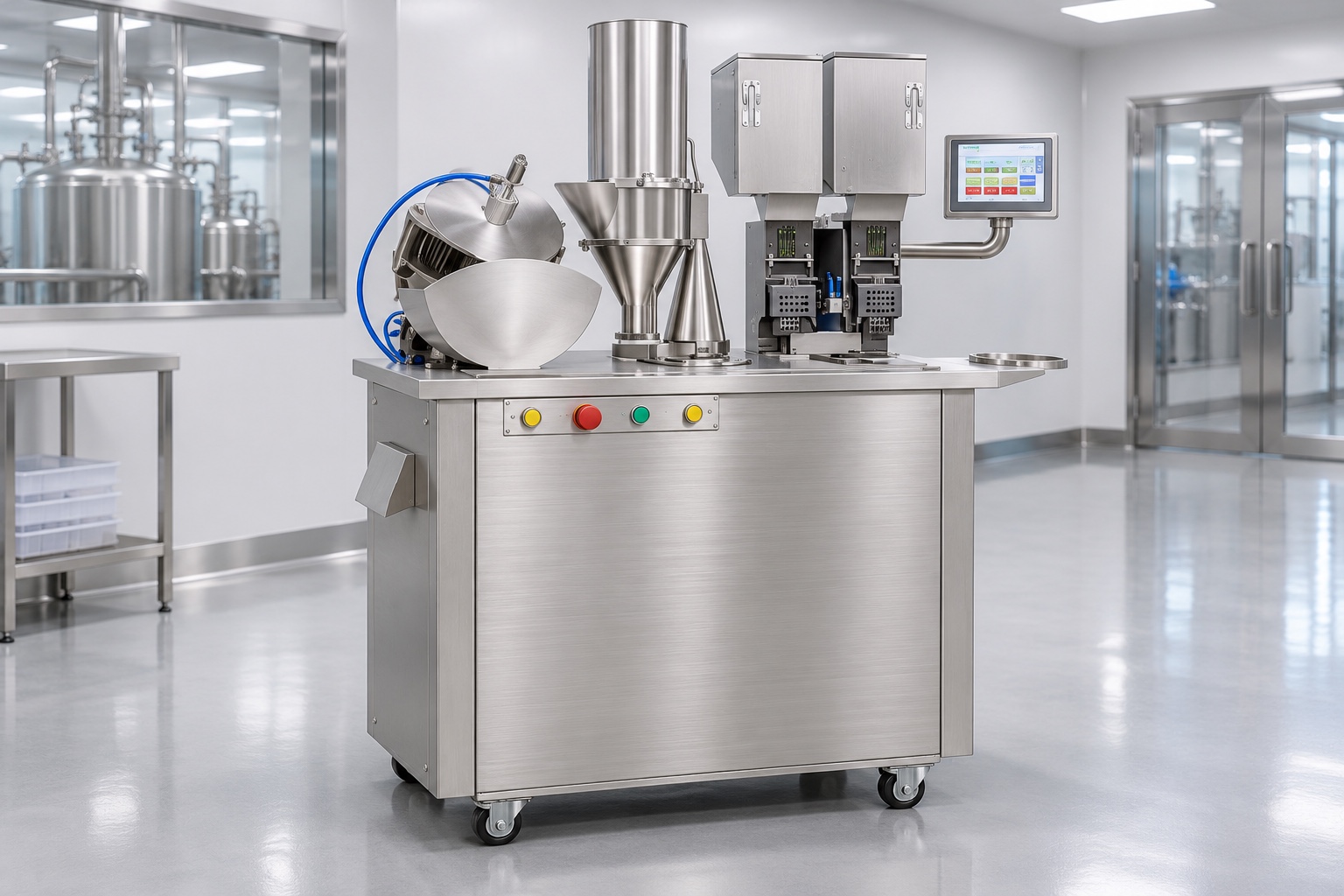
Prepare The Powder Feed Before Adjusting The Dose
When deciding how to fill capsules with powder, pay attention to what reaches the dosing station. Variations in powder level, bridging in the feed path or changes in bulk density can make the delivered fill inconsistent even when the mechanical settings remain unchanged.
Check that the hopper and feed path are clean, correctly assembled and able to supply the dosing system steadily. Examine the actual production blend rather than assuming that a previous batch represents every future batch. A change in flow or compaction behavior is a reason to reassess settings.
In a dosing-disc system, powder enters the disc holes and filling rods progressively compact it into plugs. Those plugs are then transferred into the capsule bodies. Disc geometry, powder bed height, rod penetration and powder properties work together to determine the delivered mass.
The purpose of this compaction is to form a transferable powder plug. More compaction is not automatically better. Establish the operating settings through trials with the intended formulation, checking the resulting fill weight as well as the condition of the filled capsules.
Run A Controlled Setup Trial
Before starting the machine, confirm line clearance, the identity of the shells and powder, the installed format set and the cleanliness of product contact parts. Check vacuum, dust extraction and other utilities against the instructions for the particular machine. Settings from a different model should not be treated as interchangeable.
The initial trial should establish that shells feed in the correct orientation, caps and bodies separate reliably, and bodies reach the filling station properly positioned. Separation faults need attention before dose adjustments: changing powder settings will not correct a misaligned or unseparated shell.
With shell handling stable, assess powder delivery at a controlled operating speed. Check net fill weight using a defined method that accounts for shell weight. Compare individual results and variation, rather than relying only on an average that could conceal high and low fills.
Increase speed in stages while observing the same measures. The useful operating speed is the one that sustains acceptable filling, locking and rejection performance. A catalog maximum cannot establish the output of a particular size 00 formulation on its own.
Check Closing And Downstream Handling
After filling, the cap and body must align and reach the specified closed position. Loose caps, split shells or deformed capsules call for checks of the closing setup, shell condition and alignment. They should not be dismissed because the measured powder weight is acceptable.
Use the machine's rejection functions within their confirmed scope. A shell separation check, for example, does not establish that the capsule contains the correct powder mass. Each inspection needs a clear purpose and an appropriate response when it fails.
Downstream equipment also affects the workable line speed. Fimachinery's FI-2CP combines capsule polishing with static removal and sorting of light, empty and broken capsules. This can support finished-capsule handling, but it does not replace the process checks needed to confirm fill performance. Match polishing, inspection and packaging capacity to the accepted output of the filler.
Respond To Changes During The Batch
If fill weights begin to drift, compare the trend with powder level, feed behavior, material changes and dosing-component condition. Keep the investigation focused: changing several settings together makes it harder to identify the cause and reproduce a successful setup.
If weights remain stable but capsule damage increases, examine the shell handling and closing stages. Inspect alignment, format-part condition and the closing position. Follow the equipment instructions for stopping, isolating and inspecting the machine before entering moving mechanisms.
Record the settings and checks that produced an acceptable run, including the shell batch, powder batch, format set and operating speed. Repeat the relevant checks after a changeover, an interruption or a material change rather than assuming the previous result still applies.
Specify The Production Job Before Choosing Equipment
For an equipment review with Fimachinery, provide the size 00 shell specification, formulation characteristics, target fill weight, batch size, required accepted output and expected changeover frequency. Include the downstream polishing and packaging arrangement so the filler can be assessed as part of the production line.
A representative material trial gives that discussion a practical basis. Confirm reliable shell handling, repeatable dosing and secure closing at the intended operating conditions, then use those results to select an FI-CF automatic or FI-SCF semi-automatic configuration for the production job.