
How To Fill Capsules With Oil In Industrial Production
An oil-filled capsule can leave the filling station looking sound and still leak later. Industrial production has to control both the dose inside the shell and the integrity of the finished capsule. Pumping the right quantity is one part of that process; shell compatibility, closure, sealing and storage performance need their own checks.
When specifying how to fill capsules with oil on an automatic line, start with the complete formulation and the intended capsule shell. Then define a process that can repeatedly fill, close and seal that combination under production conditions.
Choose The Capsule Route Before The Filling Machine
Two-piece hard capsules use a preformed body and cap. An automatic liquid capsule filling machine separates these parts, meters the formulation into the body and brings the cap and body together again. The project must also establish the sealing process needed to prevent leakage.
Softgel production follows a different route, forming the shell and enclosing the fill through dedicated encapsulation equipment. A hard-capsule liquid filler does not perform that shell-forming process. Confirm which finished capsule you intend to make before comparing machine layouts.
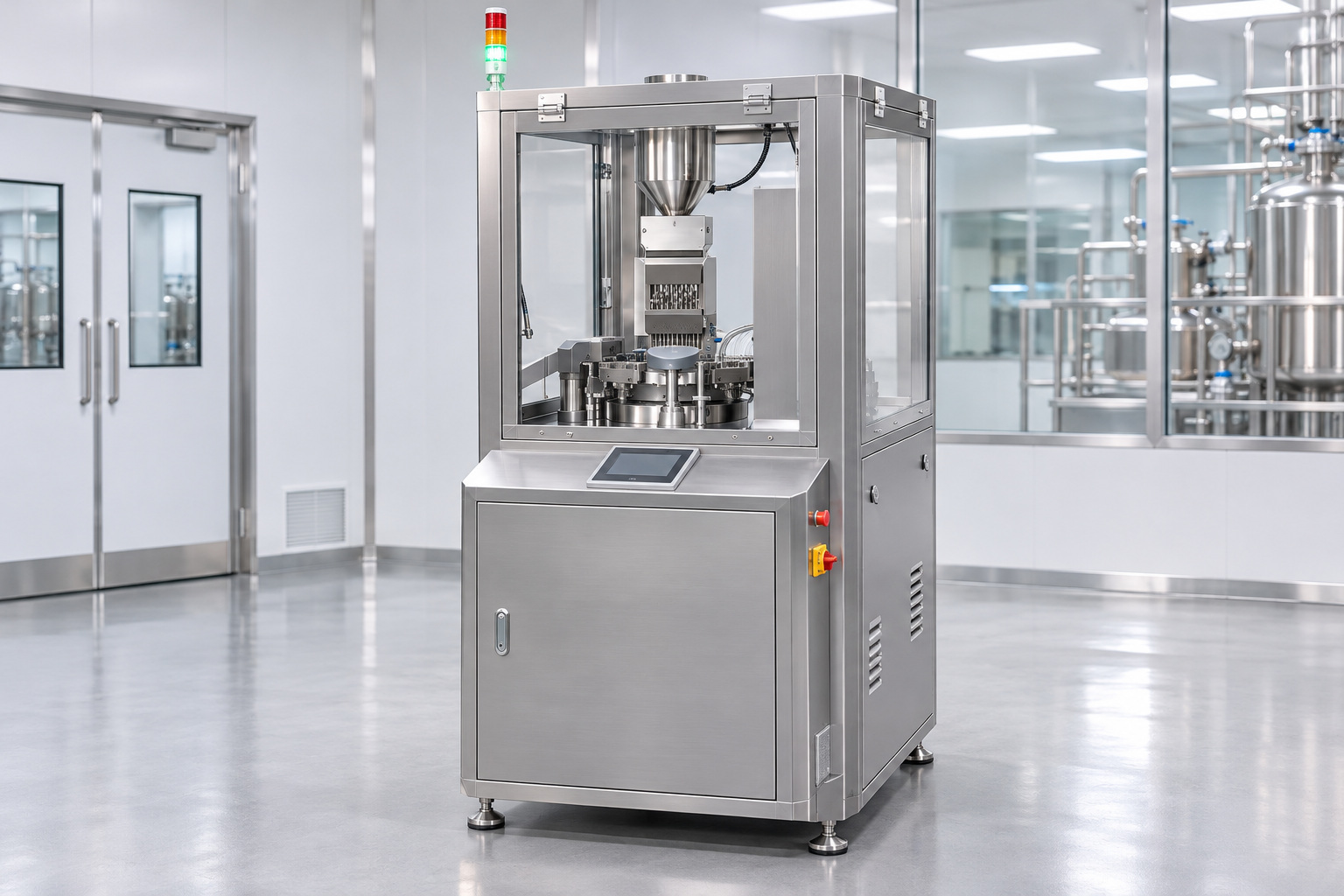
The FI-300CF/L is an automatic hard-capsule liquid filling configuration. The FI-300CF/LS combines liquid filling with sealing at the cap-body junction. These provide two relevant layouts to discuss with Fimachinery: a filling machine with a separately defined downstream sealing arrangement, or a connected filling and sealing system. The choice depends on the formulation, required output and scope of the complete line.
Prove That The Oil And Shell Work Together
“Oil” describes a broad group of formulations. A clear liquid and an oil-based suspension can behave differently during feeding, dosing and storage. Record the formulation's viscosity at its intended processing temperature, its tendency to separate or settle, and whether it introduces bubbles during transfer.
Evaluate the actual formulation with the selected shell material and capsule size. Short-term filling success does not establish storage compatibility. Changes such as shell softening, brittleness or leakage may develop after the capsule has left the machine.
Set the target dose alongside the capsule specification and sealing requirements. Do not choose a shell solely because a nominal volume appears sufficient. The combination must pass filling, closure and sealing trials with the intended product.
Keep The Oil Stable Through The Product Path
The feed vessel, pump, tubing, valves and nozzle form one product path. Their contact materials and seals need to suit both the formulation and its cleaning process. Heating, insulation, mixing or circulation should be specified where the formulation requires them, with operating conditions established through trials.
A temperature change can alter viscosity and affect pumping or nozzle behaviour. Entrained air can also disturb dose repeatability. If a suspension settles during a pause, the material reaching the nozzle after restart may differ from the material filled before the stop.
Define how the line will behave during these interruptions. Depending on the formulation, the approved response may involve maintaining temperature, controlled circulation, isolating material or cleaning before restart. A successful continuous run alone will not resolve those conditions.
Establish Repeatable Automatic Dosing
The filling system meters liquid through a pump and nozzle into each capsule body. Set and verify the dosing system using the actual formulation at the intended temperature and operating speed. Changing speed or liquid conditions can require further checks.
Observe the nozzle as well as the finished capsule. Hanging liquid, trailing droplets and inconsistent cut-off can affect the delivered dose or leave oil near the closure area. Investigate the pump, valves, product temperature and nozzle condition together when results drift.
Measure dose variation across the trial, including startup, stable operation and restart. Where weighing is used, account for the empty shell rather than treating total capsule weight as oil fill weight. Record individual results and out-of-limit units as well as the average; an acceptable average can conceal inconsistent filling.
Treat Closure And Sealing As Separate Operations
Bringing the cap and body together establishes mechanical closure. It does not, by itself, demonstrate that an oil-filled capsule will remain leak-free.
Agree the sealing method for the selected shell and formulation. Where band sealing is used, the seam treatment and subsequent drying or curing need defined conditions. Inspect the finished seam and test leakage or seal integrity using agreed methods. Storage studies should then establish whether the finished capsule remains suitable over time.
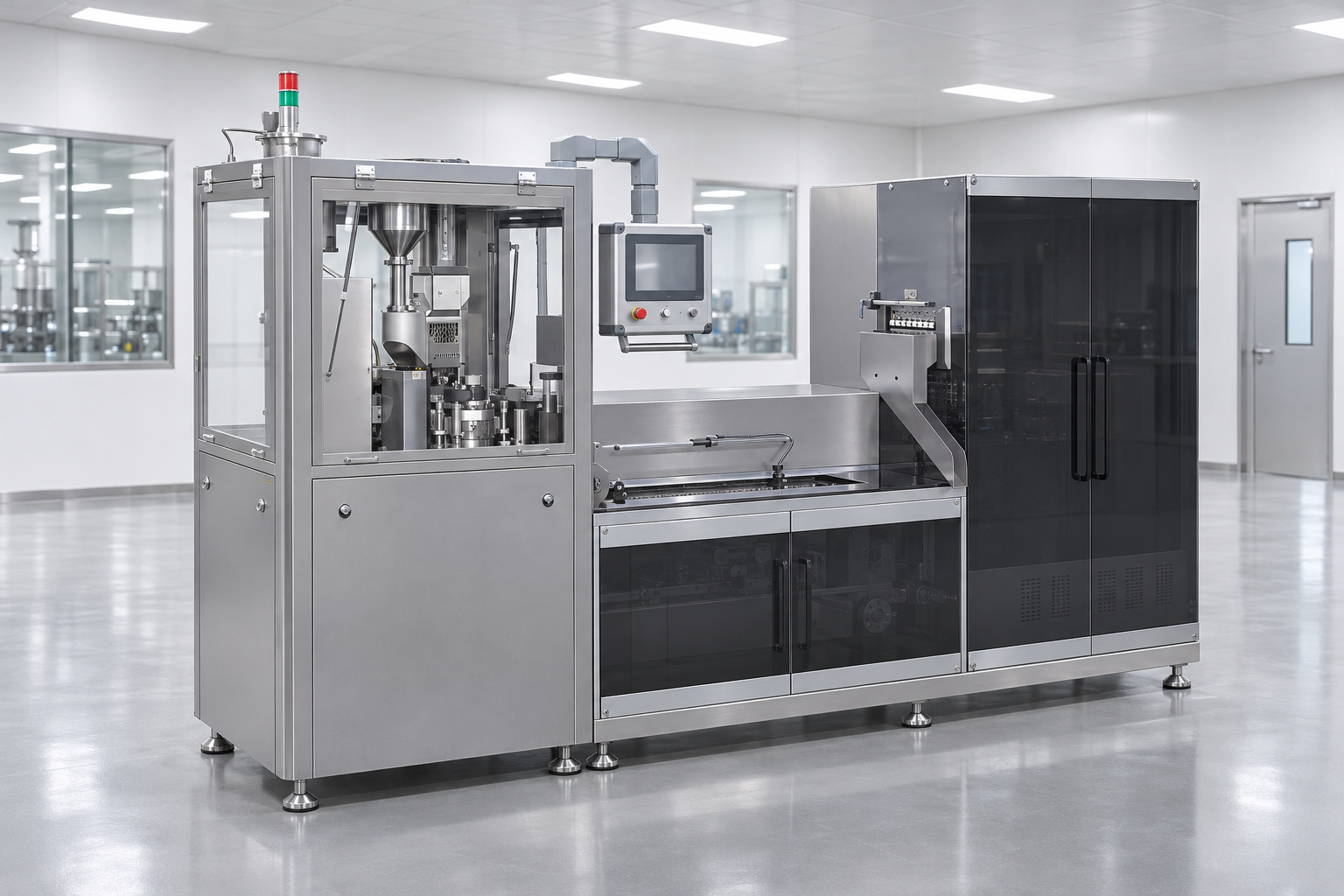
For an FI-300CF/LS project, confirm exactly which filling, sealing, transfer and downstream functions are included. A connected machine still needs separate acceptance criteria for dose, closure, seal quality and any required drying or curing. None of these results can stand in for the others.
Match The Connected Line To Sustained Production
A filler can only sustain output when the sealing and downstream stages keep pace. Include transfer capacity, temporary accumulation, blockage detection and stop signals in the line specification.
Pay particular attention to capsules between filling and sealing. Define how these units are identified and handled when either module stops, so unfinished capsules cannot mix with accepted product. Test the recovery sequence rather than relying on the normal running cycle.
Measure useful output as accepted finished capsules over an agreed run. Record rejects, sampling, pauses and downstream interruptions. A short demonstration of machine cycling does not establish the quantity of sealed product the line can consistently deliver.
Use The Correct Equipment Category For An Oil Project
Fimachinery projects may involve automatic or semi-automatic equipment, but the fill material determines which dosing system is appropriate. The FI-SCF series is a semi-automatic powder capsule filling category. Its powder-handling capability does not establish oil-filling capability.
For an oil application, specify a dedicated liquid product path, suitable dosing controls and a defined sealing arrangement. If a semi-automatic liquid solution is being considered, its suitability needs separate confirmation. For automated filling and connected sealing, evaluate the FI-300CF/L and FI-300CF/LS layouts against the actual formulation and production requirement.
Prepare A Production Trial That Answers The Purchase Questions
Give Fimachinery the capsule shell specification, formulation characteristics, target dose, batch size and required accepted output. Include the intended processing temperature, cleaning requirements and downstream packaging interfaces.
Agree the trial conditions before the demonstration. Assess dose repeatability, nozzle behaviour, capsule damage, closure, sealing, leakage and restart performance. Ask for results tied to the tested shell, formulation, speed and run duration.
The useful outcome is an agreed operating range and a clear equipment scope: which formulation-shell combination can be processed, how the line handles interruptions, and how accepted filled and sealed capsules are identified. That is the basis for selecting an industrial oil-filling system that fits the intended production job.