
Capsule Filler Trials: What Buyers Need Before Ordering
Purchase a filling machine for powder hard capsules and watch the manufacturer use general-purpose powder for a demonstration. At most, it can be considered a preliminary screening. To set a standard, you must take your own real materials and capsules and run them around on the manufacturer’s machines. It depends on whether the machine can consistently produce qualified products, provided that labor and material losses are within a controllable range. For those unresolved problems, it is necessary to determine how to correct them, how to retest them, and who will pay for them before setting the standard.
Even experienced buyers know that the most frustrating difference isn’t the machine “which can’t run”, but that it can only “make do in a short time”. A piece of equipment that requires people to slow down, frequently add materials, or repair it all day long, even if they finally force you to come up with a few batches of qualified samples, can be a real headache when it actually arrives at your factory. The additional labor costs, waste money, and delivery delays can be a real headache.
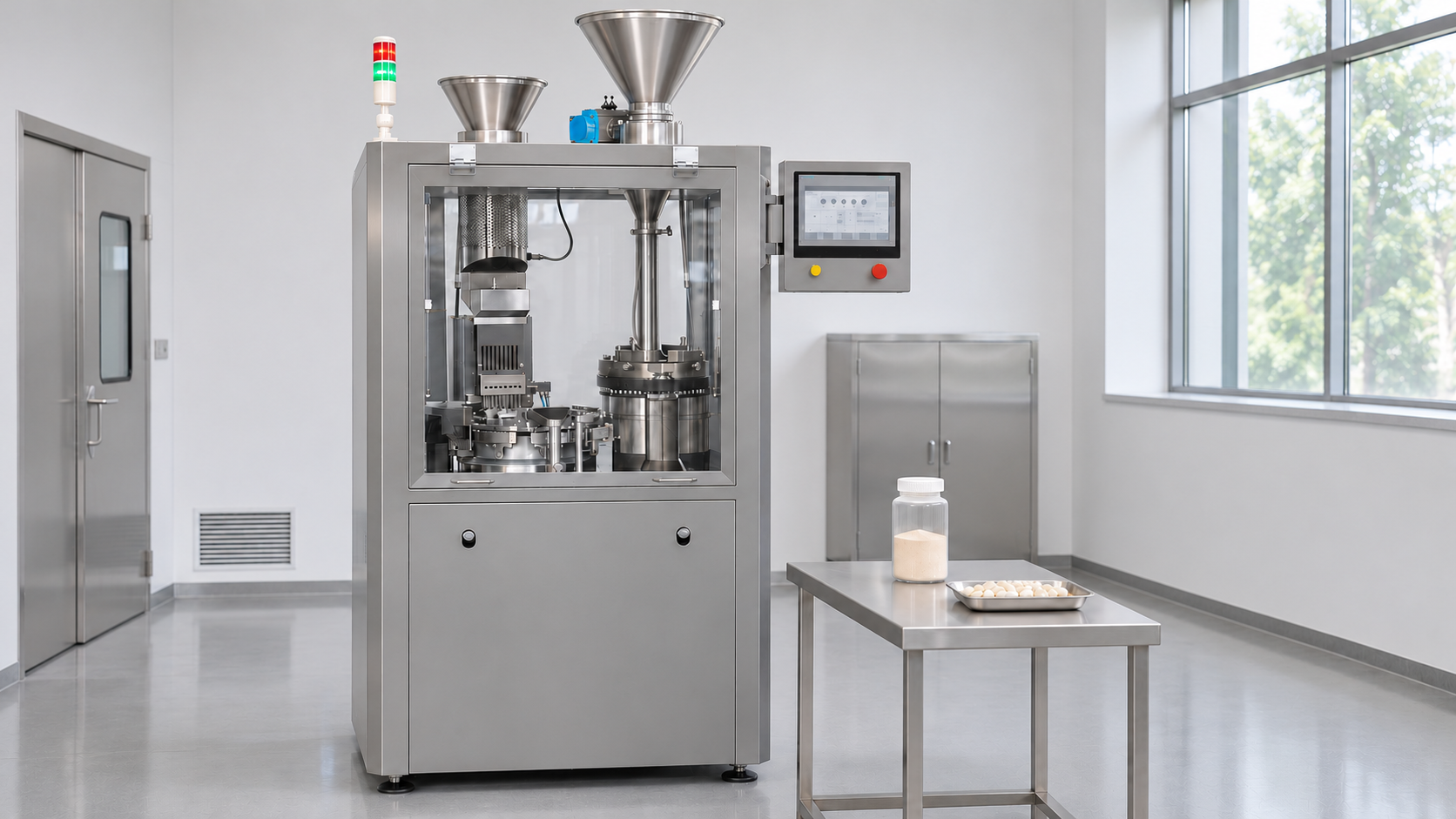
Don’t Test The Machine Blindly, Find Out What The Purpose Of This Test Is First
Before testing the aircraft, you must have a budget in mind when purchasing: Is this time you are going to screen the brands and determine the specific configuration, or are you going to prepare to sign the contract directly? The purpose is different, and the evidence you are looking at is completely different.
If you’re watching a manufacturer’s general-purpose powder and a demonstration of the machine, then that means seeing if the machine is worth the price of admission. Don’t assume it can handle your materials.
If you take your own materials, but the machine is not fully configured or only runs for a short time, this is a preliminary investigation. You can see where there is a mismatch, but it is not enough to prove that it can cope with full-load production.
Only by taking your real materials, running continuously in the agreed configuration, and keeping records can you use this as the confidence to pay for the target.
However, remember that even if you can get through at the manufacturer, it does not mean that you can directly work without inspection by pulling the equipment back to your factory. The installation and debugging budget and time that should be reserved cannot be reduced by a single point.
You Must Test With Real Materials, Otherwise The Quote Will Be Waste Paper
The materials used in the test machine must be infinitely close to the state you will pour into the machine in the workshop in the future. It is clear that the workshop uses mixed powder, and you send a single raw material to the manufacturer; or you carefully process the material before testing, but your own factory does not have this process at all—this is purely self-deception, and the range of test results will be seriously narrowed.
If the machine has to sift and mix your material again to properly fill it, you have two paths ahead of you:
First, you recognized this extra process. It is not cost-effective to recalculate the plan by including the purchase of new equipment, additional manpower, extra time and losses in the general ledger.
Second, stick to the original process. If you insist that the manufacturer use the material in your established condition to run again, there will be no standard before the result comes out.
Sometimes, because the ingredients are too expensive or confidential, alternative powders are used for testing, which is not a problem during the initial screening. But unless you can prove that this substitute powder is exactly the same as your real material “temper”, don’t use its test results to blindly promise formal production capacity.
In addition, the material, model and batch of the capsule shell must be written in black and white in the test machine record. Are the capsules tested inconsistent with what you’re going to buy later? This result can only represent the performance “of the current combination”. Whether you should retry or not depends on whether this difference will shake your determination to buy the machine.
Don’t Just Look At The Production Volume, You Also Have To Calculate How Much Labor And Waste Are Put Into It
When shopping around, don’t be fooled by the one on the touch screen “maximum speed”. You need to compare how many qualified products can be produced in the same amount of time.
Staring at the test machine records: From where does pinching the meter start to where does it end? How many times did it stop in the middle? How many times did you add the ingredients? How many times did they manually go in and tinker with it? If several manufacturers have different statistical calibers, their production capacity figures cannot be compared together.
The results of the test usually lead to the following procurement options:
After slowing down, I can run steadily: this can be discussed further. The premise is that you have to recalculate the shifts based on this slower production to see if you can still catch up by the due date. If you must complete the order at the speed advertised by the manufacturer, then slowing down the speed means that this machine is not suitable.
Machines cannot do without people, and workers have to keep an eye on them: then you have to recalculate the personnel costs. You need to distinguish whether the workers are adding materials normally or desperately dealing with jams, clearing powder, and adjusting the amount. If it’s the latter, don’t believe the illusion of “fully automated operation”; you’ll need to factor this extra human effort into the evaluation.
The output is similar, but the losses are different: this is the cost per batch. After the machine is tested, the good capsules, waste capsules, the powder remaining in the machine seams, and the collected powder in the receiving tray must all be accounted for. Don’t assume that the powder you receive can be recycled. This depends on whether your quality documents agree or disagree, and cannot be directly regarded as a profit recovery.
When encountering such expensive raw materials, the loss cost saved by the machine may be more than the price difference of the machine itself; if it is a small batch of lines that are old enough to be replaced, the time taken for clearing the field and changing molds often has a greater impact on the rate of return on procurement.
The Selected Sample Does Not Count If It Passes The Test; It Depends On When It Passes The Test
If the machine is adjusted slowly and methodically, and the manufacturer takes a small sample to show you “it meets the standards”, you should not believe it. What does it look like when you first turn it on? What does it look like to add ingredients in the middle? What does it look like after running for a long time? What does it look like to suddenly stop and start again? You don’t know any of this.
As mentioned earlier, the sampling and detection methods for these key nodes must be covered in the test plan. Calculate the specific number of samples to be drawn and the running time, and let your factory’s production and quality be determined. Don’t use general figures that are just rules for the industry.
In addition, the average weight meeting the standard may mask the huge differences between individual grains. Especially for products that require high uniformity of ingredient content, simply weighing them is definitely not enough. You have to figure out whether the test report only proves “installation volume” or also passes the test along with the relevant “quality indicators”.
In case the result is a rollover, there are two types of situations to distinguish:
One type is to adjust the machine within its original configuration. Then we need to lock the final parameters and run it again to see if the machine can only work properly within an extremely demanding range.
The other type requires changing the formula, adding equipment, or replacing core components. This has changed the procurement plan. First, ask the company whether it allows or not to change the formula, and then recalculate the quotation, delivery period and subsequent production costs.
If the test is to be modified mid-process, the final report must clearly explain: which configuration and which type of data were predicted to be qualified. Otherwise, even if the report has qualified words, you won’t know what level of machine you bought back is.
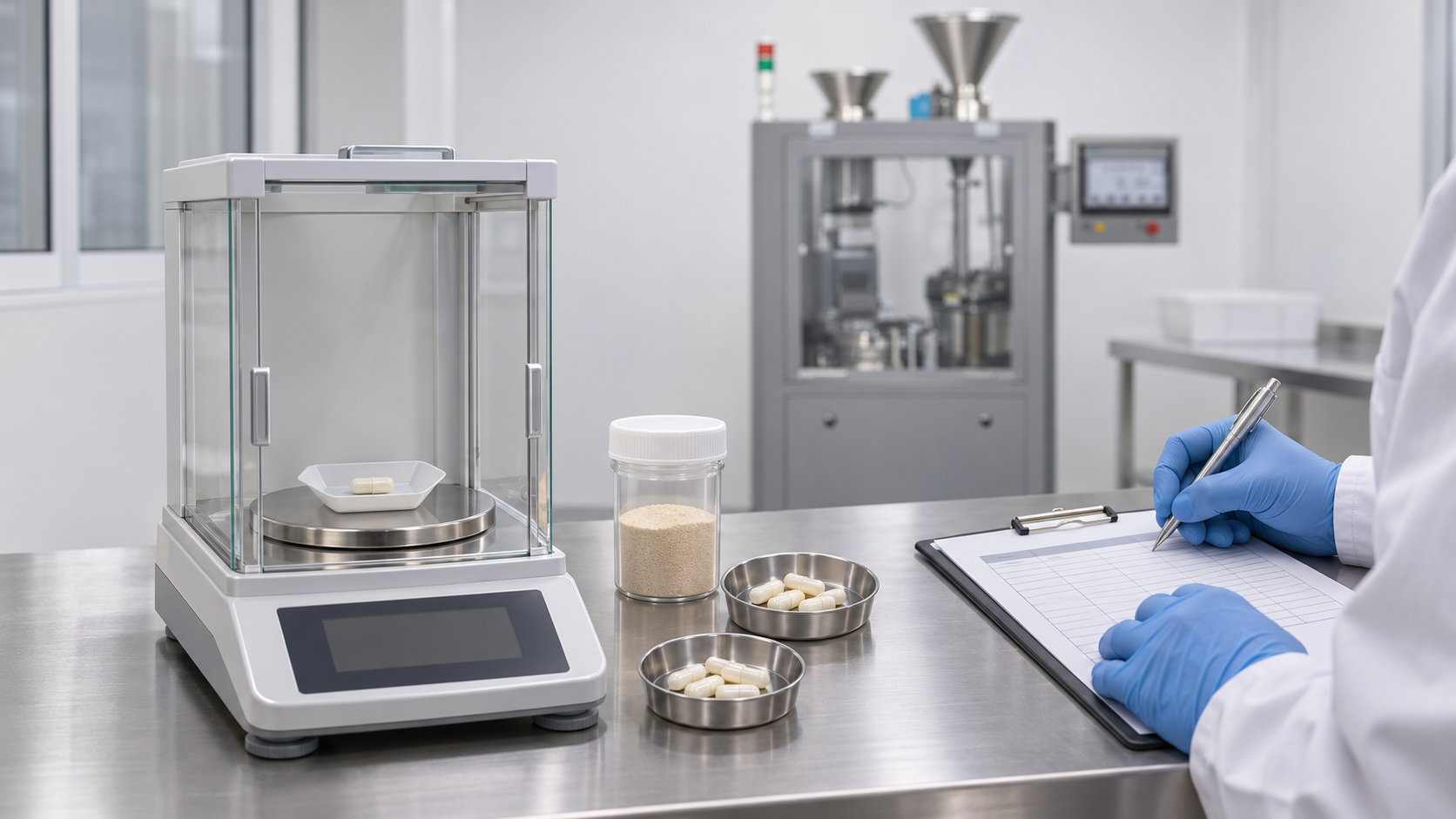
Do Machines Need To Accommodate Multiple Varieties? The Time For The Replacement And Clearance Of The Property Must Be Calculated
If you buy this machine and have to deal with several materials or different models of capsules, just verifying that one one passes the test does not mean that the entire product line is unimpeded.
Of course, there’s no need to run through all the materials on the first test run. Let the production and quality teams select the one that is easiest to change the equipment selection “representing the product” to try, and then arrange the subsequent verification plan.
At this time, procurement still needs to clarify two issues: what needs to be done in the middle of cutting from the previous batch to the next batch? Who will do these jobs and what tools will be used?
If a fast-running machine takes a long time to disassemble, wash, and resume production, it may only be suitable for running one variety for many years; another machine that runs slower but is extremely easy to change production may be more appealing to your appetite for short batches of multiple varieties. Which one to buy depends on the actual production schedule.
The disassembly, assembly and cleaning demonstration during the test machine can show you the labor investment and whether you are good at it, but it cannot prove that the residue after washing will necessarily meet the standards. If a product has these stringent quality requirements, an evaluation must be arranged separately.
How To Decide After The Test Machine: Set The Standard, Retest Or Just Say Goodbye?
After the test, the results can be roughly divided into three paths (the specific thresholds must be agreed upon by both parties before the test):
Entering the business standard: The real material is in, the configuration is finalized, and the agreed output quality has met the standards. At this point, you can freely compare the final price and delivery terms, and write down how to implement subsequent acceptance into the contract.
Retesting after rectification: There was a fork in the road. The manufacturer has a reliable solution, but it has not been verified yet. Don’t rush to place an order. First, finalize where to change it, who will pay for it, when to complete the changes, and what to take in the retest.
Pause selecting the current solution: The core indicators are not met, or you must change the formula and add labor to solve it, which is unacceptable to your factory. Then decisively re-select the model or production method, and don’t let the delivery date of the equipment kidnap your suitability judgment.
Remember, what the manufacturer says “that can be resolved later” should never be used as an excuse to close the problem. If you need to replace parts, you must decide what to test after replacing them; if you need to add auxiliary equipment, you must complete the quotation and responsibility; if you want to continue to adjust on site, you must explain how it will affect the production time.
Some minor details can indeed be left to the delivery stage, but only if they do not affect the major premise “whether the equipment can be used”. If the actual powder cannot be filled stably, or the output cannot keep up with the production schedule, such critical problems must be solved before making procurement commitments.
Before Signing The Contract, Write The Entire Bottom Plate Of The Test Machine Into The Terms
I really want to place an order and compile the final test results into a record signed and pledged by both parties, which must at least cover these few items:
- The batch of materials, capsule shells, equipment configuration, and key operating parameters that passed the test.
- Statistical caliber of qualified output, quality results, cost to several people, and amount of waste.
- There is no closed-loop problem yet. Who is responsible for the correction, who pays the cost, and when will the test be retested.
- If the test machine is different from the machine last sent to you, you must confirm what content is required.
- The preparations that need to be made in advance in your own factory, and how these are linked to subsequent acceptance and payment nodes.
In short, if the key results are all correct, use this record to make a firm decision on the final quotation and contract; if there are still unverified changes, you must not see the rabbit but not the eagle, get the retest results after the rectification, and then decide whether to accept the new price and delivery period.