
How To Fill Pill Capsules: A Practical Manual Method
Filling a few hard capsules by hand looks simple until the powder behaves differently from one cavity to the next. One body may be full while its neighbor still has space; a cap may close neatly while another traps powder along the seam. A repeatable process depends on matching the shell and filling tray, preparing the powder, keeping the fill even, and checking the finished capsules.
This guide explains how to fill pill capsules with a manual tray. It describes the physical process and the checks that matter when the capsules are part of a controlled small batch. The amount of an active ingredient, the suitability of a formulation, and any release decision must follow the applicable approved procedure. The appearance of a filled capsule cannot establish its dose.
Choose The Shell And Tray Together
Hard capsules are supplied as two pieces: a longer body that holds the fill and a shorter cap. Select the shell size and material for the intended formulation, then confirm that the loader, body plate, cap plate, powder tray, spreader, tamper, and closing plate are made for that size. Similar looking plates are not automatically interchangeable. If the body sits loosely or the cap does not align, the fill and closing steps become less reliable.
Check the shells before loading. Set aside any with dents, splits, poor fit, or damage that could interfere with separation or locking. Prepare the required powder quantity according to the approved batch or formulation instructions. A tray can organize the work, but its cavity size alone does not measure the mass placed in each capsule.
Load And Separate The Capsules
Use the loader or orientation plate to place the empty shells into the tray in a consistent direction. Seat the bodies in the lower plate and lift the upper plate so the caps separate from them. Before adding powder, look across the body plate for empty holes, tilted shells, or bodies that failed to separate. Correct these now; powder makes a missed cavity harder to spot.
Keep the cap plate nearby and protected from stray powder. Powder on the cap edge or body rim can prevent full closure later. In a controlled workspace, keep the equipment and product contact areas clean and follow the approved cleaning and handling procedure for the material in use.
Spread The Powder Evenly
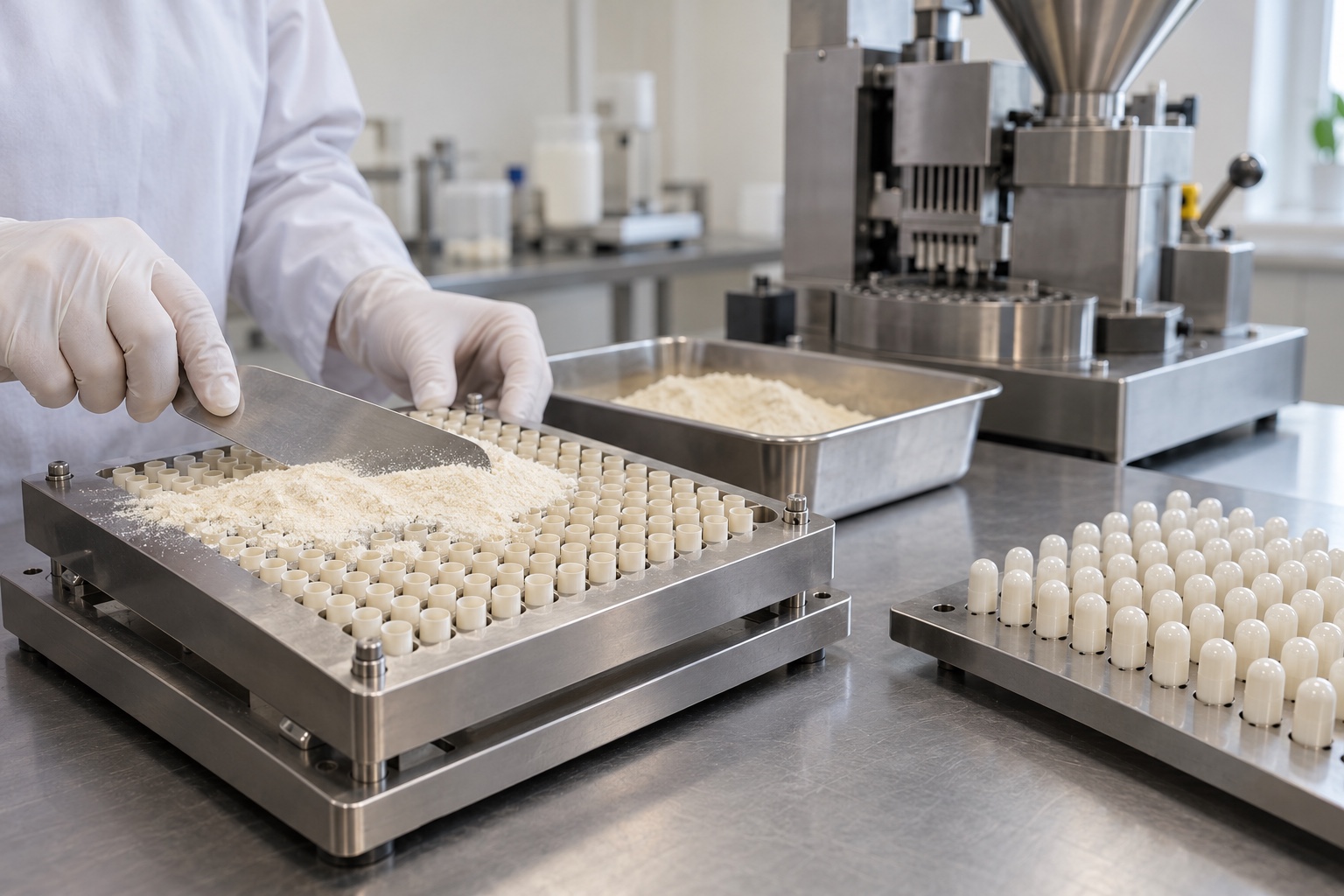
Place the prepared powder onto the powder tray or body plate as the tray design requires. Draw the spreader across the open bodies with steady, repeatable strokes. Look for cavities that remain visibly low, powder piled at one end of the plate, or material that bridges over an opening instead of entering it. Redistribute the powder and sweep again rather than assuming every cavity received the same amount.
Some powders need light tapping, vibration, or a tamper to settle enough material into the bodies. Use the same method across the plate. Pressing one row more deeply than another can change the amount held by individual capsules. If a second pass is needed, add and spread the remaining powder in a consistent sequence. Do not force extra powder into a shell simply to make the plate appear level.
Powder behavior matters as much as the tray. A material that clumps, separates into coarse and fine fractions, or flows poorly may distribute unevenly even when the operator repeats the same motion. When that happens, investigate the material and the process instead of trying to correct an unknown dose by eye.
Close, Remove, And Inspect

Clear excess powder from the plate and shell rims using the approved method. Reposition the cap plate over the filled bodies, check alignment, and operate the closing mechanism until the caps are fully locked. Then eject the finished capsules and inspect them under suitable light.
Look for loose caps, split or dented shells, powder caught in the seam, empty capsules, and powder left on the outside. Segregate questionable units for the disposition required by the batch procedure. A capsule that looks closed may still have an unacceptable fill; visual inspection is one check, not a substitute for the specified weight or content tests.
Why Fill Weight Can Vary
Manual filling has several sources of variation. Powder may reach different holes at different points in the sweep. Tapping and tamping alter how densely it packs. Powder can segregate during handling, and a partially blocked cavity can receive less material than the others. These effects become more important when a small change in fill mass matters to the product.
If the batch requires weight checks, use the approved sampling and acceptance method. Comparing the mass of a filled capsule with an appropriate empty shell can help assess its fill, but shell mass and ingredient distribution also need to be considered under the product's quality procedure. A batch average cannot show whether every individual capsule is acceptable.
When A Manual Tray Is No Longer Enough
A manual capsule filling kit is useful for development work and limited batches where its controls are suitable. It is not simply a slower version of an automatic dosing system. As volume or quality demands increase, consider the equipment needed to control shell loading, separation, filling, closing, rejection, and cleaning more consistently.
Fimachinery's FI-SCF series is a semi-automatic powder capsule filling option that handles capsule positioning, separation, filling, and locking. The company's automatic powder capsule filling range offers a different production path. Moving from a manual tray to either type still calls for a fresh evaluation of fill weight, powder behavior, shell compatibility, and product quality; the manual tray's settings or results cannot be transferred unchanged.
The practical sequence is straightforward: match the shell to the tray, separate the pieces cleanly, distribute the prepared powder evenly, close every capsule fully, and check the finished batch. The work is complete only when the required quality checks support the intended use.