
How To Use A Capsule Filler For Industrial Batches
In production, how to use a capsule filler starts well before empty shells reach the machine. The shell, formulation, change parts, and quality checks must work together. A filler can run smoothly while still producing capsules with the wrong fill mass or a poor lock, so the useful question is whether the complete process stays in control across a batch.
Fimachinery has two relevant powder-filling routes: the FI-SCF semi-automatic series and the FI-CF automatic range. Both are industrial equipment for two-piece hard capsules. The semi-automatic route moves capsule rings or trays between stations; the automatic route carries capsules through a machine cycle. The following sequence applies to powder filling, with the model's operating instructions and the approved batch procedure governing the actual settings.
Match The Machine To The Capsule And Powder
Confirm the capsule size and shell material, then verify that the installed change parts belong to that specification. A different shell batch can behave differently at orientation, separation, and locking, even when the nominal size is unchanged. Check for visibly damaged or distorted shells before feeding them to the machine.
The powder matters as much as the shell. Flow, bulk density, and compressibility affect how a metering cavity fills and how much material reaches each capsule. Record the product and batch setup rather than assuming that a setting that worked for another powder will deliver the same net fill mass.
Prepare The Equipment Before Adding Product
Check the cleaning status of product-contact parts and confirm that the capsule path, dosing components, vacuum, compressed air, dust extraction, guards, and reject route are ready for the batch. After a changeover or maintenance, run the machine in manual or jog mode as directed to check for interference at the separation, dosing, closing, and ejection positions. An unexpected resistance is a reason to stop and inspect the change parts, not to force the cycle.
Run an empty-shell trial first. Watch whether shells enter in the right orientation, caps separate from bodies, unmatched shells are rejected, and the assembled capsules leave the machine cleanly. This isolates a mechanical or shell-handling problem before powder complicates the diagnosis.
Use The Semi-Automatic Station Sequence
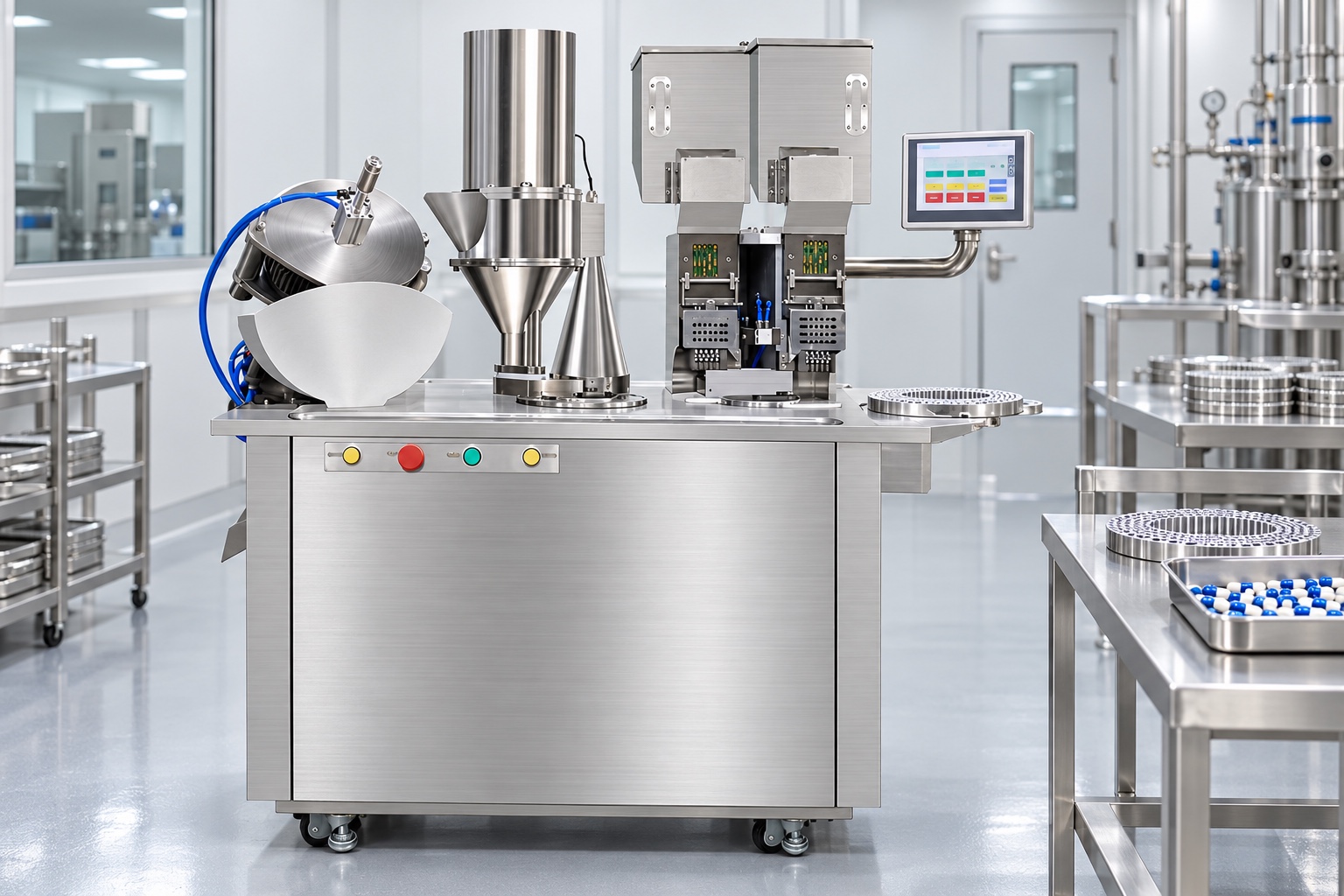
On a semi-automatic capsule filling machine such as the FI-SCF series, empty capsules are oriented and placed into a ring or tray. The machine separates the caps from the bodies, typically with vacuum. The operator then transfers the body section to the filling station, where the machine meters powder into the capsule bodies. After filling, the cap section is brought back into alignment and the closing station locks the batch of capsules. Finished capsules are discharged for inspection.
The transfer between stations is part of the production rhythm. Keep the trays identified, confirm that each ring is seated correctly, and avoid advancing a tray if separation or filling is incomplete. Check the fill result after startup and after material replenishment. A semi-automatic machine still needs a consistent supply level and repeatable station handling to maintain a stable batch.
Use The Automatic Cycle
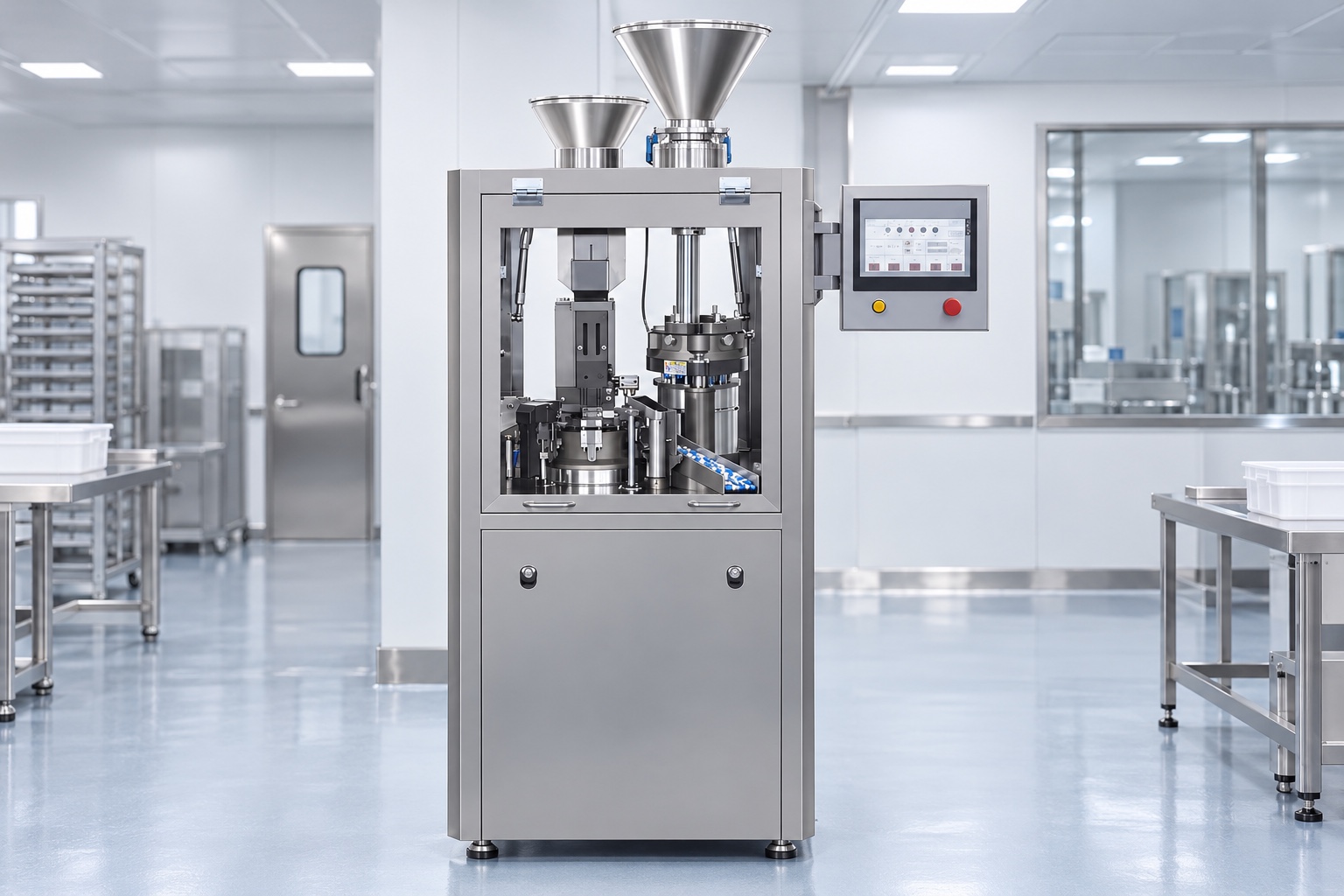
An automatic powder capsule filler brings the same essential operations into a repeated machine cycle: shell feeding and orientation, cap-body separation, powder metering, rejection of defective units, closing, discharge, and cleaning of the empty mold holes. Fimachinery's FI-CF range provides this automatic production route. The exact dosing hardware and controls depend on the model and configuration, so set up the installed machine rather than treating all FI-CF versions as identical.
Start at a controlled speed and establish reliable shell separation and fill mass before increasing output. During the run, follow the powder level, empty positions, failed separations, average net fill mass, fill variation, closure, damaged shells, and reject count. A change in powder supply or capsule behavior may require investigation even if the machine continues to cycle.
Check The Capsules, Not Just The Machine Display
Inspect capsules from startup and at the intervals in the batch procedure. Look for empty or underfilled units, loose caps, splits, dents, powder at the seam, and residue on the outside. For fill control, weigh samples using a method that accounts for empty-shell mass; a capsule's gross weight alone does not reveal its net contents. Where the product requires it, content testing is a separate question from weight variation.
If fill mass drifts, check powder feed and the condition of the metering station before changing several settings at once. If separation fails, inspect shell condition and the vacuum path. If caps are loose or shells crack, verify alignment and closing adjustment. Isolate affected output according to the batch procedure while the cause is investigated.
Finish The Batch With A Controlled Changeover
At the end of the run, account for in-process and rejected capsules, then clear remaining shells and powder from the equipment. Isolate energy sources before opening guarded areas or removing parts. Clean the product path and change parts using the approved method for the formulation, dry and inspect them, and record the setup for the next batch.
That is the practical way to use a capsule filler in industrial production: match the shell and powder to the installed machine, prove the empty-shell path, establish a stable fill, and judge the run by sampled capsules. The FI-SCF and FI-CF routes differ in how stations are linked, but both depend on those same controls.