
When Should Buyers Choose Semi-Automatic Capsule Filling?
Often, when people feel that manual filling is too laborious, they wonder whether to install semi-automatic equipment. In fact, this money is only worth it when the stable orders at hand do indeed consume a lot of labor, and the new equipment can not only ensure delivery time, but also make money back from the existing orders. If your usual orders are very broken, all in small batches, or if the workers spend most of their time frequently changing molds, clearing the field, and waiting for inspection, then buying a semi-automatic one will probably not get you back quickly.
To put it bluntly, the key to deciding whether to buy a machine depends on how much time “the time the machine can save you” accounts for in the entire production cycle. Just because the machine spins fast doesn’t mean the batch of goods can be shipped out sooner; working is not that tiring, and the boss’s monthly salary may not be immediately reduced.
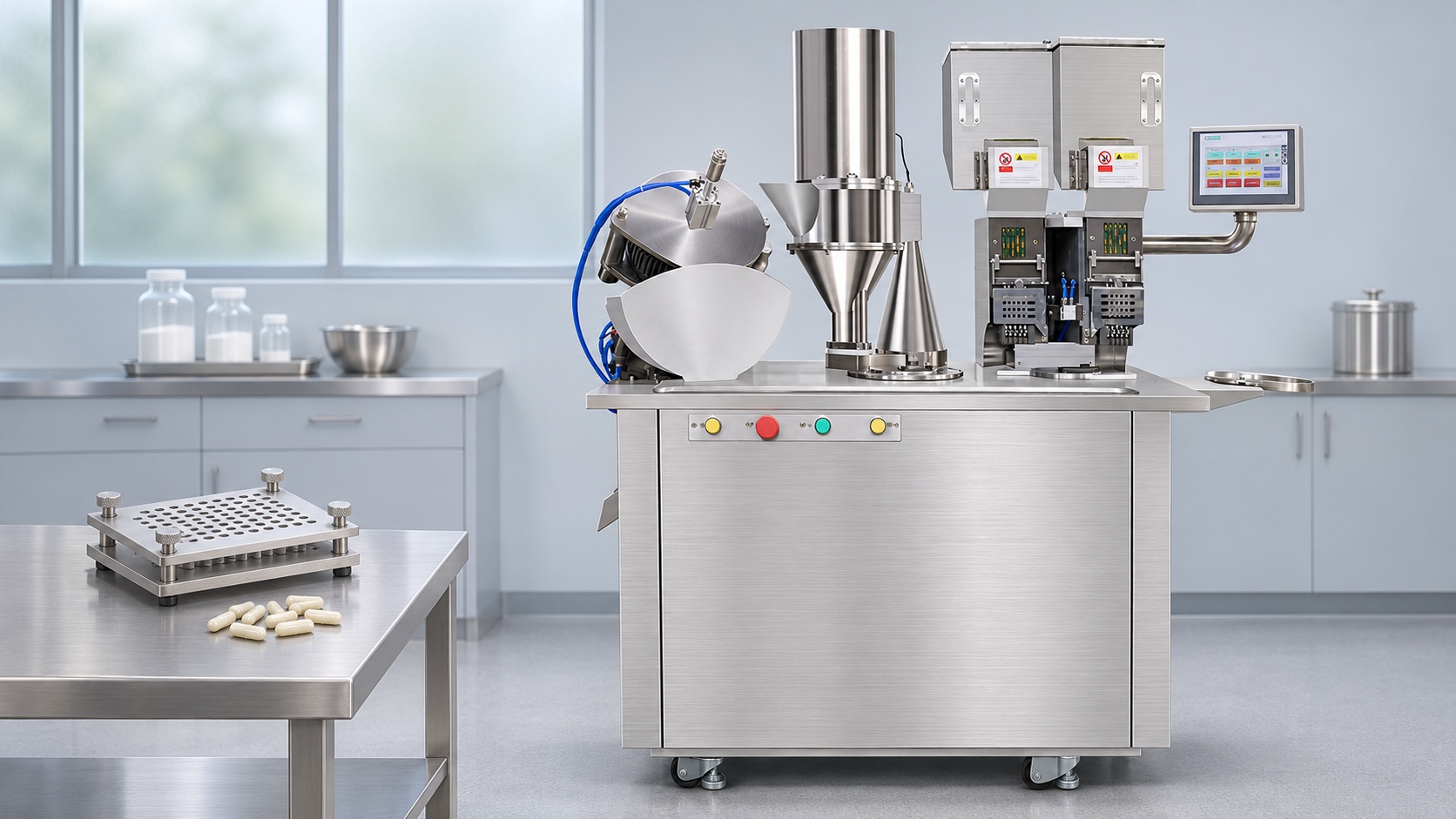
Identify The Bottleneck In Manual Capsule Filling
Before paying, you have to understand a core question: Are the current workers fighting tooth and nail to deliver the goods, or are the goods delivered just because there is too much dead energy consumed in them?
If it’s the former, then the reason for buying the machine is “to take more orders and deliver more”. But if it’s the latter, then we need to do the math: after the machines free the people, can these people do other work? Can we pay less overtime, hire fewer temporary workers, or cut the quota that was originally intended to recruit new people? If the workers have nothing else to do after leaving the filling table, then putting on the equipment is at most a way to make things easier for everyone, and the company’s real money has not been saved. This can certainly be used as a reason to buy a machine (for example, to improve labor intensity), but when doing budget approval, you have to write it down truthfully and don’t force it “to save labor costs”.
In addition, we must also identify the real bottlenecks on the assembly line. If the capsule dries very quickly, but the light inspection, number of capsules or packaging are slow and sluggish, then you just speed up the filling, and the result is a pile of semi-finished products. At this time, either we should first renovate the subsequent processes, or we should simply pull the entire line together to calculate the upgrade.
Compare Complete Batches, Not Machine Speeds
When evaluating whether manual or semi-automatic is a good deal, don’t just look at what’s in the sales mouth “how many pellets are produced per minute”. When comparing, you must identify the same starting and ending points: from the moment the worker enters the workshop and prepares to start the machine, until the work is done, the inspection is done, the machine is cleaned and handed over.
Between the end and the end, you should pinch the meter to write down two numbers. One is “total time”, which is how many hours the shipment took from start to finish, which is directly related to how you schedule production and when you can deliver it; the other is “total working hours”, which is how many hours it took all the people involved in the work combined, which is related to your manpower usage.
These two numbers will often give you very different answers. For example, there is a plan that can indeed get the entire batch of goods off the production line early, but it requires several people to rotate around at the same time when it is running. Then this equipment is only suitable for meeting delivery deadlines, and it is impossible to save labor.
Also, you have to dig and crush the semi-automatic equipment to see what manual work it still retains. If manual labor is still required for tasks such as moving trays, adding materials mid-process, collecting materials, and random inspections during the process, then the workers are still tied to the edge of the machine. Therefore, when conducting procurement reviews, manufacturers must clearly state who will perform each action, and do not trust them with an understatement “single-person operation”. If it’s nominally “single-person operation”, but this person can’t leave at all during startup, then when calculating the cost, it’s a proper and continuous occupation of your head. Only when this person can really take the time to do something else without missing the machine can you earn the time you squeezed out.
How Changeovers Affect Short Production Runs
It is not cost-effective to consider semi-automatic equipment. Just looking at the total number of products shipped each month is definitely not enough. The requirements for machines are also very different from the hundreds of thousands of grains produced a month, making two or three old varieties every day, and changing to new varieties several times a day.
Let’s use an analogy: two factories have similar monthly output. Factory A makes those fixed products every day, but Factory B is just taking on a bunch of miscellaneous small orders. Even though the time saved by the two companies is exactly the same during the “filling” process, the people in Factory B still have to disassemble, wash and adjust the machines every day. After a month of fiddling, all the labor saved is put into cleaning the site and changing the molds.
Therefore, for jobs with fixed varieties and large-scale repetitive tasks, the purchasing eye should focus on the employment situation and quality rate when the machine is running continuously. As long as the initial preparation time can be diluted by long batches, upgrading equipment is absolutely guaranteed to be profitable.
But if your work is complicated and fragmented, you need to change your thinking: the key is to see how long it will take for the next batch to start up after this batch is completed, and how many people need to be hired when changing batches. If all the time saved by the machine’s rapid rotation is smoothed out by the extra disassembly, assembly, cleaning, etc., then you might as well let the old employees continue to do manual work, or simply make several sets of equipment to make different products separately. One thing to note here is that when comparing, the workload must be calculated according to the unified cleaning standards. We must never cut corners in cleaning and inspection in order to make semi-automatic systems appear efficient.
Compare The Full Cost Of Each Option
The money that manufacturers pay you for machines is often just the tip of the iceberg. When comparing options, I recommend dividing the money into two hands.
The first amount is “money that is thrown in at once”. This includes not only the cost of purchasing the machine, but also mold accessories of various specifications, auxiliary facilities, shipping and installation fees, site renovation, and even the cost of training workers and sampling various test machines before formal commissioning. You don’t need to pay a penny for this money; it all depends on what configuration you choose and the foundation of your workshop.
The second is “continuous overhead like a stream”. Electricity bills, consumable parts replacement, routine maintenance and repairs, and of course, labor costs that can’t be lost. If this new equipment breaks down and your factory’s mechanics can’t fix it, then you still have to include all the travel service fees and spare parts inventory money for hiring an external manufacturer to repair it.
If the main goal of this purchase is “to save money”, you can first roughly calculate this formula:
Simple return on investment takes several years = the new one-time investment ÷ the net profit that can be saved every year.
The “annual net profit” mentioned here must be subtracted from the additional expenses incurred in operating the machine. The labor cost can only be considered the money you really lost, such as the overtime pay you cut, the temporary workers you didn’t hire, or the recruitment fees you saved. As for those workers “who were freed up to do other work”, their value can be recorded separately, but it absolutely cannot be directly deducted from current salary expenses. If you find out after solving the formula that the money saved in a year is zero or even negative, then the purchase and sale cannot be rounded using “saving money”. If you insist on buying, you must write it down honestly. Whether this is to meet the delivery deadline, reduce labor intensity, or break through the production capacity ceiling, and use the corresponding indicators for assessment. As for the expectation that if the machines are bought back and the production capacity is large, they can take on more orders “pancakes”, the expectation that has not yet been realized should not be used as a lifeline for the current budget approval.
Plan For Commissioning And Ongoing Support
The time difference between switching from manual to semi-automatic, and even seeing full-automatic uphill, is not just the number of days between the factory-made machine and the logistics shipment.
Continuing to do it by hand as before does not require worrying about the process of new equipment entering the factory and personnel adapting and running in, but you will also have to grit your teeth and bear the current production capacity ceiling. If you switch to semi-automatic, you have to schedule all the time for clearing the field, installing the machines, training the workers, and testing the cars with real materials into the schedule. If we further compare it with the fully automatic solution, the water will be deeper. The peripheral supporting interfaces and facilities require all of them. We must not just look at the delivery date of the main unit.
Therefore, when scheduling procurement nodes, the finish line must be drawn on the day “when the machine can safely complete the agreed commercial batch”. The machines are unloaded in the workshop, but the parts are not in order, the workers are not afraid to use them themselves, or the on-site water and electricity are not properly installed. At this time, if you dare to place an order according to the new production capacity, then wait for default.
Looking back, the machine is in use. What if I get down? If you rely on this new machine for most of your future work, then when you buy it, you must write down the list of commonly used spare parts, remote fault guidance, the factory’s on-site visit time of several days, and the expected recovery time in black and white in the price comparison list. The original handmade ones can indeed be kept as a spare tire transition, but the prerequisite is that the old equipment can still make the current products, and time and manpower allow, otherwise the spare tire is just a decoration.
In addition, businesses do not have to go through this “semi-automatic” stage. If the order you have has already been produced in large quantities and continuously, and those manual links in the alternative semi-automatic solution will still slow down the delivery period, then don’t hesitate to go directly to the fully automatic. So that you don’t have to spend a lot of money to buy a transitional product, and soon you have to replace it with a new one, and pay tuition twice in vain.
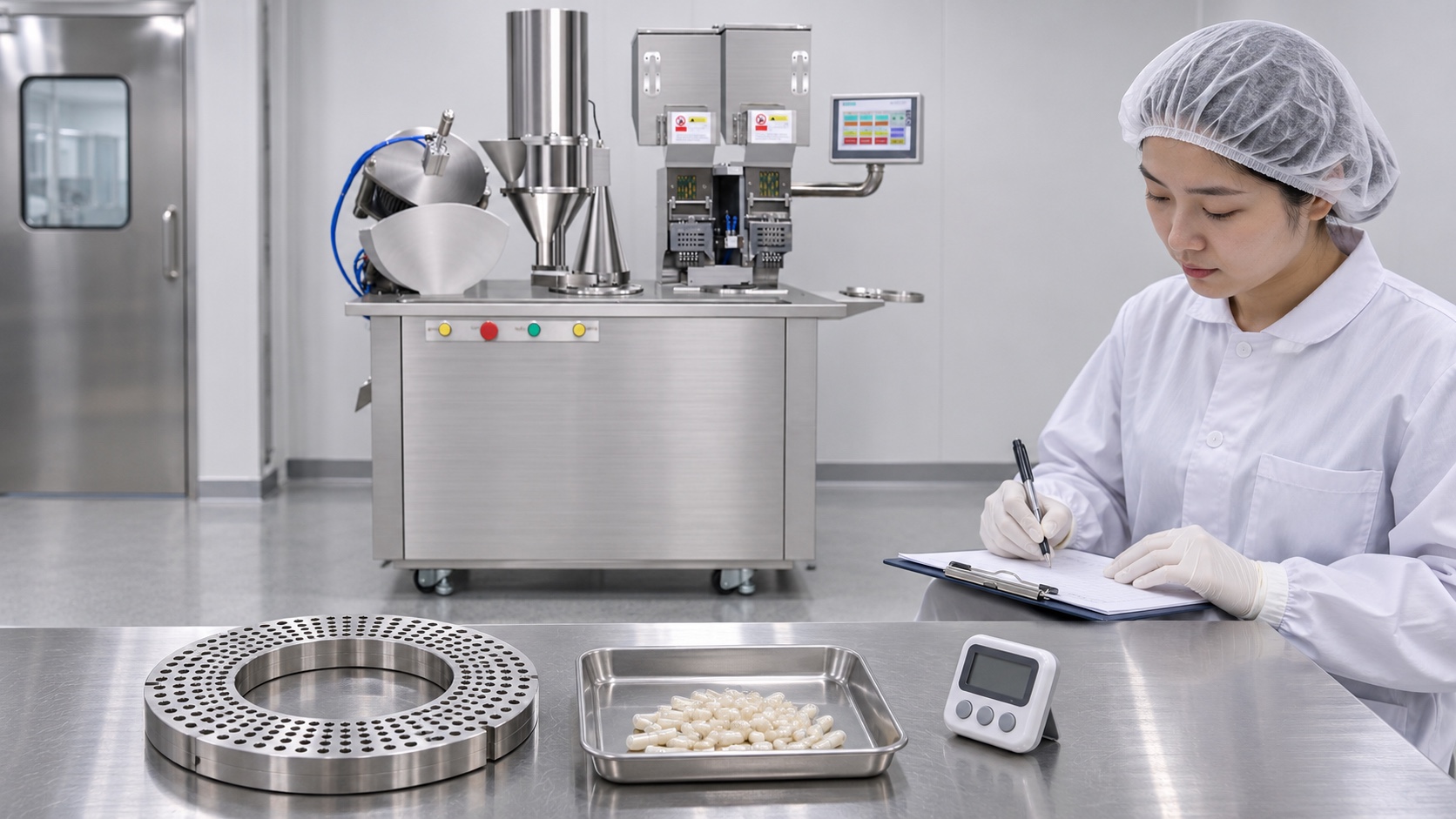
Use A Batch Trial To Decide Whether To Upgrade
How can I tell if this project can be pushed down? We can use the following logic card. This is not a rigid production standard, but a real project pitfall avoidance guide:
If manual work consistently consumes a large amount of labor time and orders are consistently repeated.
——Quickly focus on semi-automatic. As long as a complete batch is completed, it can indeed save labor and ensure delivery time, and this matter can be pushed forward.
If filling itself is not time-consuming, time is spent on changing varieties and cleaning machines.
——Then postpone the upgrade of Zhitu “the machine runs fast”. If the workload of batch replacement does not decrease, the income from upgrades will not be enough to cover the investment.
If you can barely deliver the goods by hand, but it all depends on long-term overtime or crazy recruitment of temporary workers.
——Put the total annual cost of semi-automatic and now manual drying on a piece. You can buy it as long as the money you avoid spending is enough to support new investments.
If the filling is finished early, it can only be piled there for a long time waiting for packaging and inspection.
——First solve the bottleneck at the end, or simply renovate the entire end together. Delivery value only comes when filling is done quickly, allowing the entire order to be closed sooner.
If the order volume is determined now, it will far exceed the processing capacity of the alternative semi-automatic machine for a complete batch.
——Also compare the fully automatic solutions. If the semi-automatic machine cannot meet the delivery deadline, don’t force yourself to place a single order just because it is cheap.
How to finally implement it? It’s very simple. Choose two from your current orders: one is a large order that is frequently repeated, and the other is a long-standing order that is frequently changed or is currently the easiest to postpone. First, pinch the meter to record the data of the current purely manual work to find out the total time, total working hours and output of good products.
Then, with the same batch size and quality inspection requirements, the candidate manufacturers were allowed to conduct actual machine testing. From the preparation stage, mid-run, pauses and jams, to the final inspection and clearance handover, every minute and every second is recorded. When evaluating personnel benefits, you should ask the workers in your factory who will actually drive the machines to try it out in the future, rather than just trusting the performance of skilled demonstrators from other manufacturers.
If the test results show that semi-automatic operation simply makes the filling process move faster, but people are still being occupied and the delivery time has not improved, then stop the approval immediately and first solve the links that really slow down the order. Conversely, if it can indeed continuously improve efficiency and costs in such a representative batch, then you should write down the investment, production run-in period and after-sales conditions throughout the entire life cycle into the procurement report, and finally decide whether to push forward this upgrade.